Policy
 Policy
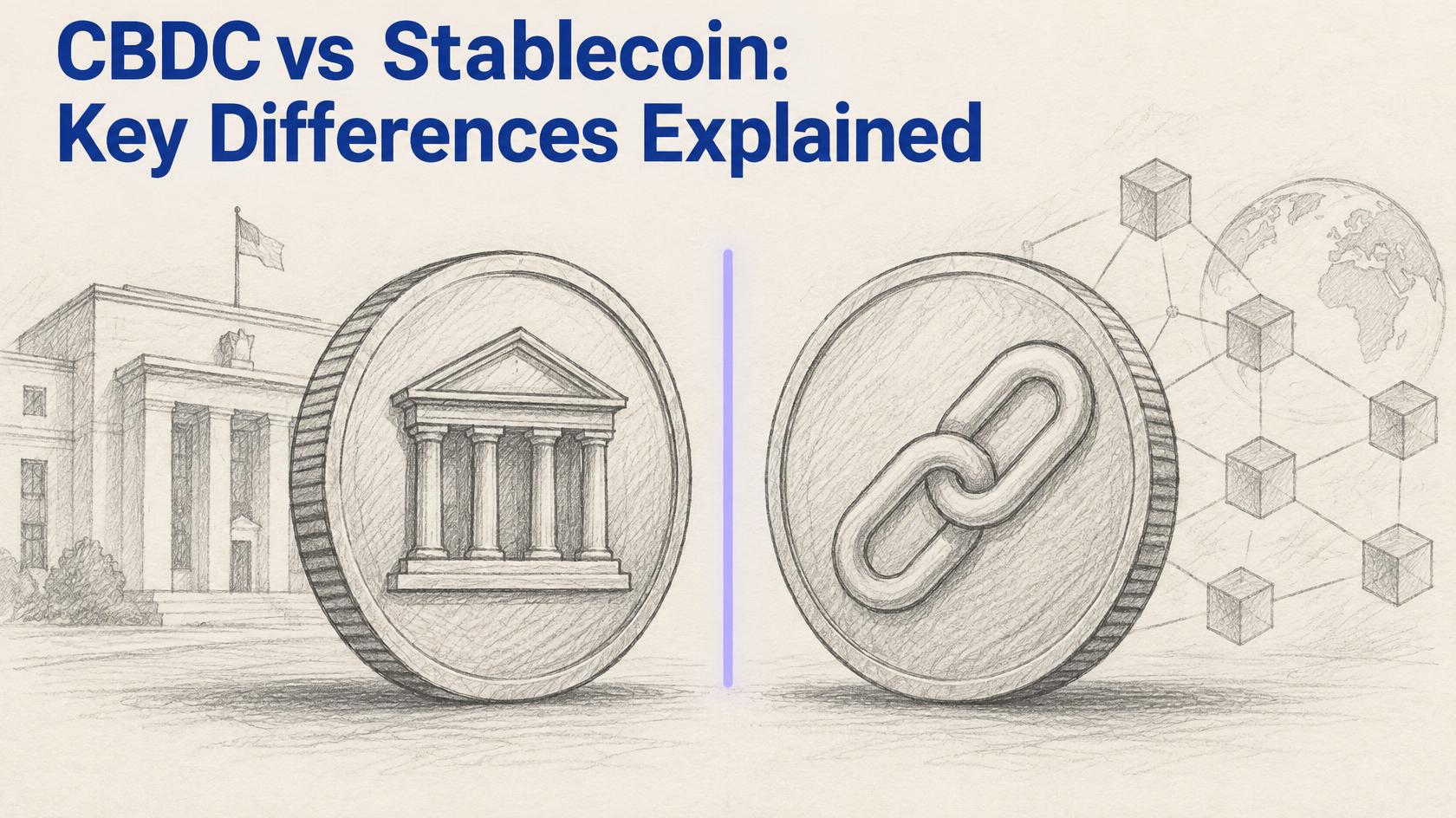
CBDC vs Stablecoin: Key Differences Explained
A CBDC is central bank money; a stablecoin is a private token backed by reserves. How they differ on issuer, risk, privacy, adoption and coexistence.
 Policy
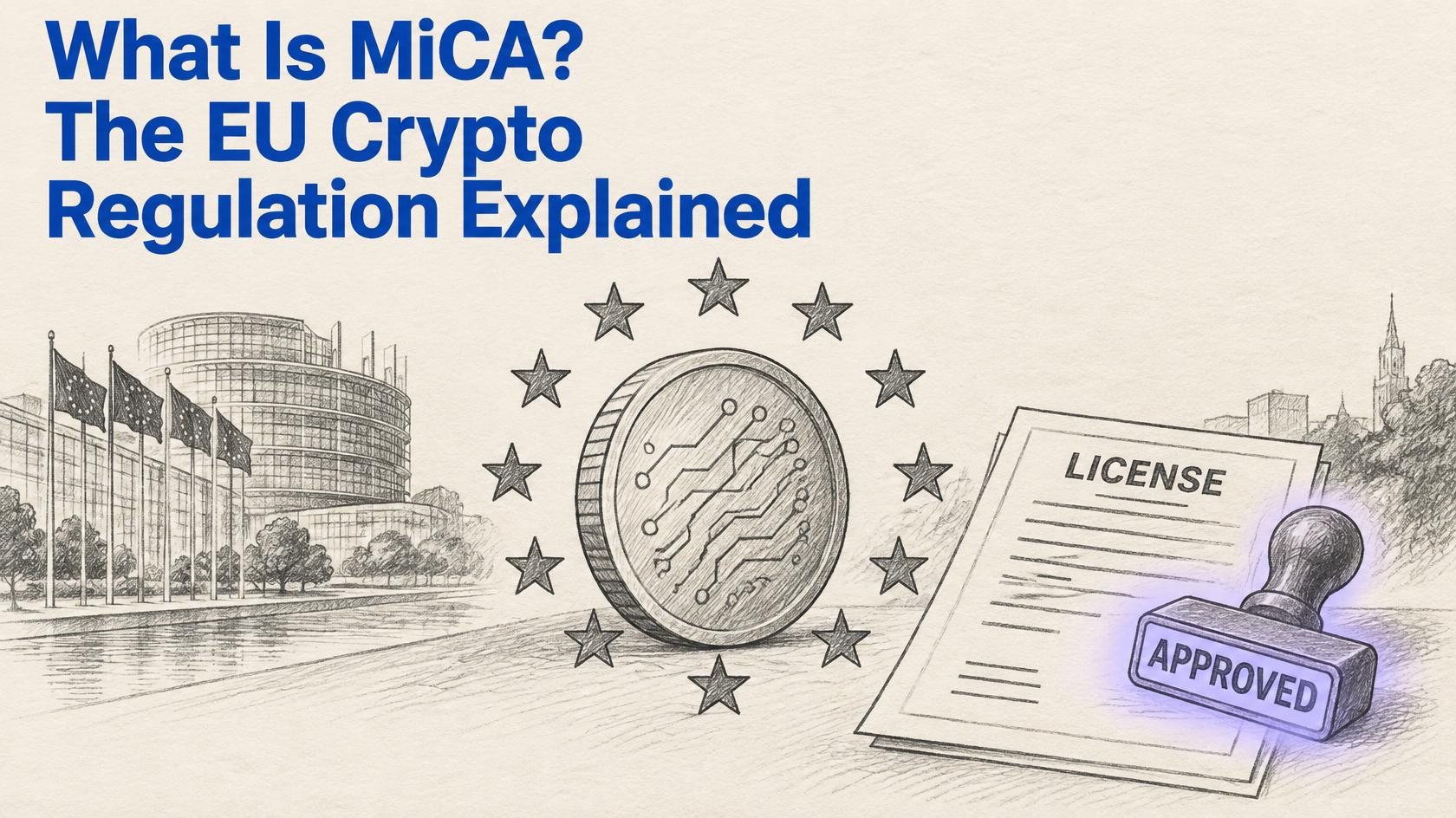
What Is MiCA? The EU Crypto Regulation Explained
MiCA is the EU rulebook for crypto issuers, stablecoins and service providers. How it works, who it covers, and what changed when the transition ended.
 Policy
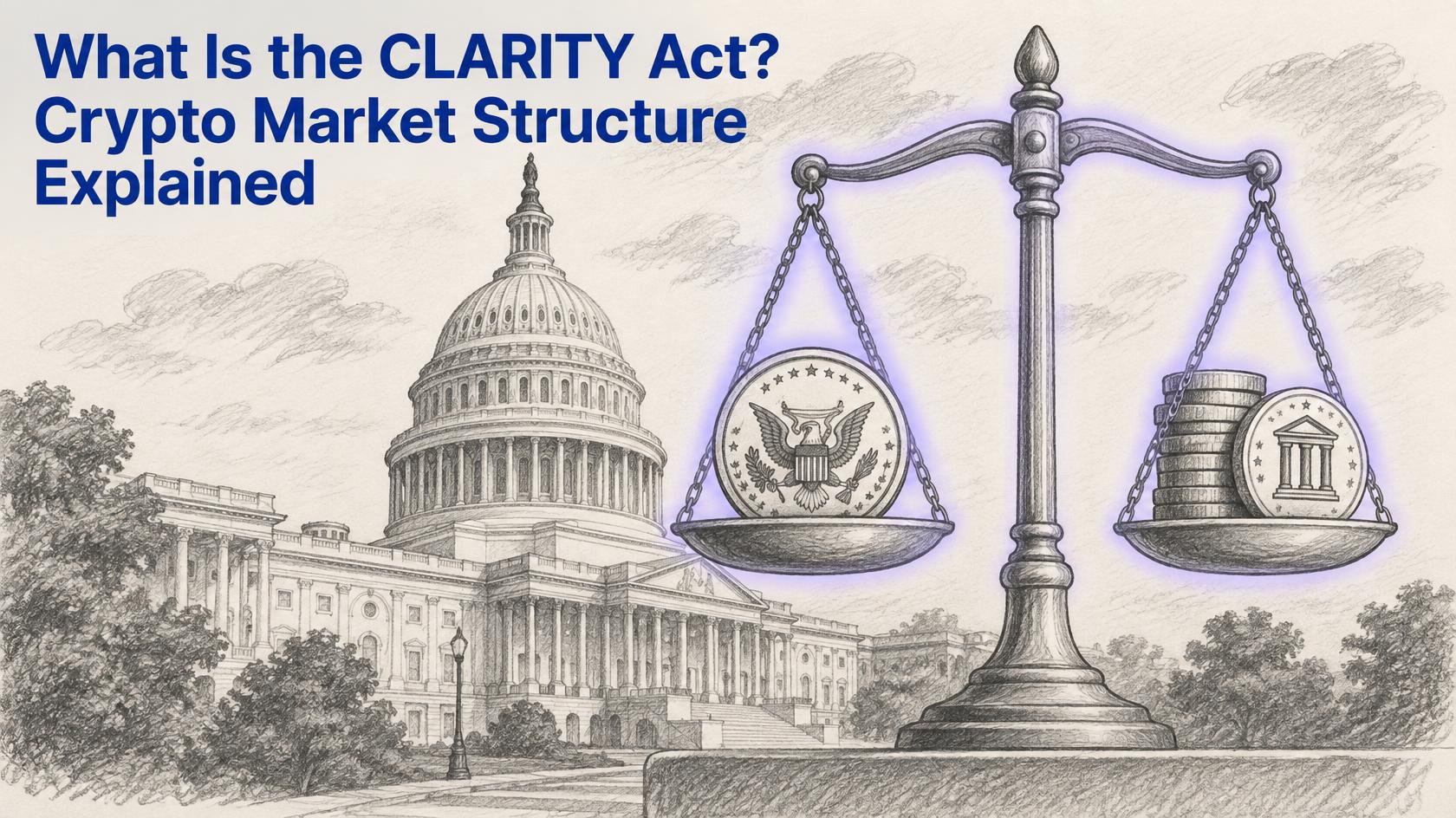
What Is the CLARITY Act? Crypto Market Structure Explained
The CLARITY Act would split crypto oversight between the SEC and CFTC. What the bill does, why the Senate blocked it 49-50, and what happens next.
 Policy
PayPal Bank Charter Application: What It Means for On-Chain Finance
Why PayPal's Utah industrial loan company filing reshapes the competitive map for stablecoin issuers, SMB credit protocols, and anyone building regulated dollar rails.
 Policy
CBDC Ban Explained: Where Digital Currency Is Blocked
The U.S. has legislated against a Federal Reserve digital dollar through 2030 while carving out private stablecoins. The implications for institutional operators are structural.
 Policy
What Is CBDC? Central Bank Digital Currency Meaning Explained
A concise research brief on what CBDCs actually are, how retail and wholesale designs differ, which jurisdictions are live, and where the technology overlaps with stablecoins.
 Policy
Anti-CBDC Surveillance State Act Explained For Finance Teams
H.R. 1919 forecloses a retail Federal Reserve digital dollar and reaches foreign CBDC holdings. The operational consequences land on treasury, custody, and correspondent banking desks.
 Policy
Genius Act Passed: What The Stablecoin Law Changes Now
A regulator-focused brief on the GENIUS Act: reserve rules, the $10B oversight threshold, BSA integration, the jurisdictional carve-out, and what still isn't settled.
 Policy
What Is The Genius Act 2025? Stablecoin Rules Explained
A concise institutional brief on the GENIUS Act: reserve rules, charter tiers, BSA compliance, and the open policy questions that implementing regulators will resolve through 2026.
 Policy
Genius Act Summary: The Key Provisions Explained
A concise institutional read on the GENIUS Act: what a payment stablecoin is under federal law, who may issue one, and how the 1:1 reserve and yield-ban rules bind.
 Policy
Genius Act 2025 Explained: What The Stablecoin Law Does
A concise institutional brief on the GENIUS Act: what it regulates, who qualifies as a permitted issuer, and how the reserve, AML, and insolvency mechanics reshape the U.S. stablecoin market.
 Policy
What Is the GENIUS Act? Stablecoin Regulation Explained
The GENIUS Act (Guiding and Establishing National Innovation for U.S. Stablecoins Act) is the first comprehensive federal law governing payment stablecoins in the United States, signed by President Trump on July 18, 2025. It establishes who
 Policy
SEC Crypto Policy Explained: What Institutions Need to Know
SEC crypto policy has shifted substantially in 2026, giving institutions clearer rules for digital asset compliance than at any point in the past decade. The SEC's March 2026 joint interpretation with the CFTC established a formal token tax