A central bank digital currency (CBDC) is a direct digital liability of a sovereign central bank, functionally equivalent to physical cash but native to digital infrastructure. Unlike commercial bank deposits or private stablecoins, a CBDC carries no counterparty risk beyond the issuing state itself. Stablecoin.nyc tracks how CBDC architecture intersects with stablecoin design, monetary policy, and institutional payment rails as this landscape matures across 146 countries and currency unions representing more than 98% of global GDP.
Definition: What CBDC Means
The Precise Technical Definition
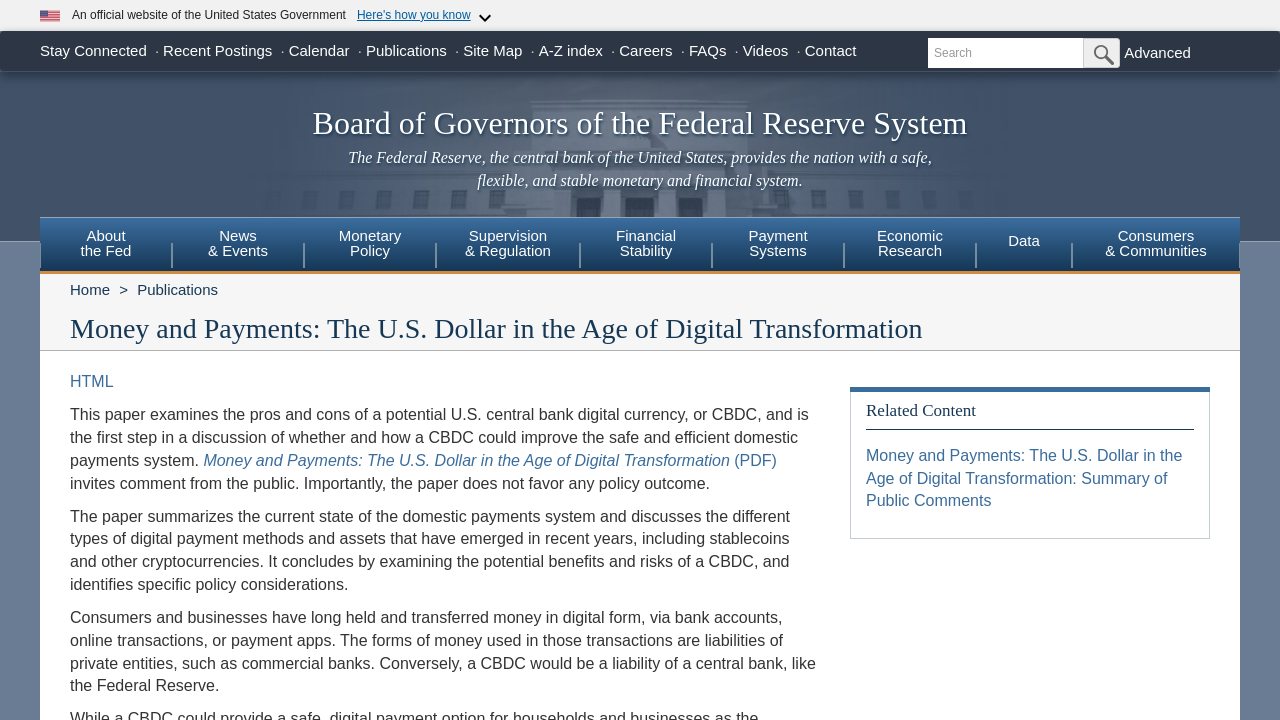
A CBDC is a digital form of sovereign currency issued as a direct liability of the central bank rather than a commercial bank. The distinction matters. Money held in a checking account is a claim on a private institution and carries that institution's credit risk; a CBDC unit sits on the same risk tier as physical banknotes. The Federal Reserve's 2022 discussion paper frames this liability structure as the foundational property that separates a CBDC from every other form of digital money currently in circulation, a point echoed in adjacent primer material on stablecoin fundamentals.
The Atlantic Council defines a CBDC as "virtual money backed and issued by a central bank," a formulation that intentionally excludes both permissionless cryptocurrencies and privately issued stablecoins. A CBDC is not a cryptocurrency: it is centrally controlled even when it happens to run on a distributed database, and a public blockchain is neither required nor necessarily useful. Wikipedia's technical overview reinforces the point that distributed ledgers were the intellectual inspiration for the concept, not a mandatory implementation choice, a distinction worth pairing with broader institutional analysis of on-chain settlement.
In Plain English
If you hold a $20 bill, your counterparty is the U.S. government. If you hold $20 in a checking account, your counterparty is your bank. A retail CBDC would give households the first kind of exposure through a digital wallet, collapsing the difference between "cash" and "digital money" into a single sovereign instrument. That reframing has downstream consequences for macro flows and monetary design that we return to below.
How CBDCs Work: Architecture and Implementation

Retail vs. Wholesale CBDCs
The two primary categories are retail and wholesale. Retail CBDCs are designed for households and businesses to make everyday payments; wholesale CBDCs are restricted to financial institutions and function analogously to central bank reserves, only tokenized. The distinction is not cosmetic. Wholesale designs slot into interbank plumbing and reverse repo markets with limited public-facing footprint, while retail designs implicate the full population and every merchant terminal, a divide explored in work on tokenized real-world assets.
Intermediated vs. Direct Models
Both the ECB and the Federal Reserve favor an intermediated architecture: the central bank issues the CBDC and manages core infrastructure, while licensed financial intermediaries handle KYC, wallets, and customer service. Direct models, in which citizens hold accounts at the central bank itself, are rare in practice because they would displace the commercial banking layer entirely. The intermediated design preserves the existing distribution network and echoes patterns visible in primary-market tokenization mechanics.
Technical Infrastructure
A CBDC database records holdings for every entity, people and corporations, with cryptographic and privacy protections. Nothing about that requires a public blockchain, though several wholesale pilots have used one. Australia's central bank ran a 2021 proof-of-concept on Ethereum to tokenize syndicated loans, illustrating that programmable settlement layers can plug into central bank infrastructure without forcing a full permissionless design. CBDCs may also carry programmability features such as conditional payments and expiry dates, properties they share with some stablecoins but that are absent from physical cash. Design choices here overlap materially with the tokenized deposit and settlement stack that institutional desks are already building.
Global CBDC Landscape: Who Is Doing What

Launched CBDCs
Three jurisdictions have fully launched a CBDC as of 2024: the Bahamas (Sand Dollar), Jamaica (JAM-DEX), and Nigeria (eNaira). All three are focused on domestic financial inclusion, and all three have seen slow adoption despite favorable regulatory conditions. The gap between technical launch and user uptake is one of the most durable lessons of the CBDC experiment so far, a theme that recurs in structural analysis of digital collateral.
Major Pilots and Advanced Programs
The Atlantic Council's tracker shows 146 countries and currency unions exploring a CBDC as of May 2026, up from 87 in May 2022. Seventy-seven are in advanced phases, with 41 active pilots. China's digital yuan (e-CNY) remains the largest by a wide margin: by December 2025 it had processed more than 3.4 billion transactions worth approximately 16.7 trillion renminbi, or roughly $2.3 trillion. In January 2026, the People's Bank of China reclassified e-CNY as deposit liabilities rather than pure digital cash, a shift with implications the global CBDC adoption roadmap treats in more detail.
The U.S. Position
Every G20 country except the United States is actively exploring a CBDC, and 14 G20 members are already piloting. The New York Fed continues wholesale cross-border research through Project Agorá, but no retail track exists at the federal level. Several U.S. states, Florida among them, have passed legislation banning state payments via CBDC on privacy grounds. That domestic political friction shapes the institutional posture that U.S.-facing treasurers and allocators need to model.
Why Central Banks Are Pursuing CBDCs

Payment Efficiency and Financial Inclusion
CBDCs can enable faster, cheaper domestic and cross-border payments and extend financial access to unbanked populations. Both the Federal Reserve and the IMF cite these outcomes consistently, though empirical results from launched CBDCs remain modest. Cross-border efficiency is where wholesale designs show the sharpest edge, an area where stablecoin-based settlement rails compete directly for the same use cases.
Monetary Sovereignty and Currency Internationalization
The ECB's digital euro pilot is explicitly framed as a "global euro moment" intended to strengthen the euro's international role and defend European payment sovereignty against dollar-denominated platforms. China's e-CNY strategy sits inside a broader People's Bank of China push toward a multipolar currency system, positioning the digital yuan as a cross-border settlement instrument. Both efforts read as sovereign responses to the same dynamic driving stablecoin dollarization pressure in emerging markets.
Response to Private Digital Money
Emerging markets including Rwanda, Kazakhstan, and Bolivia are investing in retail CBDC development partly in response to rapid proliferation of dollar-backed stablecoins in their economies. Cross-border wholesale CBDC projects have more than doubled since the G7 sanctions response to Russia's 2022 invasion of Ukraine; there are now 13 such projects, including mBridge, where transaction volume surged to $55.49 billion with e-CNY accounting for over 95% of settlement. The pattern is a state-level counterweight to private digital dollars, and the strategic logic mirrors themes in macro-level liquidity analysis.
Common Misconceptions About CBDCs
Misconception: CBDCs Are Cryptocurrencies / Reality: They Are Centrally Controlled
CBDCs are centrally issued and controlled. Unlike Bitcoin or Ethereum, they have no permissionless network, no open validator set, and no decentralized consensus mechanism. A CBDC may borrow cryptographic primitives, but the trust model is state-based rather than protocol-based. Confusing the two categories leads to bad policy analysis and worse investment framing, which is why fundamentals coverage treats them as separate asset classes.
Misconception: CBDCs Will Replace Cash Immediately / Reality: They Are Designed to Complement It
The Federal Reserve's 2022 discussion paper treats a CBDC as complementary to physical cash and existing bank deposits, not a replacement. Every major design proposal from the ECB, Bank of England, and Bank of Canada has taken the same posture. Cash still clears in cases of network outage, and no jurisdiction has demonstrated the political appetite to eliminate it. Institutional analysts should model coexistence, not substitution, a stance consistent with the broader stablecoin regulatory framing now moving through Congress.
Misconception: CBDCs and Stablecoins Are the Same / Reality: The Liability Structure Differs Fundamentally
A stablecoin is a liability of a private issuer, typically backed by short-duration Treasuries and cash equivalents. A CBDC is a direct liability of the sovereign central bank. Credit standing, legal recourse, and monetary treatment all differ. Privacy trade-offs also diverge sharply: because a CBDC database is state-managed, governments have potential visibility into every transaction, which critics describe as a tool for surveillance and coercion. Florida's legislative ban and similar state-level actions reflect real disagreement about that risk, not opposition to digital payments in general, a nuance developed in policy-facing coverage.
Risks, Policy Considerations, and the Road Ahead
Financial Stability Risks
Large-scale retail CBDC adoption could trigger bank disintermediation. If households can hold CBDC directly at the central bank, commercial banks lose deposit funding, and the loanable-funds channel that finances mortgages and small business credit contracts. The Federal Reserve's discussion paper identifies preserving monetary and financial stability, protecting citizen privacy, and maintaining anti-money-laundering capability as the three primary policy tensions. Any of them can dominate the design, and each has downstream consequences for custody and asset-manager compliance.
Privacy and Civil Liberties
State visibility into transactional data is the CBDC debate's hardest edge. Programmability features such as conditional payments, automatic tax withholding, and expiry dates expand state monetary capacity but introduce legal and ethical questions no jurisdiction has fully resolved. The Wikipedia overview cites credible commentary describing CBDCs as a potential "tool for coercion and control," and that framing is not fringe; it drives real legislation in the United States. The trade-offs sit alongside the de-pegging and liquidity dynamics that shape private-issuer risk.
What Comes Next
Advanced economies including Canada, Australia, and Norway have deprioritized retail CBDC programs in recent years, shifting focus to wholesale infrastructure instead. The ECB's Project Pontes, Singapore's live wholesale CBDC issuance, and Brazil's Drex tokenized credit pilot represent an emerging consensus: upgrade interbank settlement first, defer the consumer-facing question. That direction meshes with the tokenization desk build-out inside major dealers and suggests the near-term action for allocators is wholesale, not retail.
Frequently Asked Questions
What is the difference between a CBDC and a stablecoin?
A CBDC is a direct liability of a central bank, backed by sovereign credit. A stablecoin is a liability of a private issuer, typically collateralized by Treasuries and cash. The legal, credit, and monetary treatment differ fundamentally.
Is a CBDC the same as cryptocurrency?
No. Cryptocurrencies like Bitcoin operate on permissionless networks with decentralized consensus. A CBDC is centrally issued and controlled, uses a state-managed database, and does not require a blockchain. They share technical primitives but not trust assumptions.
Which countries have launched a CBDC?
Three: the Bahamas (Sand Dollar), Jamaica (JAM-DEX), and Nigeria (eNaira), all launched by 2024. All focus on domestic financial inclusion and have seen slow uptake despite active government support and merchant onboarding programs.
What is a retail vs. wholesale CBDC?
Retail CBDCs are designed for households and businesses to use in everyday payments. Wholesale CBDCs are restricted to financial institutions and function like tokenized central bank reserves for interbank settlement, repo markets, and large-value transactions.
Does the United States have a CBDC?
No. The Federal Reserve published a 2022 discussion paper but has not committed to issuance. The New York Fed continues wholesale cross-border research through Project Agorá, while state-level legislation in Florida and elsewhere restricts CBDC use domestically.
Can a CBDC be used to surveil citizens?
Potentially yes. Because a CBDC database is state-managed, governments could have visibility into every transaction. Design choices around privacy protections vary, and civil liberties critics cite this as the central risk driving legislative pushback in several jurisdictions.
How does a CBDC affect commercial banks?
Large retail adoption could trigger bank disintermediation. If depositors move funds from bank accounts into direct central bank claims, commercial banks lose funding for lending, potentially tightening credit supply and forcing policy offsets from the central bank.
Why are some U.S. states banning CBDCs?
States including Florida cite privacy and surveillance concerns, arguing that programmable, state-visible money enables coercion. The bans typically restrict state agencies from accepting CBDC payments rather than criminalizing private use, reflecting policy disagreement rather than blanket opposition to digital payments.
Takeaway
The CBDC question is no longer whether but where. Retail programs remain politically fraught in advanced economies, while wholesale infrastructure is quietly consolidating into a new settlement layer that will sit alongside, and sometimes underneath, private stablecoins. For treasurers and allocators, the near-term signal is the interbank rail, not the consumer wallet. Stablecoin.nyc analysis will continue tracking where sovereign issuance and private stablecoin design converge, and where the two remain structurally incompatible.