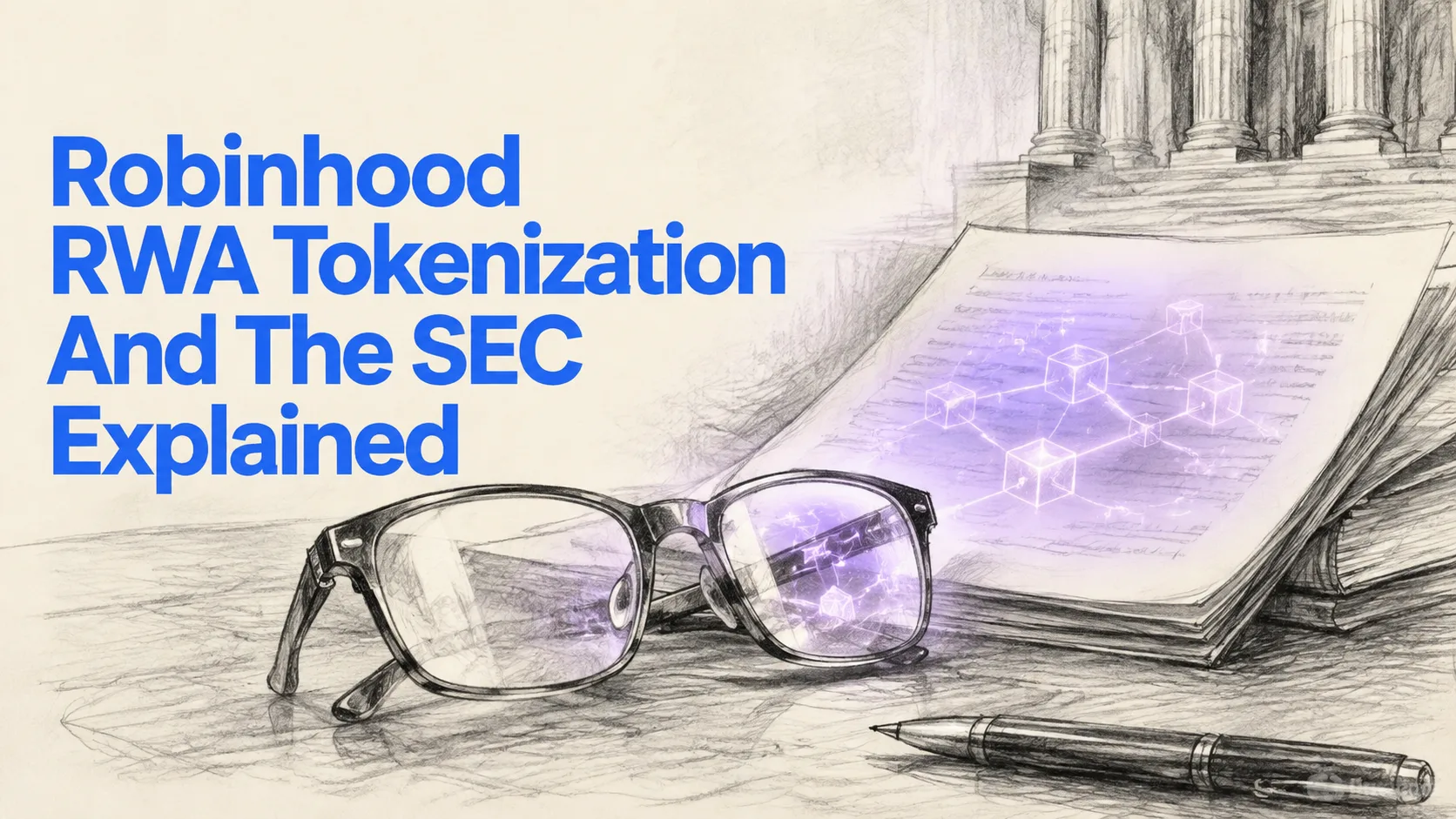
Robinhood's April 2025 submission to the SEC Crypto Task Force is the most detailed regulatory proposal a retail broker-dealer has filed on real-world asset tokenization. The 42-page letter argues that tokenized securities can reduce settlement risk, expand market access, and operate within existing U.S. securities law, provided regulators build a coherent federal framework. For institutional investors tracking on-chain asset markets, Stablecoin.nyc has been covering the compliance and market-structure implications as they surface.
The thesis is narrow and worth stating upfront: tokenization is not a new asset class, it is a new settlement rail for existing securities, and the binding constraint in the U.S. is broker-dealer custody, not blockchain technology. Everything else in the letter follows from that premise.
What Robinhood Proposed to the SEC
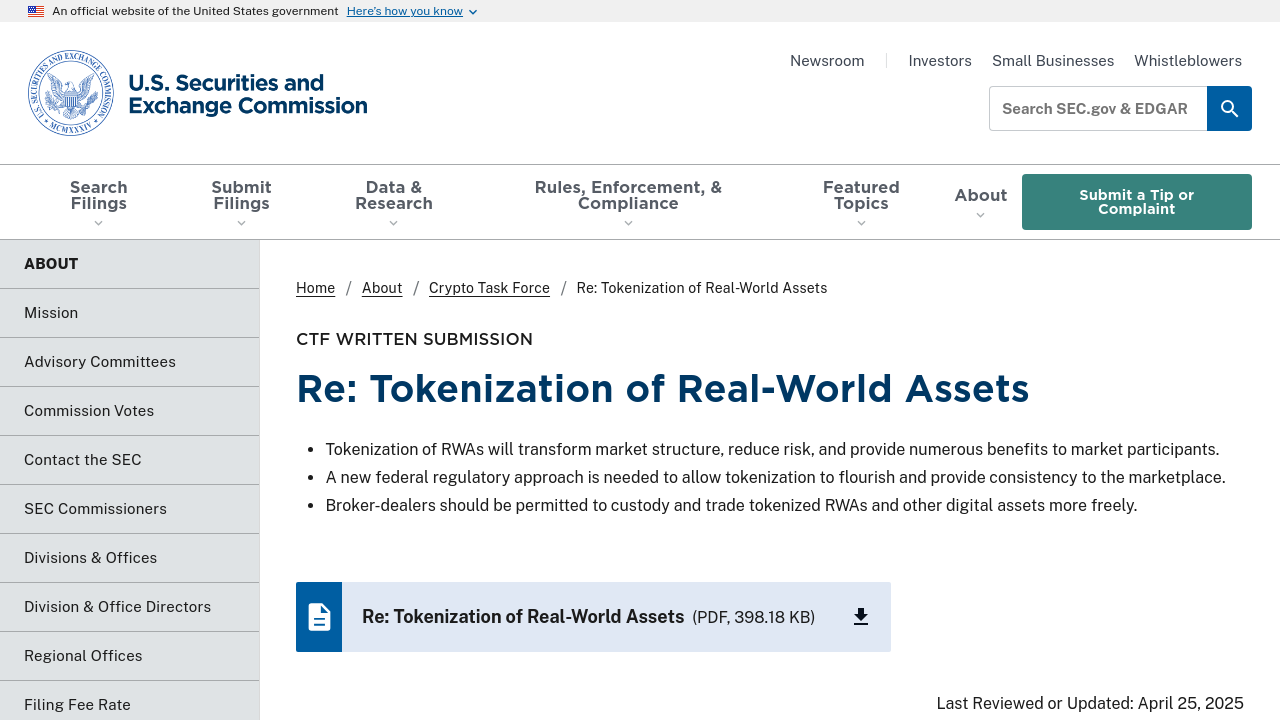
Robinhood filed its RWA tokenization proposal with the SEC Crypto Task Force on April 24-25, 2025. The written submission totals 42 pages and was accepted into formal regulatory dialogue when the SEC published it on April 25. That publication itself is a signal: the Task Force is inviting structured industry input rather than waiting for enforcement actions to define the perimeter, a shift covered in prior analysis of SEC digital-asset policy.
The 42-Page Letter: Scope and Core Arguments
The core argument is that broker-dealers should be permitted to custody and trade tokenized RWAs and other digital assets more freely under existing regulatory frameworks. Robinhood is not asking for a new asset class, a new charter, or a new exemption. It is asking the SEC to clarify that the securities laws already on the books apply to tokenized securities, and that regulated intermediaries can hold and transfer them without incurring capital penalties or unclear custody treatment. This framing echoes the position taken by asset managers pushing tokenization desks into production.
Tokenized Shares, Bonds, and Real Estate Under Existing Securities Law
The proposal covers tokenized equities, fixed-income instruments, and real estate. Each is framed as representable under current U.S. securities law without new legislation. The letter's second thesis is more forward-looking: a federal regulatory approach is needed to provide consistency across states and across intermediaries, so that tokenized RWAs do not fragment into a patchwork of state-level trust charters and offshore SPVs. Robinhood positions itself, and similarly regulated brokers, as compliant on-ramps bridging DeFi infrastructure and traditional capital-markets obligations. The takeaway for allocators: the filing treats tokenization as a plumbing upgrade, not an asset innovation, which is the correct frame for the primary-market dynamics already emerging in RWA issuance.
How RWA Tokenization Works: Definition and Mechanism
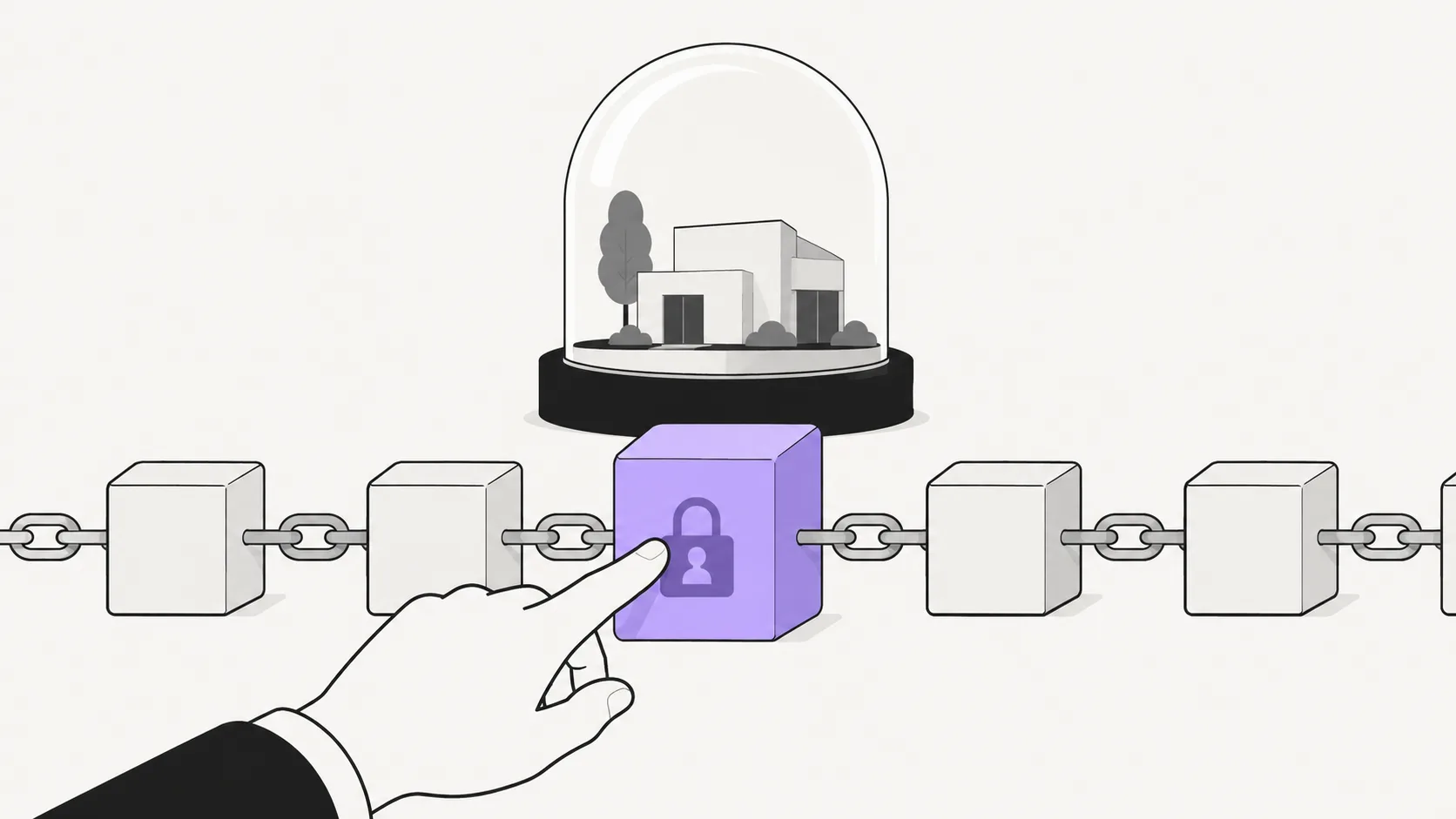
RWA tokenization refers to the process of representing a real-world asset, or the ownership rights to that asset, as a digital token on a blockchain ledger. The token is the transfer instrument; the asset itself sits with a custodian. That basic architecture, mundane as it sounds, is where every meaningful design choice lives. A more detailed treatment of that architecture appears in fundamentals coverage of tokenized asset structures.
Representing Ownership Rights as Digital Tokens
Robinhood's own Stock Tokens, issued by Robinhood Assets (Jersey) Limited, are structured as tokenized debt securities backed 1:1 by the underlying equity held by a U.S.-based custodian. Economically, the token tracks the reference share. Legally, it is a debt claim on the Jersey issuer, not a direct equity interest. Dividends are handled through a multiplier mechanism: instead of paying cash, dividend proceeds are used to purchase additional underlying shares, and each token's multiplier increases over time. That structure preserves total return but changes the tax and reporting picture for holders, a subtle point that matters for institutional treatment and one that maps to broader questions about treasury-backed yield redefinition.
Settlement, Custody, and the Role of Blockchain Rails
Once issued, tokenized assets can be held in self-custody wallets (Robinhood Wallet, Trust Wallet, Safepal, others) and deployed onchain for yield, collateral, or secondary trading on DEXs and CEXs. This is where the settlement-rail argument becomes concrete: the same token can clear peer-to-peer in seconds, sit as collateral in a lending market, and route through a centralized venue without leaving the ledger. The structural distinction to keep in mind is that Robinhood's current Stock Tokens provide economic exposure but do not confer legal or beneficial ownership rights in the underlying issuer. That gap is exactly what the SEC proposal aims to close for a U.S. domestic product, and it is the reason institutional allocators watching the space still treat tokenized equities as reference-price wrappers rather than as registered shares.
Robinhood's Live Tokenization Products vs. the SEC Proposal
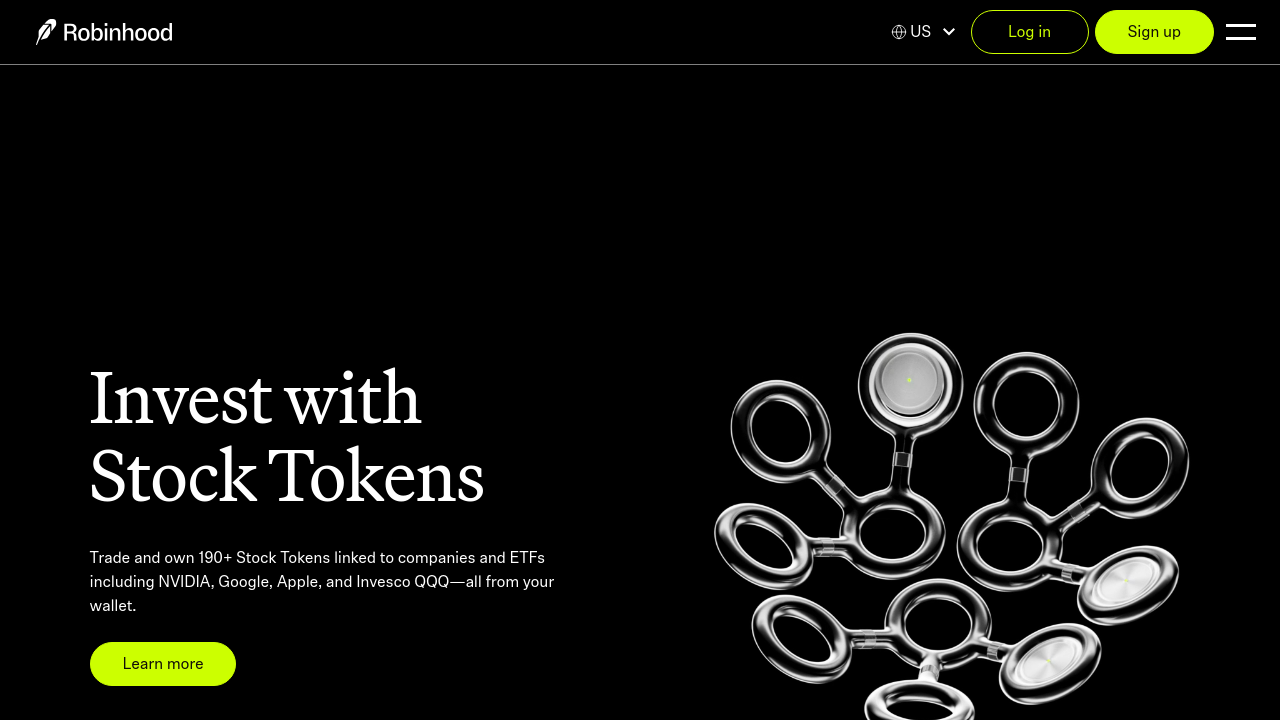
The letter to the SEC is not theoretical. Robinhood already runs a live tokenized-equity product in the EU, and the shape of that product tells you what a U.S. equivalent would look like under a reformed custody regime. That contrast, live offshore product versus proposed onshore framework, is the most useful lens for reading the filing, and it is one we have applied in analysis of on-chain market structure.
Stock Tokens in the EU: What Is Already Operating
Robinhood began offering more than 200 tokenized U.S. stocks to EU customers in June 2025, giving non-U.S. investors 24/7 exposure to U.S. equities via blockchain rails. Per Robinhood's Stock Tokens product page, the tokens are backed 1:1 by the underlying equity, held by a licensed custodian, and swappable through Robinhood Wallet, DEXs, or centralized exchanges. The always-on trading window is the headline feature, but the interoperability with DeFi collateral markets is the more consequential one for capital efficiency, and it echoes the passive-versus-active supply dynamics that shape AMM liquidity.
The Regulatory Gap Between European Launch and U.S. Framework
Stock Tokens are explicitly not registered under U.S. securities laws and are unavailable to U.S. persons or to Canadian, U.K., and Swiss residents. That exclusion reflects the current regulatory gap the SEC proposal aims to close. The live product operates through Robinhood Assets (Jersey) Limited, a structure that sidesteps U.S. registration requirements by issuing tokens offshore as debt securities. If the SEC adopts the proposal, a domestic equivalent could be issued directly by a U.S. broker-dealer, removing the offshore workaround and, more importantly, opening the product to U.S. retail and institutional flows. Data providers such as RWA.xyz have noted that Stock Tokens use non-ERC-20 measures, requiring adjustments in on-chain supply reporting; the same fragmentation appears across primary RWA markets more broadly.
The SEC's Position and the Regulatory Stakes
The SEC has neither adopted nor rejected the proposal. What it has done is accept the letter into its formal Crypto Task Force submission process, which is a policy window rather than a decision. The distinction matters for anyone modeling timing risk, and it fits within a broader macro policy backdrop that continues to shape institutional entry points.
Crypto Task Force Written Submissions and the Policy Window
By publishing the letter on April 25, 2025, the SEC signaled that industry input is being taken formally. The submission argues that tokenization will transform market structure, reduce counterparty and settlement risk, and provide measurable benefits to a broad range of market participants. It also frames the ask precisely: broker-dealers should be permitted to custody and trade tokenized RWAs more freely. That is a request for either SEC guidance, formal rulemaking, or no-action relief, each with different timelines and political costs, a policy dynamic that resembles the stablecoin bill's path through Senate committee.
What Broker-Dealer Custody Reform Would Mean for Markets
Permitting broker-dealer custody of tokenized securities would remove the primary structural barrier preventing U.S. retail and institutional platforms from offering on-chain RWA products domestically. Without that reform, tokenized equities in the U.S. remain a research topic, not a product line. As of mid-2025, no formal SEC rulemaking or guidance had been issued in direct response to Robinhood's letter, leaving the proposal in policy review. For allocators building exposure through spot vehicles, the interim workaround remains regulated wrappers; the volumes there are already meaningful, as covered in reporting on record spot ETF flows.
Implications for Institutional Investors and Asset Managers

The relevant question for institutional readers is not whether tokenization is coming, but how the specific U.S. framework, if adopted, changes the operating model for equity, fixed-income, and real-estate exposure. The changes are concrete and worth mapping against existing workflows, alongside the sovereign-collateral pivot already underway.
Market Structure Changes If the Framework Is Adopted
If the SEC adopts a federal tokenization framework along the lines Robinhood proposes, institutional intermediaries would gain a clear legal path to offer tokenized equities, bonds, and real estate to U.S. investors. Tokenized RWAs on compliant rails could compress T+2 settlement latency to near-real-time, lowering margin requirements and counterparty exposure for asset managers holding large equity books. The second-order effect is on collateral velocity: the same tokenized bond can post as margin, secure a repo, and settle a secondary trade within the same session, a scenario that connects directly to the liquidity-cycle compression already visible on-chain.
Risks, Open Questions, and What to Watch
Legal counsel evaluating on-chain exposure should note that current Robinhood Stock Tokens explicitly disclaim legal or beneficial ownership rights, a material distinction from holding registered shares. Open questions include how corporate actions, proxy votes, tender offers, spin-offs, would be handled for tokenized shares, and how AML/KYC obligations attach at the wallet level. The absence of a U.S. domestic tokenized-securities market means institutional capital is currently constrained to observing offshore pilots, making the SEC's eventual response a critical policy inflection point, and one that sits alongside parallel jurisdictional moves such as MiCA 2.0 in the EU.
At a glance: EU Stock Tokens vs. proposed U.S. framework
| Dimension | Current EU Stock Tokens | Proposed U.S. framework |
|---|---|---|
| Issuer | Robinhood Assets (Jersey) Limited | U.S. registered broker-dealer |
| Legal form | Tokenized debt security | Tokenized security (direct or wrapped) |
| U.S. person access | Prohibited | Permitted |
| Custody | Licensed offshore custodian | SEC-supervised broker-dealer custody |
| Dividend handling | Multiplier mechanism (reinvestment) | To be specified by rulemaking |
| Corporate actions | Contractual pass-through | Open regulatory question |
| Settlement | Near real-time on-chain | Near real-time on-chain |
Frequently Asked Questions
What did Robinhood propose to the SEC about RWA tokenization?
Robinhood filed a 42-page letter with the SEC Crypto Task Force in April 2025 asking that broker-dealers be permitted to custody and trade tokenized real-world assets under existing securities law, with a coherent federal framework.
Are Robinhood Stock Tokens available to U.S. investors?
No. Stock Tokens are not registered under U.S. securities laws and cannot be offered or sold to U.S. persons. Residents of Canada, the United Kingdom, and Switzerland are also excluded from the current EU-facing product.
What is the difference between a tokenized stock and a real stock?
A tokenized stock, in Robinhood's current structure, is a debt security providing economic exposure to the reference share. A registered share confers direct legal and beneficial ownership, including standard proxy and corporate-action rights, which tokens do not.
How does Robinhood handle dividends on Stock Tokens?
Dividends are not paid as cash. Instead, dividend proceeds purchase additional underlying shares, and each token's multiplier increases over time. Total return tracks the reference stock, but the distribution mechanism differs from traditional shareholding.
What regulatory changes would allow tokenized RWAs in the United States?
Domestic issuance would require SEC guidance, formal rulemaking, or no-action relief that clarifies broker-dealer custody of tokenized securities. Robinhood's proposal argues existing statutes suffice; the missing piece is a consistent federal implementation.
What assets does Robinhood's tokenization proposal cover?
The letter addresses tokenized equities, fixed-income instruments, and real estate. Robinhood argues all three can be represented under current U.S. securities law without new legislation, provided intermediaries have clear custody and trading permissions.
Has the SEC responded to Robinhood's RWA tokenization letter?
The SEC published the letter through its Crypto Task Force submission process on April 25, 2025, accepting it into formal dialogue. As of mid-2025, no rulemaking, guidance, or no-action letter had been issued in direct response.
What are the risks of investing in tokenized real-world assets?
Key risks include issuer credit risk in debt-wrapped structures, absence of direct ownership rights, unresolved corporate-action mechanics, wallet-level AML/KYC exposure, and jurisdictional restrictions. Institutional allocators should also model smart-contract risk and custodian concentration.
Conclusion
The Robinhood filing is best read as a request to align existing securities law with existing blockchain settlement, not as a bid for a new asset class. If the SEC accepts that framing, U.S. broker-dealers get a domestic path to tokenized equities, bonds, and real estate, and institutional workflows begin to reprice around near-real-time settlement and higher collateral velocity. If it does not, offshore structures continue to absorb the flow while the onshore market watches. Either way, the policy window is open, and the direction of travel is documented. Stablecoin.nyc will continue to track the filings, the market-structure response, and the compliance detail as the framework moves from proposal to rule.