The United States has drawn a hard line on sovereign digital money while explicitly protecting private stablecoins, and that split now defines dollar policy on-chain. Congress passed a temporary ban on Federal Reserve CBDC issuance running through December 31, 2030, and a growing faction of lawmakers is pushing to make the prohibition permanent. Stablecoin.nyc tracks how these restrictions interact with private stablecoin markets and what they mean for institutional operators navigating dollar-denominated digital assets.
Definition: What a CBDC Ban Actually Prohibits

A CBDC ban prohibits a central bank or federal agency from issuing, creating, or operating a digital asset that functions as legal tender and is controlled by the sovereign issuer. The restriction is narrow by design: it targets the issuer, not the instrument category. Digital dollars from regulated private entities are unaffected. The distinction is the entire policy substance and matters for any institutional digital asset allocator reading the statute.
Scope of the restriction
The U.S. Senate's 21st Century ROAD to Housing Act bars the Federal Reserve from directly or indirectly issuing "a central bank digital currency or any digital asset substantially similar to a CBDC" through December 31, 2030. The "substantially similar" language is the operative phrase. It closes obvious workarounds where the Fed could partner with a technology intermediary and effectively issue central bank liabilities in tokenized form. For context on how sovereign balance sheets are already migrating toward tokenized instruments without a CBDC layer, see the analysis of sovereign debt and digital collateral.
What remains permitted
The legislation explicitly exempts private stablecoins, specifically "open, permissionless, and confidential dollar-denominated assets" providing privacy comparable to cash. President Trump's January 2025 executive order preceded the legislative ban, prohibiting federal agencies from promoting or developing a CBDC; the Senate bill enshrined that order in statute. The takeaway: U.S. policy is channeling dollar digitization through private issuers, and the stablecoin regulatory track is the operative one for anyone building or allocating.
The U.S. Legislative Timeline: From Executive Order to Senate Vote
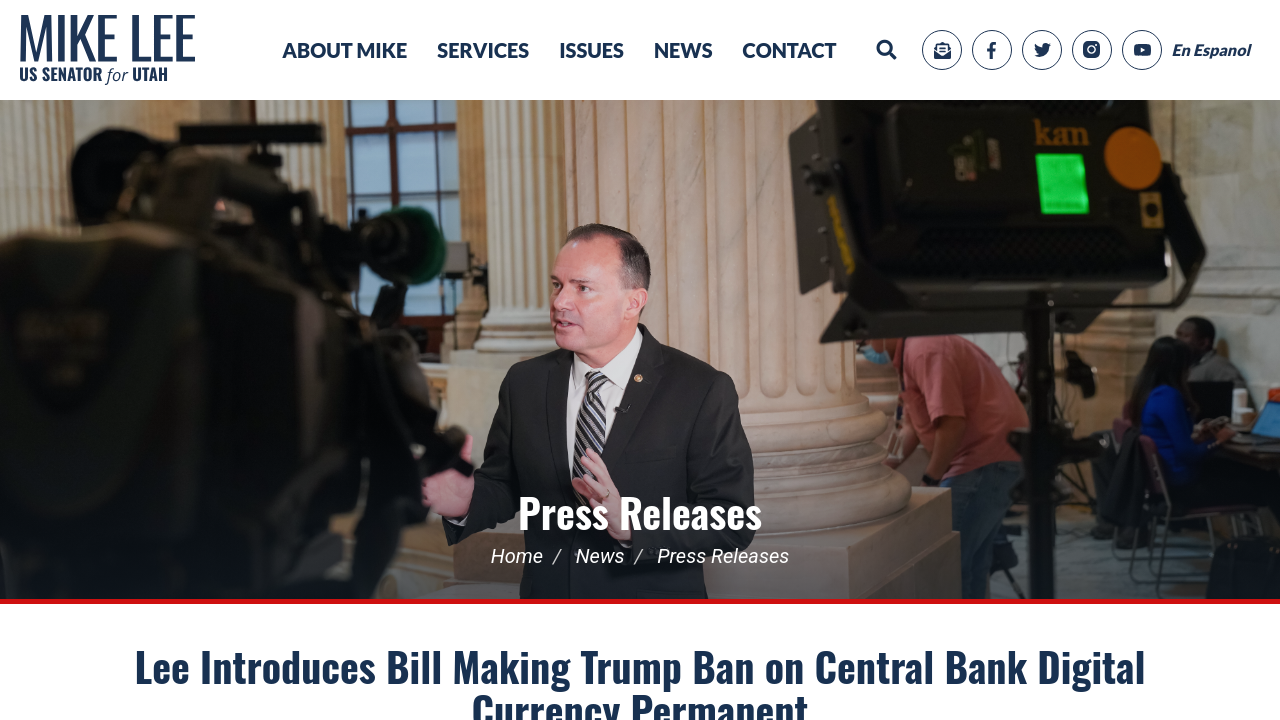
The path from White House directive to Senate statute compressed roughly eighteen months. Understanding the sequence matters because each step shifted the political ceiling on what a permanent ban could look like. The broader macro policy backdrop explains why this compression happened when it did.
Trump executive order (January 2025)
President Trump signed an executive order in early 2025 banning federal agencies from issuing or endorsing CBDCs. Senator Mike Lee's No CBDC Act, co-sponsored by Ted Cruz and Rick Scott, was introduced immediately after to codify the prohibition permanently. An executive order can be reversed by the next administration in a single stroke. Statutory law cannot, which is why the legislative track was pursued in parallel from day one.
Senate passage and the 2030 sunset
The Senate passed the CBDC ban 85-5 as an amendment attached to the 21st Century ROAD to Housing Act. The legislative vehicle was chosen deliberately: must-pass housing bills draw broad bipartisan support, and non-core measures routinely ride along. The Bitcoin Foundation's coverage of the vote documents the mechanics. The 2030 sunset is the concession that got the bill through; without it, Democratic votes would have been harder to secure. For historical context on how Congress has legislated against sovereign monetary innovation in narrower windows, the legislative pattern rhymes with earlier stablecoin bills.
Push for a permanent ban
The Cato Institute and Rep. Ralph Norman have both criticized the 2030 expiration, arguing a temporary ban creates regulatory uncertainty and that Congress should legislate a permanent prohibition. The CBDC Anti-Surveillance State Act (S.3801, 118th Congress) also sought to amend the Federal Reserve Act to prohibit Fed banks from offering digital currency products directly to individuals. Treasury Secretary Scott Bessent confirmed in May 2026 that a digital dollar is "off the table," with the administration's focus redirected to the CLARITY Act crypto regulation framework. The takeaway: the executive branch and the Senate agree on outcome; the disagreement is on duration. For finance teams tracking these shifts, the SEC's parallel custody rulemaking is running on the same clock.
Why Lawmakers Oppose CBDCs: Surveillance and Disintermediation
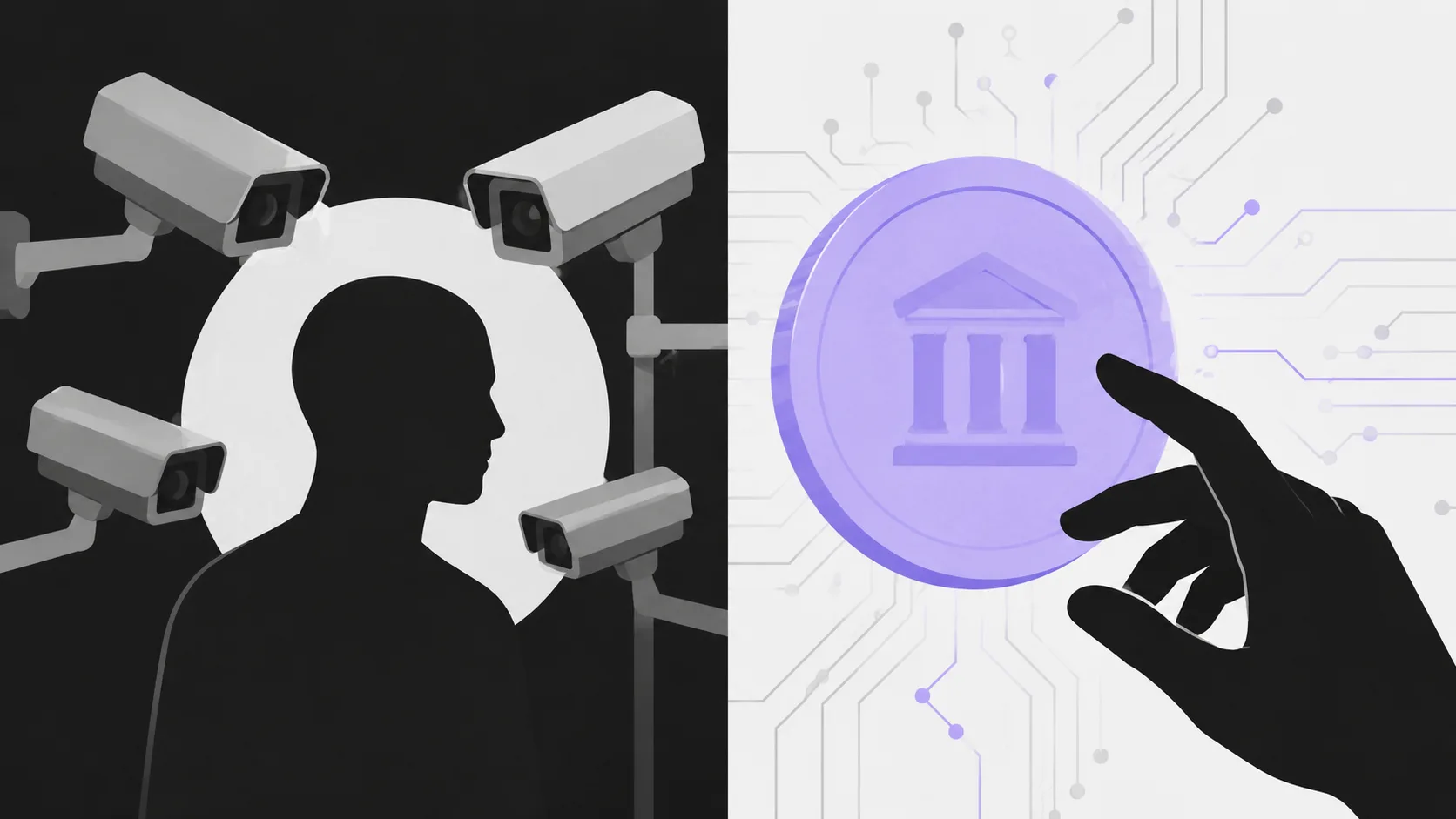
The opposition case rests on two arguments that are structurally distinct but politically fused. One is about privacy. The other is about the plumbing of credit. Both cut against the case for a Fed-issued digital dollar, and both surface repeatedly in the analytical record around this legislation.
Financial surveillance concerns
Proponents of the ban argue a CBDC would give the federal government visibility into every consumer transaction, effectively creating a financial surveillance apparatus operated by the central bank. Sen. Lee cited China's digital yuan trials, in which the People's Bank of China set expiration dates on money balances, as evidence that programmable currency enables state coercion of spending behavior. Heritage Action and civil liberties groups supporting the ban frame CBDC as fundamentally incompatible with separation of monetary and economic power, in contrast to Bitcoin's decentralized model. For the fundamentals of how programmable money differs from account-based balances, the distinction matters more than the marketing.
Threat to banking intermediation
The No CBDC Act's background materials note that a CBDC would restrict commercial banks to "functioning merely as wallets," eliminating their role as credit intermediaries and concentrating lending decisions in the Fed. This is the disintermediation argument, and it is the one that quietly moves community bank associations from neutral to opposed. If depositors can hold central bank liabilities directly, the fractional reserve base thins and lending capacity contracts. That mechanic connects to the same liquidity dynamics that shape stalled yields in the current cycle. The implication: the ban preserves the existing dual-tier banking structure whether or not that is the stated intent.
Global Contrast: Countries Moving Forward With CBDCs
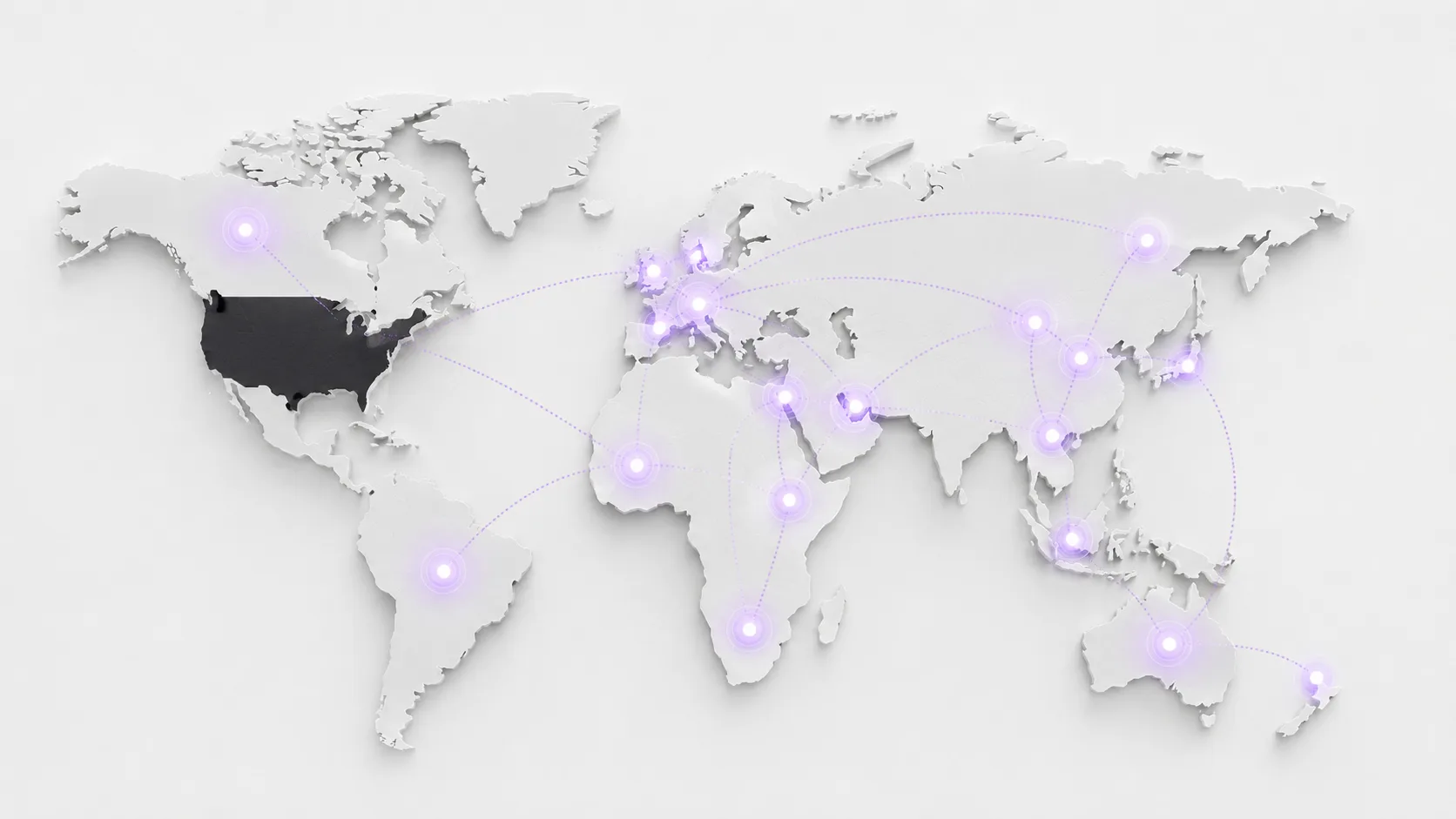
While the U.S. legislates against retail CBDC, the rest of the world is running pilots at record pace. The divergence is now measurable in institutional footprint, not just policy documents. The global CBDC adoption roadmap covers the country-by-country state of play.
Atlantic Council tally: pilots and live deployments
As of mid-2026, the Atlantic Council's CBDC tracker shows three countries with live retail CBDCs, 41 running active pilots, 33 in development, and roughly 40 still in research phases. The direction of travel outside the U.S. is toward deployment, not restriction. That data alone reframes the U.S. ban as an outlier rather than a template, which matters for macro positioning on dollar reserve dominance.
China's digital yuan expansion
China added 26 financial institutions to its digital yuan cross-border platform in June 2026, according to Reuters, expanding the e-CNY's international settlement footprint. The Chinese approach is explicitly institutional and cross-border first, retail second. That sequencing bypasses the surveillance debate that dominates U.S. discussion and focuses instead on trade settlement use. The parallel to how treasury-backed digital assets are redefining yield is worth noting: sovereign issuers are pursuing settlement rails, private issuers are pursuing yield-bearing collateral, and the two are converging on the same institutional client.
South Korea's commercial bank pilot
South Korea's Bank of Korea advanced its CBDC pilot to include nine commercial banks creating digital wallets, vouchers, and blockchain settlement infrastructure for real transactions, a step beyond isolated payment tests. The pilot design preserves commercial banks as intermediaries, addressing the disintermediation critique head-on. The U.S. ban and the Korean pilot are effectively two answers to the same design question, and the institutional analysis of which model produces more durable rails is still open.
Implications for Stablecoins and Institutional Digital Asset Strategy
The Senate bill's explicit carve-out for private stablecoins is the most important single line in the statute for allocators. It signals that U.S. policy is channeling dollar digitization through regulated private issuers rather than the central bank. That channels capital, compliance work, and product design toward a specific set of counterparties whose risk profiles look nothing like a sovereign guarantee. Anyone modeling on-chain dollar exposure needs to internalize the shift.
Stablecoins as the legislative alternative
The CLARITY Act, referenced by Treasury Secretary Bessent, is the parallel regulatory track establishing compliance requirements for stablecoin issuers, making it the operative framework for institutional operators. A CBDC ban does not eliminate on-chain dollar exposure; it concentrates that exposure in instruments like USDC and USDT, which carry their own counterparty and regulatory risk profiles. The de-pegging paradox in shortening liquidity cycles is directly relevant: private issuer risk is not sovereign risk, and stress events look different.
Institutional positioning after the ban
Institutions evaluating dollar-denominated digital asset exposure must now map their risk against private issuer frameworks rather than sovereign guarantees, a materially different credit and legal analysis. The framework shift touches reserve composition, attestation cadence, redemption mechanics, and jurisdictional exposure. The comparable dynamics playing out in real-world asset tokenization preview what institutional-grade issuance looks like when the sovereign is not the counterparty. The implication is not that stablecoins replace a CBDC one-for-one; it is that dollar digitization now runs on a private-issuer credit stack, and the diligence work reflects that.
Common Misconceptions About CBDC Bans
The policy is narrow, and most public commentary widens it. Three misconceptions do most of the damage, particularly in institutional briefings where the details determine positioning. The fundamentals category covers each in longer form.
Misconception: A CBDC ban blocks all digital dollars
Reality: A CBDC ban does not prohibit digital dollars. It prohibits the central bank from issuing them. Private stablecoins remain legal and are explicitly protected under the current U.S. legislation. Confusing the two categories collapses the analytical space needed to evaluate ETF and tokenized product flows that ride on stablecoin settlement rails.
Misconception: The ban is permanent
Reality: The current U.S. ban expires December 31, 2030 unless extended. Permanent prohibition requires additional legislation, and the legislative coalition for that is not yet assembled. A future Congress could allow the sunset, extend it, or replace it. The broader legislative context suggests the sunset is a political feature, not a bug.
Misconception: Other countries will follow the U.S. lead
Reality: No major economy outside the U.S. has enacted a CBDC ban. The Atlantic Council data shows the global trend among non-U.S. jurisdictions is toward pilot expansion, not restriction. A ban on retail CBDC issuance also does not necessarily extend to wholesale CBDC experiments between central banks, a distinction that matters for cross-border settlement discussions. The EU's MiCA 2.0 phase illustrates the alternative direction the rest of the developed world is taking.
Frequently Asked Questions
What is a CBDC ban?
A CBDC ban is a legal prohibition on a central bank or federal agency issuing, creating, or operating a digital currency that functions as sovereign legal tender. It targets the issuer, not the broader category of digital dollar instruments.
Is CBDC banned in the United States?
Yes, on a temporary basis. The Senate passed language in the 21st Century ROAD to Housing Act barring the Federal Reserve from issuing a CBDC or substantially similar digital asset. A prior executive order established the same restriction on federal agencies.
When does the U.S. CBDC ban expire?
The statutory ban runs through December 31, 2030. Absent an extension or replacement legislation, the Federal Reserve would regain the ability to explore CBDC issuance after that date, though explicit congressional approval would still likely be required in practice.
Does the CBDC ban affect stablecoins like USDC or USDT?
No. The legislation explicitly exempts private stablecoins, defined as open, permissionless, and confidential dollar-denominated assets with cash-like privacy. Regulatory requirements for these issuers run through the CLARITY Act and related frameworks, not the CBDC ban itself.
Which countries have banned CBDCs?
The United States is currently the only major economy to legislate a CBDC ban. According to Atlantic Council tracking, most jurisdictions are moving in the opposite direction, with 41 active pilots, 33 in development, and three live retail deployments as of mid-2026.
Why do some lawmakers want to permanently ban CBDCs?
Proponents cite financial surveillance risk and disintermediation of commercial banks. Senator Lee's No CBDC Act, backed by Heritage Action, argues that programmable sovereign money enables state coercion of spending behavior and concentrates lending authority inside the Federal Reserve.
What is the CBDC Anti-Surveillance State Act?
The CBDC Anti-Surveillance State Act (S.3801, 118th Congress) sought to amend the Federal Reserve Act to prohibit Fed banks from offering digital currency products directly to individuals. It is distinct from the housing bill amendment but shares the same policy objective and privacy framing.
How does the U.S. CBDC ban affect the global digital currency race?
The ban creates structural divergence. Dollar digitization now runs through private stablecoin issuers, while state-issued digital currencies advance in Asia and parts of Europe. The competitive question is whether private rails or sovereign rails accumulate more institutional settlement volume by 2030.
Conclusion
The U.S. has legislated a specific answer to a narrow question: the Federal Reserve will not issue a digital dollar through 2030, and private stablecoins will carry the dollar's digital footprint in the interim. That answer is not global. It is not permanent. And it is not neutral for institutional operators, who now underwrite dollar digital exposure against private issuer balance sheets rather than sovereign guarantees. Stablecoin.nyc analysis will continue tracking how the CLARITY Act framework, the 2030 sunset, and the widening gap with foreign CBDC pilots reshape the compliance and allocation stack. The open question is whether the private-issuer channel scales fast enough to make the sovereign channel structurally unnecessary.