A crypto card is a Visa or Mastercard payment card funded by digital assets, with crypto converted to fiat at the moment of purchase. The right one depends on four things: custody model, rewards, fees and whether the issuer serves US residents. Headline cashback is the least informative number on the page. The structure behind it, who holds the assets, whether the card sells or borrows, and what tier unlocks the rate, determines what a cardholder actually keeps.
What to look for in a crypto card
The thesis is simple: a crypto card is a liquidity routing product, and the routing decides the economics. Every card in this guide is judged on the same five criteria.
Custody model: custodial exchange balance or self-custody wallet
Some cards spend from an exchange account, where the issuer holds the assets. Others connect to a wallet the user controls and pull funds only at payment. The tradeoff is counterparty risk versus operational responsibility; if you go the self-custody route, start with secure self-custody wallet options.
Takeaway: decide who holds the keys before comparing rewards.
Card type: debit, prepaid or crypto-collateralized credit
Debit and prepaid cards sell crypto to fund each purchase. Crypto credit cards let users borrow against holdings and spend in fiat without selling. Collateral preserves exposure but introduces liquidation and loan terms. A Gnosis Pay review is available for readers who want a closer look at one card.
Takeaway: debit is a sale, collateralized credit is a loan.
Rewards and how they are paid
Rewards are often paid in a native token, and the rate frequently scales with how much of that token is staked or subscribed. A reward paid in a volatile token is a position, not cash.
Takeaway: price rewards in the asset they are paid in, net of any lockup.
Fees: subscription, ATM, foreign exchange and conversion
ATM withdrawals are possible with many cards, though fees may apply depending on the provider. Tier subscriptions, conversion spreads and FX charges sit alongside these. Transparency on fees varies between issuers. A Nexo card review is available for readers who want a closer look at one card.
Takeaway: read the full fee schedule, not the marketing banner.
US availability and KYC
Card providers typically require identity verification to meet Know-Your-Customer rules, and availability varies by issuer.
Takeaway: confirm eligibility on the issuer's own terms before applying.
Top picks judged against the criteria
The same criteria apply to every card below. Cards with unclear US status are listed with that caveat rather than ranked.
| Card | Custody model | Card type | Rewards | Fee points | US availability |
|---|---|---|---|---|---|
| Coinbase Card | Custodial (Coinbase account) | Debit | Crypto rewards on purchases | No annual fee | See vendor |
| MetaMask Card | Self-custody wallet | Debit (Mastercard) | See vendor | See vendor | See vendor |
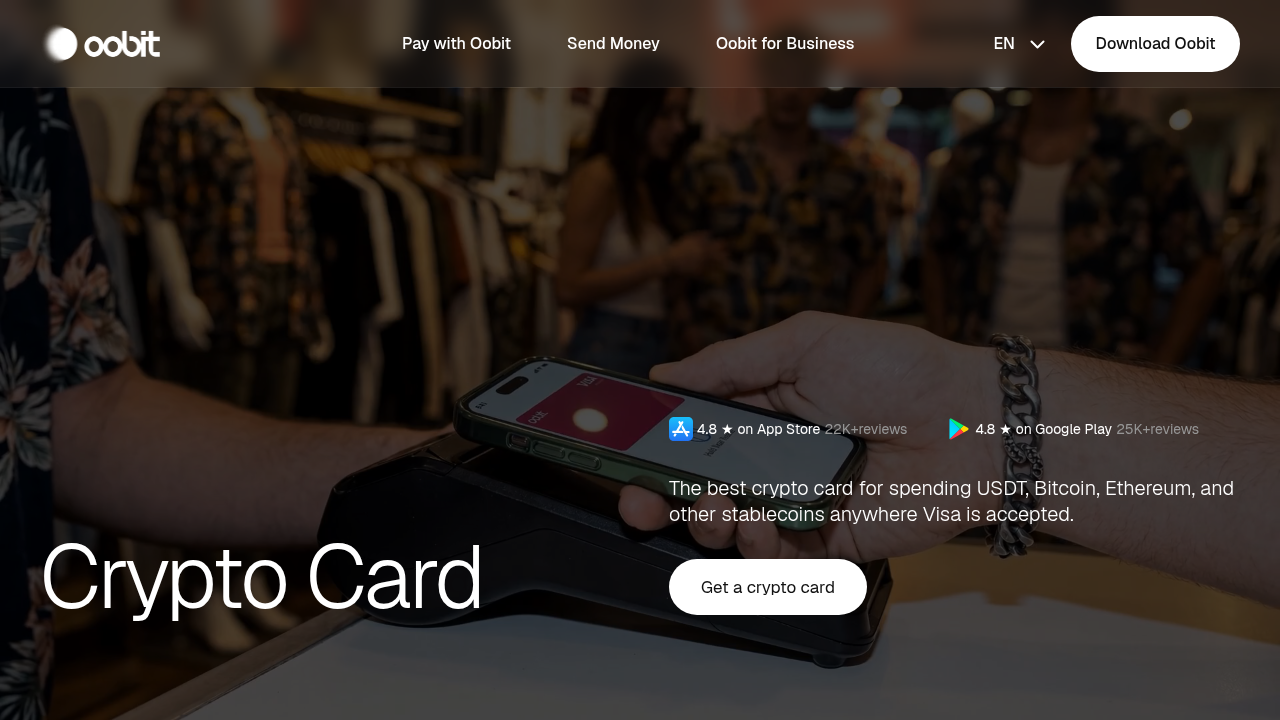
| Oobit Card | Self-custody wallet connection | Collateralized credit, Visa Platinum | See vendor | See vendor | See vendor |
| Crypto.com Visa Card | See vendor | Prepaid, tiered | CRO, scaled by tier and staking | Tier subscriptions or CRO lockups | Confirm with issuer |
| ether.fi Cash | See vendor | Visa credit | See vendor | See vendor | See vendor |
Coinbase Card
A debit card that spends directly from a Coinbase account, earns crypto rewards, carries no annual fee and works wherever Visa is accepted. Custody sits with the exchange. A separate Coinbase One Card credit option has been described as requiring a membership.
Takeaway: the cleanest choice for users already holding balances on Coinbase.
MetaMask Card
MetaMask describes it as a crypto debit card usable anywhere Mastercard is accepted, connecting directly to the wallet. That places it on the self-custody side of the custody criterion.
Takeaway: suited to users who want spending without moving assets to an exchange.
Oobit Card
Oobit documents a credit card that uses digital assets as collateral, runs on the Visa network and settles in local currency. It connects to self-custody wallets such as MetaMask, Trust Wallet, Phantom and Base, and as a Visa Platinum card it lists price protection, purchase protection, extended warranty and auto rental coverage. Oobit advertises 10% cashback; the conditions behind that figure belong on the vendor's terms.
Takeaway: the clearest example of collateral-over-sale spending with wallet custody.
Crypto.com Visa Card
A prepaid, tiered card where rewards depend on CRO staked. Crypto.com advertises up to 5% back in crypto. Those figures are euro-market terms; US eligibility and terms should be confirmed with the issuer.
Takeaway: the headline rate is a function of token lockup, not spending.
ether.fi Cash
ether.fi Cash is a Visa credit card tied to the ether.fi ecosystem.
Takeaway: evaluate it as a credit product, with collateral terms read first.
How crypto cards settle a purchase

The merchant never touches crypto. That is the design, and it is why acceptance scales.
Conversion at point of sale and tax realization
At checkout, the card either sells crypto in real time at the current exchange rate or draws credit against posted collateral. The sale path is a disposal of the asset, which in the US can create a taxable gain or loss on every purchase. The collateral path defers the sale but adds borrowing terms.
- Debit or prepaid: crypto is sold, fiat settles the transaction.
- Collateralized credit: a fiat line is drawn against held assets.
- Either way: the merchant receives local currency.
Because tax treatment depends on the holder's situation, check with a tax adviser before routing regular spending through a card.
Takeaway: the conversion event, not the swipe, is what matters for tax.
Visa and Mastercard rails
Crypto cards run on Visa or Mastercard networks, which is why they work at ordinary merchants. Oobit, for example, states its card works at over 175 million Visa merchants. The rail is commoditized; the funding logic behind it is the product.
Takeaway: network choice rarely differentiates; funding logic does.
Red flags and what to avoid

Most bad card decisions trace to a handful of omissions.
- Unstated US availability. A global landing page is not an eligibility statement.
- Headline cashback without tier or cap. "Up to" rates usually sit behind subscriptions, staking or monthly limits.
- Lockup requirements. Twelve-month token staking converts a payment product into a concentrated position.
- Unclear custody. If the terms do not say who holds the assets, assume the issuer does.
- Sponsored rankings. Lists that rank cards without disclosed criteria are advertising.
Takeaway: read the fee schedule and the issuing bank's cardholder terms before applying.
FAQ: Frequently Asked Questions
What is a crypto card?
A crypto card is a payment card funded by digital assets such as Bitcoin or stablecoins. It converts crypto to fiat at purchase and runs on Visa or Mastercard, so merchants are paid in local currency.
Do crypto cards work with Apple Pay and Google Pay?
Many do. Oobit, for example, documents adding its card to Apple Pay or Google Wallet. Support varies by issuer, so check each card's wallet compatibility on the vendor's own documentation before applying.
Is a crypto credit card different from a debit card?
Yes. A debit card sells crypto to fund each purchase. A crypto credit card borrows against holdings, letting the user spend fiat without selling, but it adds loan terms and potential collateral risk.
Do I owe tax when I spend crypto?
Possibly. Converting crypto to fiat at purchase can be a taxable disposal, creating a gain or loss on each transaction. Treatment depends on individual circumstances, so confirm with a qualified US tax adviser.
What fees apply to crypto cards?
Common fee points include tier subscriptions, ATM withdrawal charges, foreign exchange fees and conversion spreads. Some issuers replace subscriptions with token staking lockups. Always read the full fee schedule rather than the headline offer.
Conclusion
The category is splitting along one axis: sell to spend, or borrow to spend. Debit cards like Coinbase's treat each purchase as a disposal. Collateralized cards like Oobit's keep the asset on the balance sheet and draw fiat against it. If collateralized spending becomes the default, the crypto card stops being a payments product and becomes a consumer credit product secured by volatile assets. The open question is whether issuers will price that risk transparently before the next drawdown tests it.