For US readers, the strongest cashback crypto cards pay up to 4% in crypto, but the headline rate usually depends on a cap or a requirement such as a monthly spend limit or a Coinbase One membership. The number on the landing page is a ceiling, not a yield.
That distinction matters more than the ranking itself. Some links on the site are referral links, which never affect verdicts. Four cards make the list, followed by a set of debit products whose headline rates deserve scrutiny.
How We Ranked These Cards
The same five criteria apply to every card, partner or not:
- US availability. If a resident cannot apply today, the card is excluded from the ranking.
- Effective rate after caps. A 4% rate limited to a monthly spend ceiling is worth less than its label on any spend above that ceiling.
- Qualifying conditions. Memberships, asset balances and staking requirements are costs, even when they are not labeled as fees.
- Fees. Annual fees, foreign transaction fees and membership charges reduce net return.
- Reward currency. Native crypto rewards, optional conversion and fixed-asset rewards carry different exposure.
The framework is simple: a card is a yield product with a cost basis. Rank on net yield, not gross.
Quick Summary
- Gemini Credit Card: tiered crypto rewards, no annual fee. Best Overall
- Coinbase One Card: up to 4% in Bitcoin for members. Best for Heavy Crypto Users
- Venmo Visa Credit Card: cash back with a crypto conversion option. Best for Dining
- Coinbase Visa Prepaid Debit Card: crypto rewards without a credit line. Best Debit Option
At a Glance: Rewards, Caps and Conditions
| Rank | Card | Headline reward | Condition or cap | Card type |
|---|---|---|---|---|
| 1 | Gemini Credit Card | Up to 4% crypto back | 4% applies to up to $300 spend per month, then 1%; no annual fee | Credit (Mastercard World Elite) |
| 2 | Coinbase One Card | Up to 4% back in Bitcoin | Coinbase One membership, from $49.99 per year; rate tied to Coinbase assets | Credit |
| 3 | Venmo Visa Credit Card | See vendor | Cash back, with an option to convert to crypto | Credit |
| 4 | Coinbase Visa Prepaid Debit Card | See vendor | Prepaid; reward rates per vendor | Prepaid debit |
Read the fourth column before the third.
Gemini Credit Card
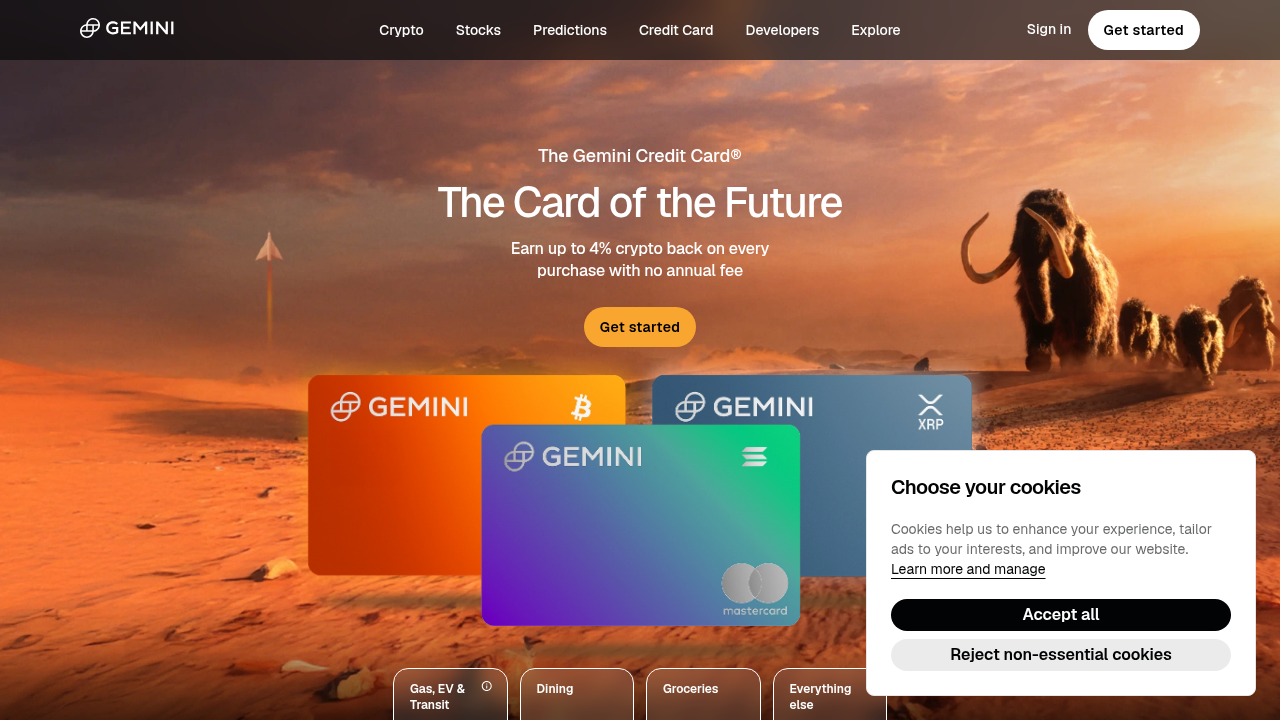
The Gemini card is the cleanest structure in the category: no membership, no asset balance, and a category ladder that is easy to model.
Gemini lists the following tiers on its card page:
- Gas, EV and transit: 4%
- Dining: 3%
- Groceries: 2%
- Everything else: 1%
The 4% tier applies to up to $300 in qualifying spend per month, then drops to 1% for the rest of that month. The spend cycle resets on the first of each month. The card is a Mastercard World Elite issued by WebBank, with no annual fee and no foreign transaction fees. Rewards can be taken in bitcoin or more than 50 other cryptocurrencies available on Gemini, and the currency can be switched.
The arithmetic of the cap is the point. Beyond that, a commuter's fuel and transit spend earns the base rate. For most cardholders the effective rate will sit closer to the dining and grocery tiers than the headline.
Caveat: the $300 monthly cap. Heavy transit or fuel spenders will exhaust the 4% tier quickly.
Takeaway: the best default for readers who want crypto rewards with zero fixed cost.
Coinbase One Card
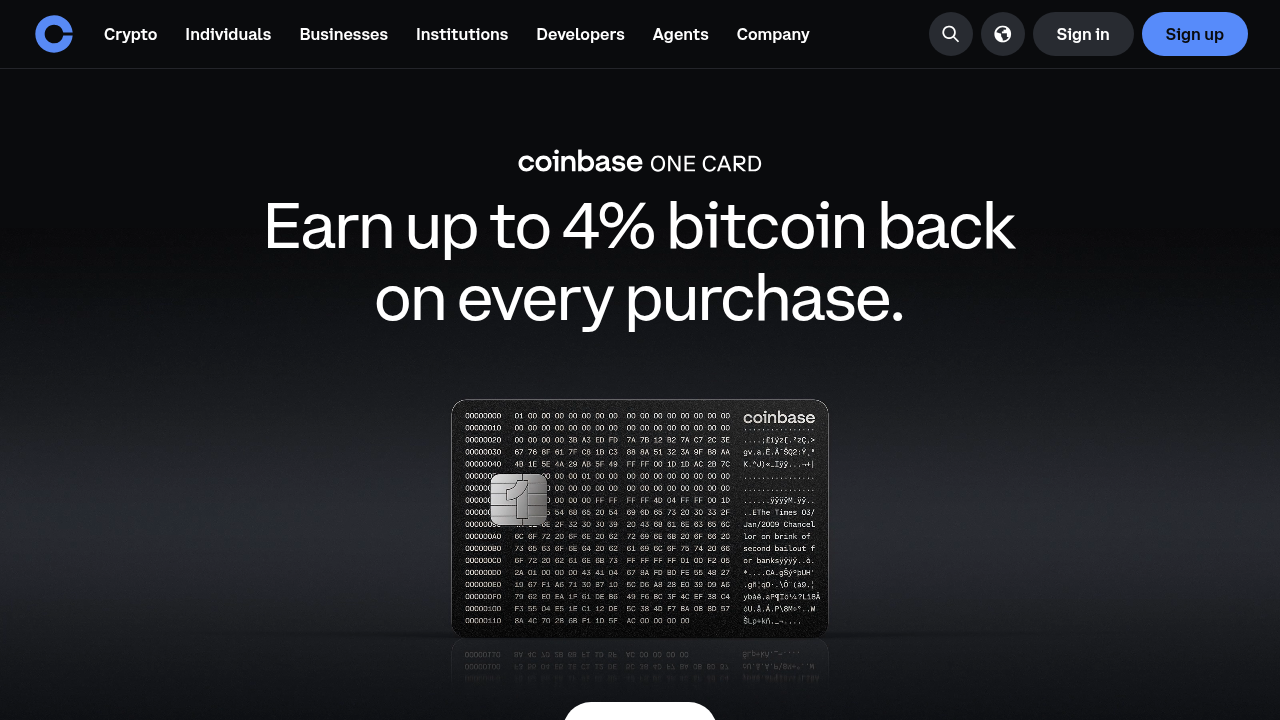
The Coinbase One Card is a credit card available only to Coinbase One members. Coinbase states the card comes at no added charge to members, with annual membership starting at $49.99 per year.
Rewards can be earned up to 4% in Bitcoin, with the rate tied to the cardholder's Coinbase asset tier, according to a third-party comparison of Bitcoin cashback cards. This is a hot-start design: the card rewards users who already hold balances on the exchange, and it offers little to a new user arriving cold.
Two costs sit behind the headline. The first is explicit, the membership. The second is implicit: assets parked on Coinbase to reach a higher tier carry custody and opportunity cost. A treasurer would call that a compensating balance requirement, and it should be priced as one.
Caveat: membership cost and the asset requirement. Below the top tier, the advertised rate is not available.
Takeaway: compelling for users who already hold meaningful balances on Coinbase and pay for membership anyway; hard to justify otherwise.
Venmo Visa Credit Card

The Venmo Visa Credit Card, issued by Synchrony Bank, is a cash back card first and a crypto card second. CNBC Select positions it for dining and entertainment spend, and its crypto angle is an option to convert cash back into crypto.
That structure is passive rather than native. Rewards accrue in dollars and the holder chooses whether to move them into crypto. For a user who wants optionality without taking token exposure by default, that is a feature. For a user who wants every swipe to accumulate an asset, it is an extra step. Check current category rates with the issuer before applying.
Caveat: crypto is an optional conversion, not the native reward.
Takeaway: a fit for existing Venmo users whose spend skews toward dining and who want crypto exposure on their own schedule.
Coinbase Visa Prepaid Debit Card
Not every reader wants a credit line. CNBC Select lists the Coinbase Visa prepaid debit card as its pick for debit card users, and it is the obvious route for readers avoiding new credit. Reward rates are set by Coinbase and can change, so confirm the current schedule on the vendor's site.
Prepaid structure has trade-offs. It does not build credit history, and prepaid cards generally carry fewer consumer protections than credit cards, particularly on disputed transactions.
Caveat: prepaid, so no credit-building and fewer protections than a credit card.
Takeaway: the right choice when avoiding a credit inquiry or revolving debt matters more than maximizing rate.
Debit Cards With Headline Rates to Treat Carefully

The highest advertised rates in this market sit on debit cards, and they rarely come free. TravelinPoints, reviewing crypto debit cards, warns that rates such as 8% typically require staking, meaning holding a large amount of the issuer's own token for a set period. The example it cites is Binance's tiered card, where a 2% tier required holding 10 BNB, worth roughly $6,230 at the time of writing. See the Nexo card review for another crypto card.
The mechanism is straightforward. The issuer subsidizes rewards with demand for its token. The cardholder takes price risk on a volatile asset to earn a percentage on spend. If the token falls, the loss can exceed years of rewards. See the Gnosis Pay review for another card.
Uphold and MetaMask both offer debit cards with tiered cashback, and TravelinPoints has reviewed each. They are named here without ranking because availability and terms vary by state and change often. Verify US eligibility before applying.
Takeaway: treat any debit rate above the 1% to 2% range as a token position with a card attached.
How to Choose a Cashback Crypto Card
Start with spend pattern: if your monthly fuel and transit spend sits well above $300, Gemini's 4% tier will cover only part of it. Next, price the holding requirement, whether a Coinbase One membership, an exchange balance or a staked token, as a real cost against expected rewards. Then decide between credit and debit based on whether credit-building and purchase protections matter to you. Finally, choose the reward currency deliberately, because native crypto rewards add market exposure that a cash back conversion option lets you defer.
FAQ: Frequently Asked Questions
Are crypto cashback cards worth it?
They can be, when the conditions match your behavior. A no-fee card with category tiers suits most spenders. Cards requiring memberships or token holdings only pay off when rewards clearly exceed those carrying costs.
Is crypto card cashback taxable?
Treatment depends on how rewards are classified and what you do with the crypto afterward. Selling or converting rewards can create a taxable event. Consult a tax professional about your specific situation before assuming rewards are tax-free.
What is the best cashback crypto card with no annual fee?
Among the cards here, the Gemini Credit Card charges no annual fee and no foreign transaction fees. It pays up to 4% crypto back, though the 4% tier applies to only $300 of monthly spend.
Do crypto cards require staking?
Not always. The credit cards in this ranking do not require staking. Some debit cards advertising high rates do require holding or staking the issuer's token, which adds price risk to the reward.
Credit or debit for crypto rewards?
Credit cards generally offer stronger purchase protections and build credit history. Debit and prepaid cards avoid a credit line. Choose credit if you pay balances in full; choose debit if avoiding credit matters more.
Do reward rates stay the same?
No. Issuers can change rates, tiers, caps and eligibility rules. Market prices also change the dollar value of rewards already earned. Recheck terms periodically, especially for cards with tiered or token-linked structures.
Conclusion
The crypto card market has converged on a common headline, up to 4%, and diverged on everything underneath it. Gemini caps the rate by spend, Coinbase gates it behind membership and balances, and high-rate debit cards often gate it behind token risk. The same criteria will apply as terms shift. The open question is whether issuers can sustain these rates once rewards stop doubling as customer acquisition spend.