For US users, the strongest crypto wallets with debit card features are Coinbase Card, a Visa debit card funded from a Coinbase balance, and self-custody wallet cards where the issuer supports US residents. The choice turns on three variables: US availability, custody model and rewards. Most roundups mix global cards without flagging either eligibility or custody. This shortlist applies one set of criteria to cards and wallets. For the custody side, see our self-custody wallet options.
How We Ranked These Crypto Debit Cards

A crypto card is a conversion engine attached to a balance sheet. The questions that matter are whose balance sheet holds the assets and whether the card works where you live.
The mechanics are consistent across issuers. A crypto debit card converts crypto into fiat at the moment of purchase, and the merchant receives dollars over a card network. What varies is everything around that conversion.
- US availability. A card that cannot be issued to a US resident is irrelevant to a US reader, regardless of rewards.
- Custody model. Custodial cards spend from an exchange or lender account. Self-custody cards spend from a wallet the user controls.
- Rewards. Headline rate, the asset rewards are paid in, and whether that asset is a volatile platform token.
- Mobile wallet support. Apple Pay and Google Pay determine whether the card works at NFC terminals without the plastic.
- Fees and conversion at point of sale. Spread, FX and funding costs compound on every transaction.
One structural note: CoinCodeCap flags that crypto card conversions may be taxable events. In the US, spending crypto is generally treated as a disposal, so every coffee can create a gain or loss to track.
Takeaway: eligibility and custody are gating criteria; rewards are a tiebreaker.
Quick Summary of the Picks
- Coinbase Card: Visa debit funded from a Coinbase balance. Best Overall for US users
- Nexo Card. Best for Borrowing Against Crypto
- Bleap Mastercard: spends directly from a self-custody wallet. Best Non-Custodial
- Kast Visa: stablecoin-funded card with tiered rewards. Best for Stablecoin Spending
- Wirex Card: platform-token rewards, broad country coverage. Best for Token Rewards
Takeaway: only one pick is confirmed for US residents in the data used here; the rest require an eligibility check.
At a Glance: Cards Compared
The table below adds the column most roundups omit: US status. Coverage and rewards figures are as listed by CoinCodeCap unless a vendor page states otherwise. Crypto.com Visa and Bybit Card are included for reference; they sit outside the ranked five.
| Rank | Card | Custody model | Rewards headline | Stated coverage | Pricing | US status |
|---|---|---|---|---|---|---|
| 1 | Coinbase Card | Custodial (exchange) | - | US | See vendor | Confirmed for US |
| 2 | Nexo Card | Custodial (lender) | - | EU/UK | No monthly, annual or inactivity card fees | Check with issuer |
| 3 | Bleap Mastercard | Self-custody | 2% USDC | Global | See vendor | Check with issuer |
| 4 | Kast Visa | - | Tiered | Global, 150+ countries | See vendor | Check with issuer |
| 5 | Wirex Card | Custodial (platform) | Up to 8% WXT | 130+ countries | See vendor | Check with issuer |
CoinCodeCap lists Apple Pay and Google Pay support for every card in this table.
Takeaway: the highest headline rewards sit with the cards whose US status is least certain.
1. Coinbase Card
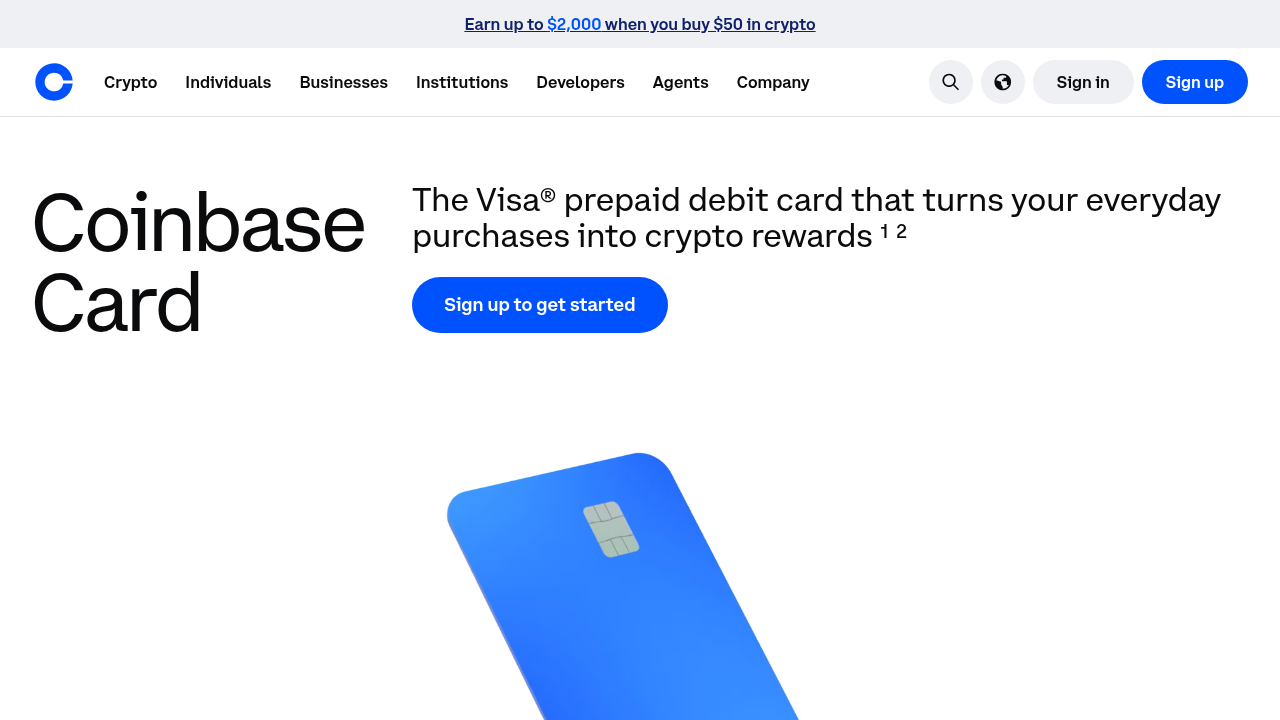
Coinbase Card is the default US choice because it removes the eligibility question entirely.
Coinbase describes it as a Visa prepaid debit card for spending cash or crypto wherever Visa debit is accepted, with unlimited rotating crypto rewards on purchases. CoinCodeCap lists rewards of up to 4% in crypto, a US market, an instant virtual card, and one-tap funding from a Coinbase balance.
Key features
- Visa network acceptance
- Rotating crypto rewards
- Apple Pay and Google Pay support, per CoinCodeCap
Pricing: see Coinbase for current terms.
Who it's for: US users who already hold a Coinbase balance and want low setup friction.
Caveat: this is a custodial product. Funds sit on the exchange until spent, so the user carries Coinbase counterparty risk in exchange for convenience. Rotating rewards also make yield forecasting difficult.
Takeaway: the card is a hot-start product; it inherits Coinbase's existing user base and balances rather than building a new one.
2. Nexo Card
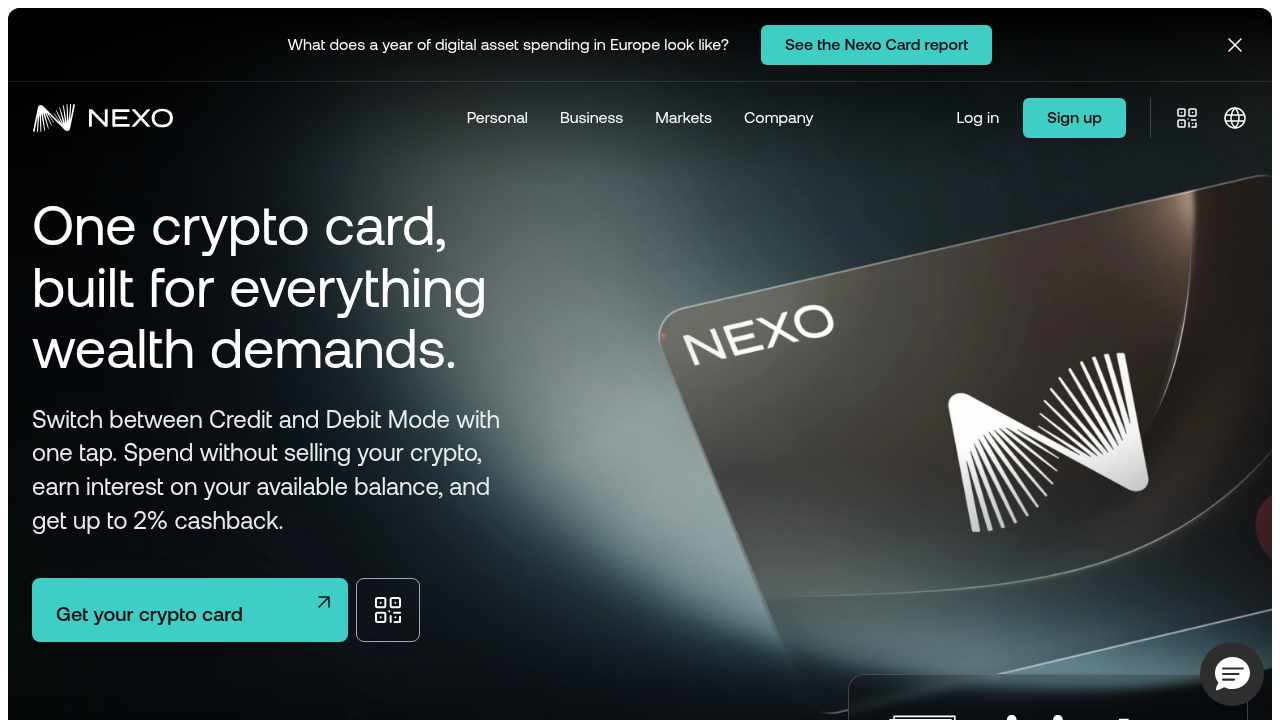
Nexo Card is less a spending tool than a liquidity tool with a card attached.
Nexo documents two modes. Debit Mode spends stablecoins, crypto and FiatX assets such as USDx, with a drag-and-drop priority order for which assets to use first. Credit Mode lets users spend against crypto collateral without selling, with up to 2% crypto cashback on purchases. Nexo lists Apple Pay and Google Pay support and no monthly, annual or inactivity card fees.
Pricing: no card fees per Nexo; credit lines carry interest set by Nexo.
Who it's for: holders who want to defer disposals by borrowing rather than selling. That is a meaningful distinction for anyone managing tax lots.
Caveat: CoinCodeCap lists coverage as EU/UK, so US eligibility must be confirmed with Nexo directly. Cashback applies in Credit Mode, which introduces collateral and liquidation dynamics. Our Nexo Card review covers the product in more depth.
Takeaway: Credit Mode converts the card from a payments product into a collateralised lending product.
3. Bleap Mastercard
Bleap is the cleanest expression of the self-custody card thesis.
CoinCodeCap identifies it as its best non-custodial pick: spending happens directly from a self-custody wallet, with 2% rewards paid in USDC and global coverage listed.
Key features
- Spend from a wallet the user controls
- Rewards in USDC, a dollar stablecoin, rather than a platform token
- Apple Pay and Google Pay, per CoinCodeCap
Pricing: see Bleap for current terms.
Who it's for: users who will not park assets on an exchange but still want card-network reach.
Caveat: "global" coverage is not a US confirmation. Regional availability needs to be verified with the issuer before onboarding.
Takeaway: stablecoin-denominated rewards remove the reflexive token risk that weighs on most card programs.
4. Kast Visa
Kast is built around stablecoins as the spending asset.
CoinCodeCap lists Kast as stablecoin-funded, with tiered rewards and 150+ country coverage, plus Apple Pay and Google Pay support. For users whose working balance is already USDC or similar, funding in stablecoins avoids a volatile-asset disposal on each purchase, though conversion mechanics still apply.
Pricing: see Kast for current terms.
Who it's for: stablecoin-native users and operators who treat the card as a dollar rail. Readers holding USDC can also compare USDC wallet choices.
Caveat: wide stated coverage does not settle US availability. Verify with Kast, and check how reward tiers are qualified.
Takeaway: a stablecoin-funded card is functionally a dollar debit card with on-chain settlement upstream.
5. Wirex Card
CoinCodeCap lists rewards of up to 8% in WXT, coverage across 130+ countries, and Apple Pay and Google Pay support.
Pricing: see Wirex for current terms.
Who it's for: frequent spenders comfortable holding the platform token.
Caveat: rewards are paid in WXT, Wirex's own token. A headline 8% denominated in a volatile token is not equivalent to 8% in dollars. Passive reward supply from card programs tends to become sell pressure, which compresses realised value.
Takeaway: discount token-denominated rewards before comparing them to stablecoin or cash rewards.
How to Choose

Start with eligibility: if the issuer will not serve a US resident, nothing else matters, which is why Coinbase Card leads for US readers. Next decide on custody, since a cold wallet keeps keys with the user while an exchange-funded card trades counterparty risk for convenience. Only then compare rewards, adjusting for the denomination asset. Readers leaning toward self-custody should review the best secure crypto wallet picks before choosing a card front end.
FAQ: Frequently Asked Questions

How does a crypto debit card work?
It converts crypto to fiat at the moment of purchase. The merchant receives dollars over Visa or Mastercard, while the card debits your crypto or stablecoin balance held by an exchange, lender or self-custody wallet.
Can Revolut offer a crypto card?
Revolut operates a card and app with crypto features in some markets, but availability and terms differ by country. US readers should confirm directly with Revolut what crypto spending is supported for their account.
Are crypto card purchases taxable?
Generally yes in the US. Spending crypto is usually treated as a disposal, so each purchase can create a capital gain or loss. CoinCodeCap also warns that card conversions may be taxable events.
Do crypto debit cards work with Apple Pay?
Many do. CoinCodeCap lists Apple Pay and Google Pay support for Coinbase Card, Nexo Card, Bleap, Kast and Wirex, among others. Confirm support in your region before relying on tap-to-pay.
What is the difference between custodial and self-custody cards?
A custodial card spends from an account a company controls, so you carry its counterparty risk. A self-custody card spends from a wallet whose keys you hold, keeping control with you.
Which card is available in the United States?
Coinbase Card is the confirmed US option here. CoinCodeCap also names Gemini's credit card for US users. For other cards on this list, check eligibility directly with the issuer before applying.
Conclusion

The US crypto card market currently rewards convenience. The confirmed option is custodial; the self-custody options carry the stronger design but weaker eligibility clarity. Every product here is judged on the same criteria, and on those criteria the gap is plain. The open question is whether wallet cards like Bleap and Kast can secure US issuance before exchange-funded cards lock in the default. If they do, custody stops being a trade-off against reach.