Some links on this page are referral links. They never affect our verdicts.
TL;DR
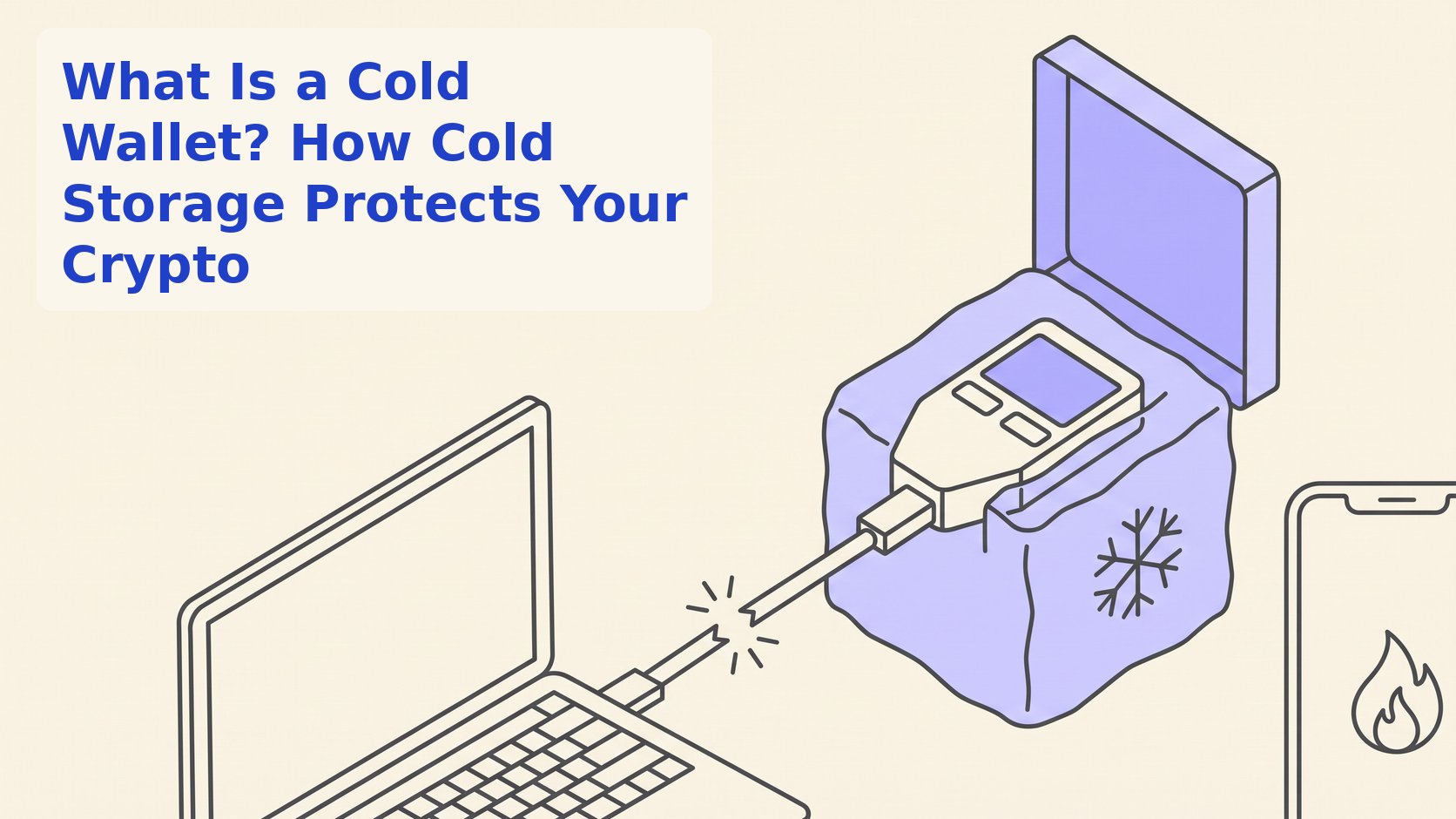
A cold wallet is a way of storing crypto where the private keys that control your funds are kept offline, usually on a dedicated hardware device. Because the keys never touch an internet-connected computer, hackers and malware cannot reach them remotely. Cold wallets are the standard for holding crypto and stablecoins long term; hot wallets, which stay online, are better for frequent spending.
Cold wallet: definition and positioning
Your crypto does not live inside a wallet. It lives on a blockchain. A wallet holds the private keys: the secret numbers that prove you own an address and let you sign transactions to move funds. Whoever has the keys controls the crypto.
A cold wallet keeps those keys offline. A hot wallet keeps them on a device connected to the internet, such as a phone app or browser extension. "Cold" and "hot" describe the keys' exposure, not the coins.
Cold storage is also different from leaving funds on an exchange. On an exchange, the company holds the keys for you; that is custodial storage. A cold wallet is self-custody: you hold the keys, and nobody can freeze, lend out, or lose your funds on your behalf. The trade-off is responsibility. If you lose your keys and backup, nobody can recover them.
How a cold wallet works
- Key generation. When you set up a hardware wallet, it generates your private keys inside a secure chip and shows you a recovery phrase, usually 12 or 24 words. That phrase is the master backup for every account on the device.
- Receiving. The wallet gives you public addresses. Anyone can send crypto to those addresses without the device being connected.
- Building a transaction. To send, you prepare the transaction in a companion app on your computer or phone. The app is online, but it never sees your keys.
- Signing offline. The transaction goes to the device by USB, Bluetooth, NFC, or QR code. You review the details on the device screen and approve with a physical button or touch. The device signs inside its secure chip.
- Broadcasting. The signed transaction goes back to the app, which broadcasts it to the blockchain. The keys never leave the device.
The physical approval is what makes cold storage strong. Even if your computer is infected, an attacker cannot move funds without your hands on the device.
Types of cold wallets
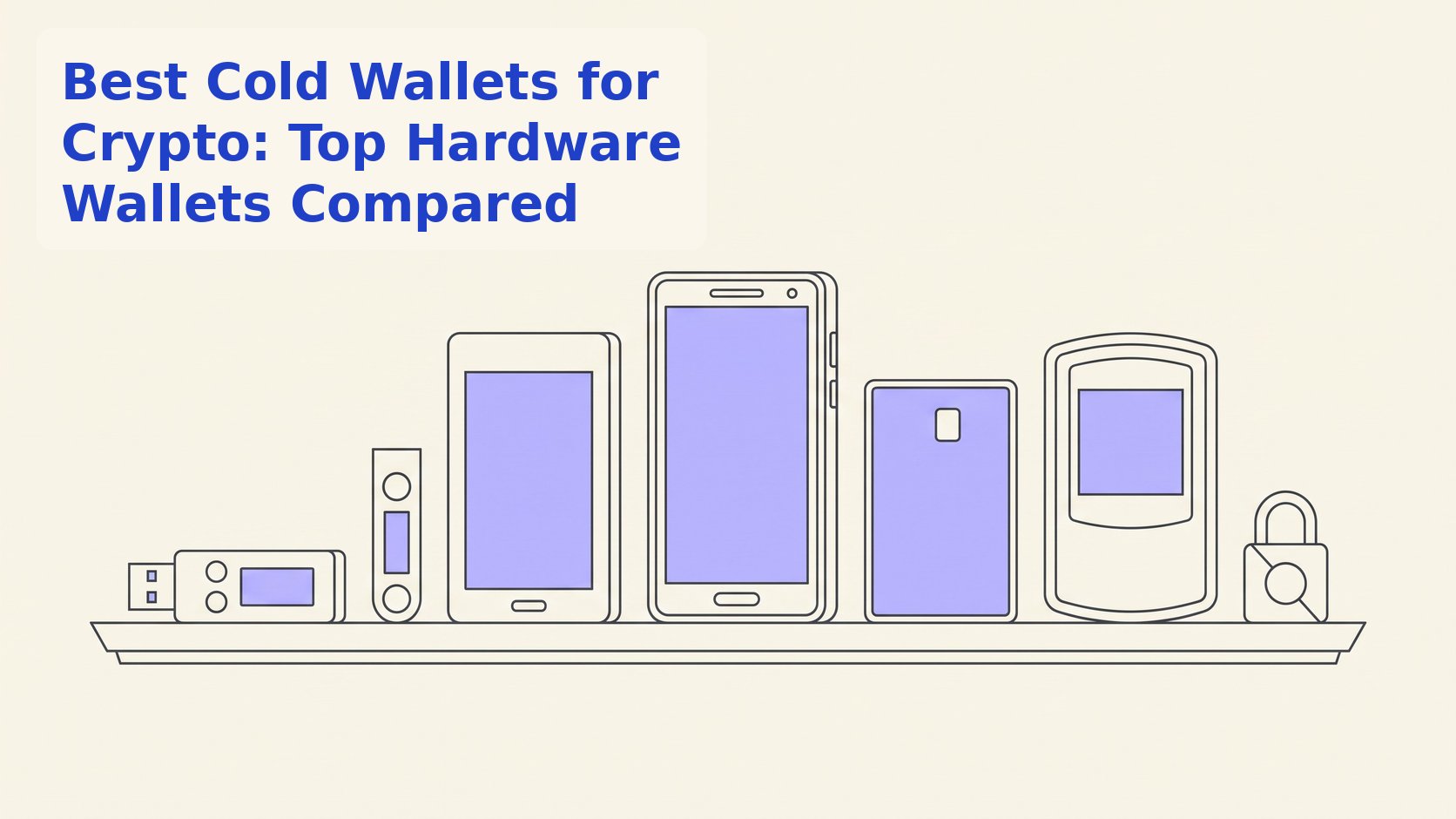
Hardware wallets. Dedicated devices such as Ledger, Trezor, and Keystone with a secure chip and screen. The most common and practical form of cold storage. See our guide to the best cold wallets.
Shop Ledger hardware wallets →
Air-gapped wallets. Hardware wallets that never connect by cable or wireless, signing by QR code or memory card instead, such as Keystone. They remove connection-based attack paths.
Smart card wallets. NFC cards such as Tangem that you tap on a phone to sign. Simple, cheap, and durable, but without their own screen.
Paper and metal backups. Writing or stamping the recovery phrase on paper or steel. These are backups, not wallets: they store the phrase but cannot sign transactions safely on their own. Old-style paper wallets that print a private key are no longer recommended.
Cold wallet vs hot wallet
| Criteria | Cold wallet | Hot wallet |
|---|---|---|
| Where keys live | Offline, on a device | Online, on a phone or browser |
| Main risk | Losing the device and recovery phrase | Malware, phishing, hacks |
| Speed and convenience | Slower; device needed to sign | Instant from any connected device |
| Cost | About $55 to $250 for a device | Usually free |
| Best for | Long-term holdings and savings | Daily spending and active DeFi |
Most experienced users run both: a cold wallet for savings and a hot wallet with a small balance for everyday use.
Cold wallets in practice
Long-term holders keep Bitcoin and other assets in cold storage and check balances without connecting the device at all.
Stablecoin savers use cold wallets to hold USDC or USDT outside banks and exchanges, removing counterparty risk while keeping dollar value. Our guide to the best USDC wallets covers which devices support which networks.
Businesses and treasuries often combine several hardware wallets in a multisig setup, so no single device or person can move funds. See our guide to the best multisig wallets for businesses.
Trade-offs and limitations
You are the bank. Lose both the device and the recovery phrase and your funds are gone permanently. Store the phrase offline, ideally in more than one secure place.
Phishing still works. A cold wallet cannot stop you from typing your recovery phrase into a fake website or approving a malicious transaction. No legitimate company will ever ask for your phrase.
Supply chain risk. Tampered devices sold secondhand are a known scam. Buy directly from the manufacturer.
Friction. Every transaction needs the device, which is the point for savings but a hassle for daily payments.
FAQs
What is a cold wallet in crypto?
A cold wallet is a crypto wallet that keeps private keys offline, usually on a hardware device. Transactions are signed on the device itself, so keys are never exposed to the internet, protecting funds from hackers and malware.
Is a cold wallet safer than an exchange?
For long-term holdings, generally yes. A cold wallet removes the risk of an exchange being hacked, freezing withdrawals, or failing. The trade-off is that you are fully responsible for keeping your recovery phrase safe.
Can a cold wallet be hacked?
Remote hacks of the keys are extremely unlikely because the keys never leave the device. Most losses come from users revealing their recovery phrase, buying tampered devices, or approving malicious transactions.
What happens if I lose my cold wallet?
Your crypto is safe if you still have your recovery phrase. Restore it on a new device from the same or a compatible manufacturer. Without the phrase, a lost device means lost funds.
Do I need a cold wallet for stablecoins?
If you hold a meaningful amount of USDC or USDT long term, a cold wallet is the safest self-custody option. For small balances you spend often, a hot wallet on a low-fee network is more practical.
Last updated: October 13, 2026.