Best Multisig Wallets for Businesses: Top Options Compared
Best Multisig Wallets for Businesses: Top Options Compared
TL;DR
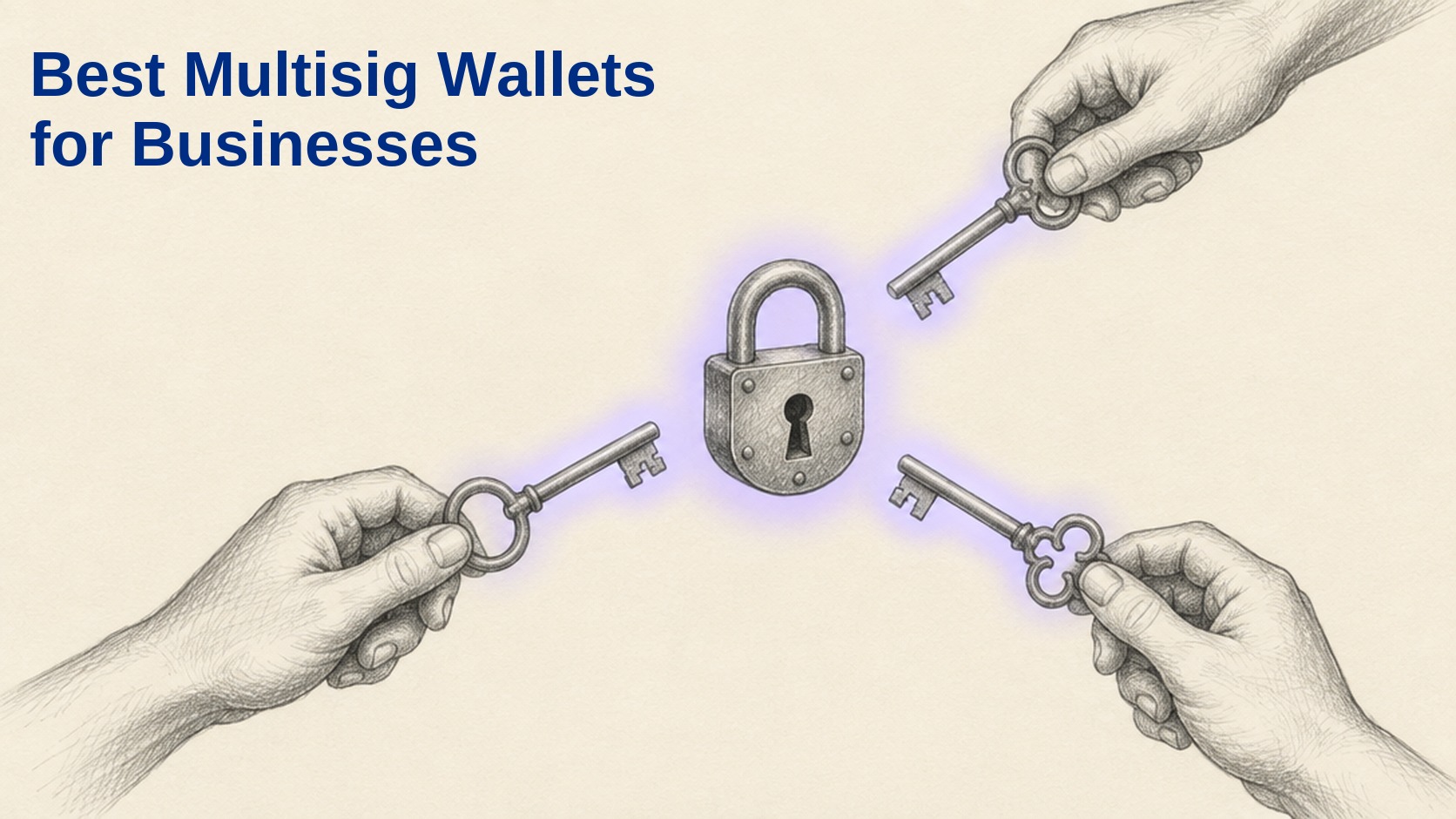
Best overall for EVM-based business treasuries wanting on-chain, independently auditable governance is Safe, the default smart contract multisig for corporate wallets, DAOs, and protocol operations. Best for businesses that need policy-heavy signing bundled with institutional operational tooling is BitGo, which frames multisig as segregation-of-duties infrastructure compliance teams already recognize. Best for businesses that want multisig governance and MPC operational speed under one platform rather than two separate systems is Cobo. Best for Bitcoin-native businesses prioritizing long-term holding and inheritance-grade key resilience is Casa or Unchained. A personal multisig setup and a business one solve different problems: multisig is rarely a security upgrade for a business, it's a governance control, the wallet layer where treasury policy, fraud prevention, and audit evidence actually converge.
What actually matters when choosing a multisig wallet for a business
Custody model. Self-custodial multisig keeps every key with your own team, preserving direct control but placing all operational risk inside the company. Custodial or co-custodial multisig involves a regulated third party, which changes the regulatory treatment, recovery options, and audit responsibilities. Neither is automatically correct, the right one depends on your regulatory posture.
Policy engine, not just the M-of-N threshold. The signer threshold is the security setting. The policy engine is the rules layer above it, spending limits, whitelisted destination addresses, time delays, tiered approval workflows, and exception handling. A business buying multisig needs to evaluate the policy engine as carefully as the threshold itself.
Chain coverage matched to what you actually hold. The 2026 landscape spans EVM mainnet, Arbitrum, Avalanche, Base, Solana, Bitcoin, and Tron. Confirm your wallet covers the specific assets your business holds, not a generic "multi-chain" claim.
API availability. Any business embedding wallet flows into its own payment, payroll, or treasury systems needs programmatic access, not just a web dashboard.
Compliance support versus qualified custody. Multisig can support internal fraud controls and audit readiness, but it does not automatically satisfy qualified custody requirements a regulated entity may be bound to. Confirm this distinction directly rather than assume multisig alone clears a compliance bar.
Quick comparison table
| Wallet | Custody model | Policy engine | Chain coverage | Best for |
|---|---|---|---|---|
| Safe | Self-custodial, on-chain smart contract | Spending limits, roles, approval thresholds, all on-chain and auditable | Ethereum, Polygon, Optimism, Arbitrum, Base, and more EVM chains | EVM-based treasuries wanting transparent, independently auditable governance |
| BitGo | Self-custodial and custodial options available | Policy-heavy, built for segregation of duties and audit trails | Broad multi-chain, institutional-grade | Businesses wanting enterprise operational tooling bundled with multisig |
| Cobo | Self-custodial and custodial (choice), MPC-plus-multisig hybrid | Programmable transaction policies, role-based access, combines governance and operational layers on one platform | Multi-chain | Businesses wanting multisig governance and MPC-speed operations under one roof |
| Casa | Self-custodial, hardware-backed | Recovery and inheritance-focused rather than workflow-heavy | Primarily Bitcoin | Bitcoin-native businesses prioritizing long-term holding and key resilience |
| Unchained | Self-custodial, coordination software (Caravan) separate from key storage | Transparent, self-managed coordination rather than a packaged policy engine | Bitcoin only | Businesses wanting a fully transparent, self-managed Bitcoin multisig setup |
Top options compared
Safe is the default choice for any EVM-based business treasury, positioning multisig specifically as a way to distribute access across multiple owners and set approval thresholds, roles, and spending controls, with every check enforced on-chain rather than by a server that could be compromised or simply go down. This makes it a natural fit for corporate wallets, DAO treasuries, and protocol operations that need governance evidence a auditor can independently verify. Where it breaks: on-chain enforcement means gas costs on every policy check, and its coverage is EVM-focused, a business with meaningful Bitcoin holdings needs a separate solution for that asset.
BitGo frames multisig as infrastructure that mirrors the segregation of duties compliance teams already expect, built for organizations that need policy controls, auditing, and scale rather than a simple shared wallet. It pioneered institutional Bitcoin multisig in 2013 and has since expanded into broader institutional custody, supporting both self-custodial and custodial configurations depending on what a business needs. Where it breaks: the specific custody model matters and should be selected deliberately, some BitGo offerings involve custodial components, others support full self-custody, and treating "BitGo" as one undifferentiated product misses that distinction.
Cobo takes a different architectural approach: rather than forcing a business to choose between multisig's on-chain auditability and MPC's operational speed, it runs both under one platform, multisig as the governance layer for board-level approvals and policy changes, MPC as the operational layer for high-frequency settlements and API-driven workflows. Where it breaks: this flexibility comes with more platform surface area to configure correctly than a single-purpose tool like Safe.
Casa and Unchained both serve businesses whose holdings are Bitcoin-native and whose priority is long-term resilience over workflow throughput. Casa emphasizes that one lost or stolen key does not mean lost funds if the threshold is designed properly, with recovery and inheritance planning built into the product. Unchained's open-source Caravan software separates transaction coordination from key storage entirely, appealing to a business that wants a fully transparent, self-managed setup rather than a packaged custody experience. Where they break: neither is built for the tiered, workflow-heavy approval processes a larger multi-chain treasury operation needs, they're the right tool for Bitcoin-specific, resilience-first holding, not general business treasury operations across many chains.
Key differences that actually matter
The real decision for a business is custody model first, workflow depth second. A business legally required to use a qualified custodian needs to confirm that directly rather than assume any of these solves that requirement, multisig supports audit readiness but doesn't automatically satisfy qualified custody rules. Past that filter, the split is between on-chain transparency (Safe, at real gas cost) and hybrid governance-plus-operations platforms (Cobo, BitGo) that trade some of that transparency for operational speed and bundled tooling.
When a treasury needs more than one solution
A business holding both EVM assets and Bitcoin at meaningful scale should not expect one wallet to solve both well. Safe's EVM-native governance and a Bitcoin-specific tool like Casa or Unchained solve genuinely different problems, and running both, rather than forcing one to cover assets it wasn't built for, is standard practice for a treasury with a mixed holding.
FAQs
What is the best multisig wallet for a business?
Safe is the strongest default for EVM-based business treasuries wanting on-chain, independently auditable governance. BitGo and Cobo both fit businesses wanting policy-heavy signing bundled with broader institutional operational tooling. Casa and Unchained are the right pick specifically for Bitcoin-native businesses.
Does multisig satisfy qualified custody requirements for a regulated business?
Not automatically. Multisig can support internal fraud controls and audit readiness, but qualified custody rules, like those the SEC applies to registered investment advisers, typically require a specific regulated custodian relationship. Confirm this distinction directly with your compliance team rather than assume multisig alone clears the bar.
What is the difference between multisig and MPC for a business wallet?
Multisig uses multiple complete cryptographic keys, enforced on-chain via script conditions on Bitcoin or smart contracts on Ethereum-style chains, with each approval independently verifiable. MPC (multi-party computation) splits a single key into distributed fragments that never combine in one place, verified off-chain. Multisig is generally preferred for governance-level, auditable decisions; MPC is generally preferred for high-frequency, API-driven operational transactions.
How many signers should a business multisig wallet require?
This depends on the operating model, not a fixed rule. A treasury team, a smaller company, and a DAO protocol multisig don't need the same signer count or approval flow, the threshold should reflect actual operational reality: how many people genuinely need signing authority, and how the business tolerates the trade-off between security and coordination speed.
For the broader institutional custody landscape beyond multisig specifically, see Best Self-Custody Solutions for Teams and Institutions and Enterprise Stablecoin Treasury.
Last updated: September 28, 2026 Written by the stablecoin.nyc Editorial Desk