Some links on this page are referral links. They never affect our verdicts.
TL;DR
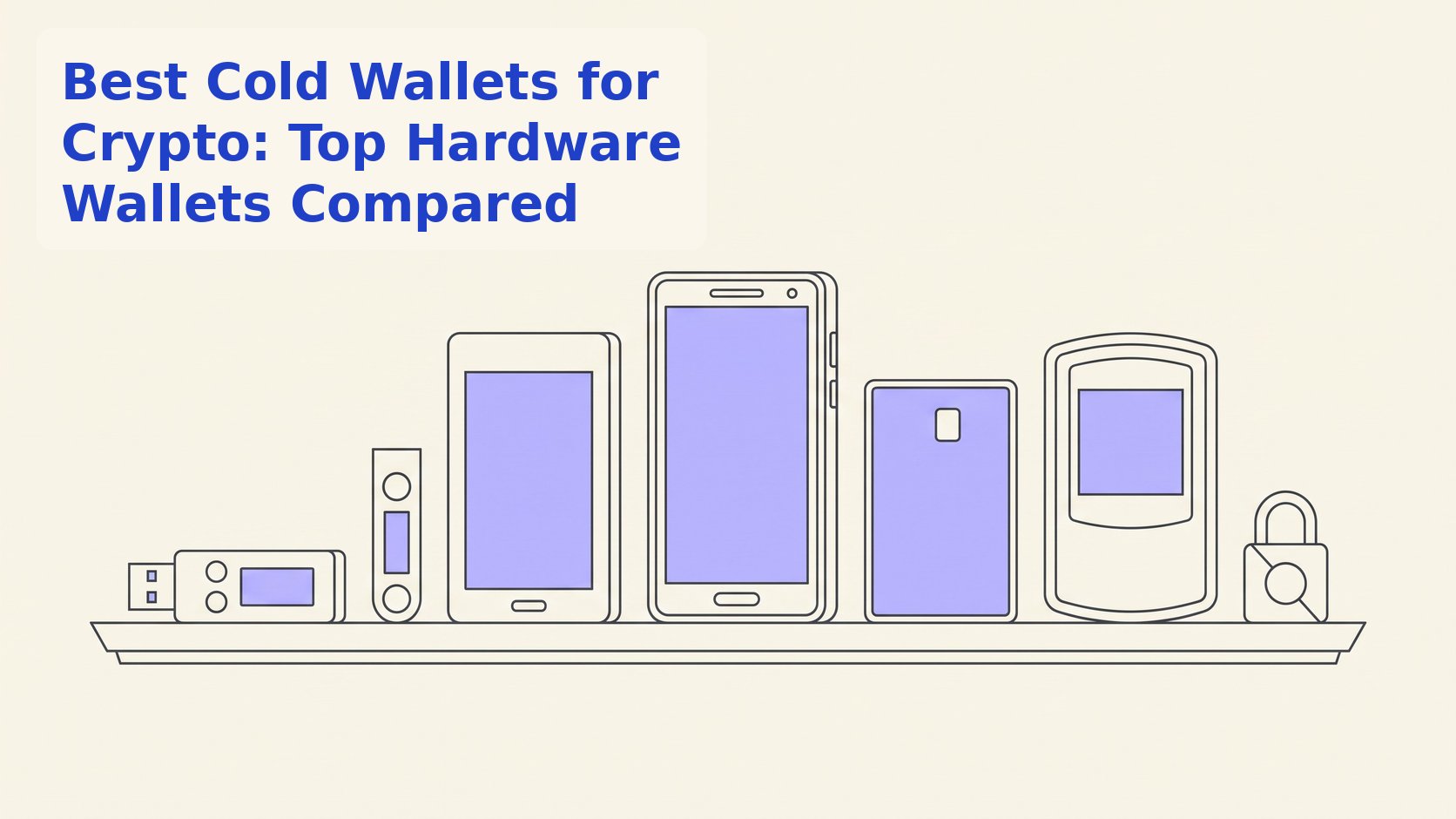
Best overall: Ledger Nano Gen5 ($179), with a touchscreen, clear transaction display, and the widest app and asset support. Best open source: Trezor Safe 5 ($169). Best air-gapped: Keystone 3 Pro ($149), which signs by QR code with no cable. Best budget: Trezor Safe 3 or Ledger Nano S Plus, under $80. Best for simplicity: Tangem, a card you tap on your phone.
What actually matters when choosing a cold wallet
A cold wallet keeps your private keys offline, so malware on your computer or phone cannot steal them. Every device on this list does that. The differences are in five places:
Security chip. Most modern devices use a certified secure element, the same class of chip used in passports and bank cards. Some add dual or triple chips.
Open source. Trezor, Keystone, and BitBox publish their firmware for public review; Ledger's secure element firmware is closed. Open source lets researchers verify the code; closed source relies on audits and track record.
Connectivity. USB, Bluetooth, NFC, or fully air-gapped QR codes. Fewer connections mean fewer attack paths but more friction.
Screen and transaction display. A bigger screen showing what a transaction actually does is the best defence against signing a malicious contract.
Asset support. Bitcoin-only devices reduce attack surface; multi-chain devices cover Ethereum, Solana, stablecoins, and thousands of tokens.
The criterion that really separates options: what you hold and how often you sign. A Bitcoin saver who checks once a year and an active DeFi user signing daily need very different devices.
Quick comparison table
| Cold wallet | Price | Open source | Connectivity | Screen | Best for |
|---|---|---|---|---|---|
| Ledger Nano Gen5 | $179 | Partly (secure element closed) | USB-C, Bluetooth, NFC | E Ink touchscreen | Best overall, multi-chain |
| Trezor Safe 5 | $169 | Yes | USB-C | Color touchscreen | Open-source all-rounder |
| Keystone 3 Pro | $149 | Yes | QR code only (air-gapped) | 4-inch touchscreen | Air-gapped DeFi and multi-chain |
| Trezor Safe 3 | From about $59 | Yes | USB-C | Small OLED, buttons | Budget open source |
| Ledger Nano S Plus | $79 | Partly | USB-C | Small OLED, buttons | Budget, wide app support |
| Tangem | $54.90 (2 cards) / $69.90 (3 cards) | App only | NFC tap to phone | None (uses phone) | Beginners, simplicity |
| Ledger Flex / Trezor Safe 7 | $249 each | Ledger partly / Trezor yes | USB-C, Bluetooth (plus NFC on Flex) | Larger touchscreens | Frequent signers, premium build |
| BitBox02 | About $149 | Yes | USB-C | Small OLED, touch slider | Minimalist, Bitcoin-only option |
Prices are manufacturer list prices checked in October 2026; promotions and bundles change often. Buy only from the manufacturer's official store or authorised resellers, never from secondhand listings.
Top cold wallets compared
Ledger Nano Gen5: best overall
The Nano Gen5 brings a touchscreen and Clear Signing, which shows readable transaction details, to a $179 price, below Ledger's Flex and Stax. Ledger supports the widest range of apps and assets, including stablecoins on multiple networks. Where it breaks: closed-source secure element firmware, and a company record that includes a 2020 customer data leak and a 2023 software library attack, though devices themselves were not compromised. Best for most multi-chain holders. Read our Ledger wallet review.
Trezor Safe 5: best open source
Trezor built the first hardware wallet and keeps its firmware open source. The Safe 5 adds a color touchscreen and a certified secure element at $169. Where it breaks: USB-only, with no Bluetooth for phone use, and some apps and networks arrive later than on Ledger. Best for users who want verifiable code.
Keystone 3 Pro: best air-gapped
Keystone never connects by cable or wireless. It signs transactions by scanning QR codes, which removes the connection as an attack path entirely. Three secure elements and open-source firmware at $149, with support for MetaMask and other wallets. Where it breaks: QR scanning is slower for frequent signing. Best for security-focused multi-chain users.
Trezor Safe 3 and Ledger Nano S Plus: best budget
Both cost under $80 and give real cold storage with a secure element. The Safe 3 is open source; the Nano S Plus has broader app support. Where they break: small screens with buttons show less transaction detail, so they suit storage more than active DeFi.
Tangem: best for simplicity
Tangem is a set of NFC cards. You tap a card to your phone to sign, and spare cards act as backups, so there is no recovery phrase to write down unless you choose one. Where it breaks: the card has no screen, so you rely on your phone to display transactions, and the closed card firmware is less verifiable. Best for beginners who would otherwise never use cold storage.
Ledger Flex and Trezor Safe 7: best premium
Both cost $249 with larger touchscreens for people who sign often. The Flex adds NFC and Ledger's ecosystem; the Safe 7, released in late 2025, adds Bluetooth and an auditable secure chip. Best for heavy users who want the most readable screen.
Key differences that actually matter
Ledger wins on app and asset coverage; Trezor and Keystone win on open source. Air-gapped Keystone wins on attack surface; Bluetooth devices win on phone convenience. Under $80, you trade screen size and transaction clarity, not core security.
For stablecoin holders specifically, check that your device supports USDC or USDT on the network you use, such as Ethereum, Solana, or Tron. See our guide to the best USDC wallets.
When the number one pick is not the right choice
If you hold only Bitcoin and want the smallest attack surface, a Bitcoin-only device such as a BitBox02 Bitcoin edition is the better tool. If you insist on open-source firmware, choose Trezor or Keystone over Ledger. If you manage funds for a company, a single device is a single point of failure: use multisig across several devices, as covered in our guide to the best multisig wallets for businesses. And if you hold small amounts, a reputable exchange or software wallet may be enough.
The verdict
Ledger Nano Gen5 for most people holding multiple assets. Trezor Safe 5 for open source. Keystone 3 Pro for air-gapped security. Trezor Safe 3 or Ledger Nano S Plus on a budget. Tangem for beginners. Whatever you buy, buy direct, set it up yourself, store the recovery phrase offline, and never type it into any website or app.
FAQs
What is the best cold wallet for crypto?
For most people holding several assets, the Ledger Nano Gen5 offers the best mix of security, screen, and asset support at $179. The Trezor Safe 5 is the best open-source option, and the Keystone 3 Pro is the best fully air-gapped wallet.
What is the safest cold wallet?
All major hardware wallets keep keys offline on a secure chip. Air-gapped devices such as Keystone remove cable and wireless attack paths entirely. In practice, safety depends more on protecting your recovery phrase and buying direct from the manufacturer.
Is Ledger or Trezor better?
Ledger supports more apps and assets and offers Bluetooth and NFC models. Trezor offers fully open-source firmware. Both have strong security records at the device level; choose by whether you value ecosystem or verifiable code.
How much does a cold wallet cost?
Cold wallets range from about $55 for a Tangem card set to $249 for premium touchscreen devices. Solid budget options such as the Trezor Safe 3 and Ledger Nano S Plus cost under $80.
Do I need a cold wallet?
If you hold crypto or stablecoins worth more than you would be comfortable losing, yes. A cold wallet removes exchange risk and protects keys from malware. For small, frequently spent amounts, a software wallet is fine.
New to cold storage? Start with what a cold wallet is and how it works.
Last updated: October 13, 2026.