Last updated: October 2026
The best cross-chain bridge depends on what you are moving. For native USDC, Circle's CCTP is the safest route because nothing is wrapped. For fast transfers between Ethereum, its rollups and Solana, Across and Relay lead on speed and cost. For swapping one token into a different token on another chain, an aggregator like Jumper finds the route for you.
TL;DR
Best for USDC: Circle CCTP, which burns USDC on one chain and mints native USDC on the other, with Fast Transfer settling in seconds.
Best intent-based bridge for EVM chains: Across, with more than $35 billion bridged and no exploit since launch, by its own account.
Best for breadth and speed across many chains: Relay, a solver-based intents protocol covering dozens of networks including Solana.
Best cross-chain swap aggregator: Jumper, built on LI.FI, which compares many bridges and DEXs in one quote.
Best for native Bitcoin: THORChain, which swaps native BTC without wrapping it.
Bridge or cross-chain swap: what is the difference?
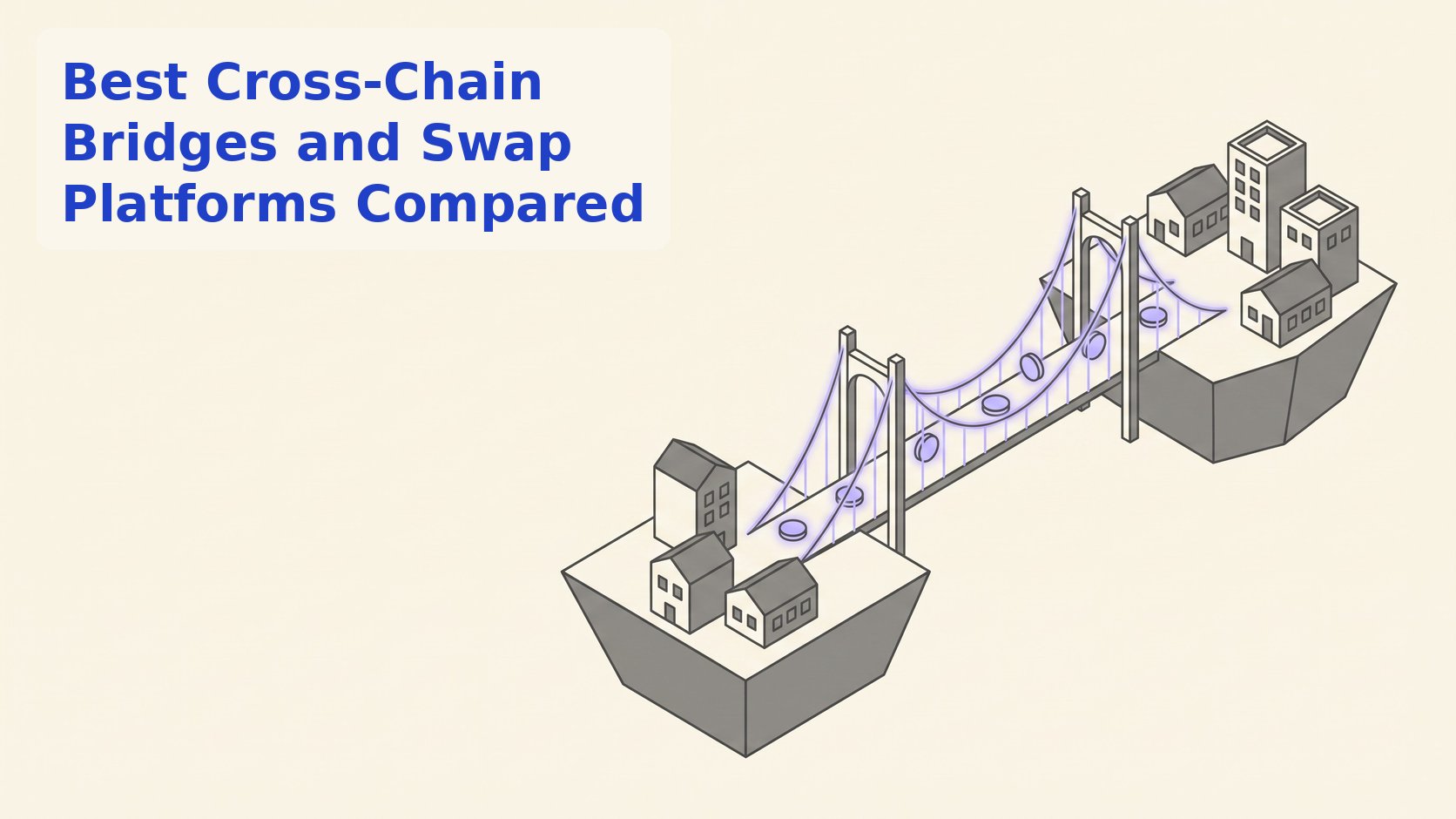
A bridge moves the same asset from one chain to another: USDC on Ethereum becomes USDC on Base. A cross-chain swap changes the asset as it moves: ETH on Arbitrum becomes SOL on Solana. Most modern platforms do both, by chaining a DEX swap, a bridge and another DEX swap into one transaction.
The distinction matters because the risks differ. A pure USDC transfer through CCTP carries only Circle's trust assumption. A three-leg cross-chain swap adds two DEX legs, a bridge and the aggregator contract on top. More legs mean more price exposure and more contracts that must work correctly.
What actually matters when choosing a bridge
- Trust model. Who can steal or freeze funds in transit: a multisig, a validator set, an oracle, an issuer, or nobody because a relayer fronts the money.
- Asset quality on arrival. Native tokens beat wrapped ones. A wrapped token is only as good as the bridge holding the collateral.
- Speed. Seconds for intent-based bridges and CCTP Fast Transfer, minutes to hours for bridges that wait for finality.
- Total cost. Protocol or relayer fee, gas on both chains and any swap slippage.
- Track record. Bridges have been the most exploited category in crypto; Ronin, Wormhole and Nomad were each drained in 2022.
The framing to keep: the cheapest bridge is the one that does not lose your money. Fee differences between good bridges are usually a few dollars. The gap between a safe bridge and a compromised one is everything.
Quick comparison table
| Platform | Type | Trust model | Typical speed | Fee model | Best for |
|---|---|---|---|---|---|
| Circle CCTP | Native burn and mint (USDC only) | Circle attestation | Seconds (Fast) or about 13 to 19 minutes (Standard) | No Circle fee on Standard; small fee on Fast | Moving USDC |
| Across | Intent-based bridge | Relayers front funds; optimistic oracle settles | Seconds | Relayer fee set by competition | EVM chains and Solana |
| Relay | Intent-based bridge and swap | Solvers front funds; Relay Chain settles | Seconds | Solver quote plus gas | Many chains, fast swaps |
| Stargate | Liquidity pool bridge (LayerZero) | LayerZero messaging plus pools | Seconds to a minute | Base fee plus gas | Native assets via pools |
| Jumper (LI.FI) | Aggregator of bridges and DEXs | Inherits the chosen bridge | Depends on route | Route fees plus a small platform fee | Any token to any token |
| THORChain | Native cross-chain liquidity network | THORChain validator network | Minutes | Swap fee plus outbound fee | Native BTC |
Checked against each protocol's documentation and public data in October 2026. Always confirm the live quote before sending.
Top bridges and cross-chain swap platforms compared
Circle CCTP
What it does well: CCTP burns USDC on the source chain and mints native USDC on the destination, so there is no wrapped token and no pool to drain. CCTP V2, live since March 2025, added Fast Transfer. According to Across's CCTP V2 explainer, Fast Transfer settles in seconds for a small fee, around 1 basis point from Arbitrum, while Standard Transfer waits for hard finality, roughly 13 to 19 minutes on Ethereum and its rollups, with no protocol fee. Our CCTP explainer covers the mechanism.
Where it breaks: it only moves USDC, only between supported chains, and you trust Circle's attestation service.
Best for: anyone moving meaningful USDC balances.
Across
What it does well: Across was the first major intent-based bridge. You deposit on the source chain, and relayers race to pay you on the destination chain from their own capital, then get reimbursed later after an optimistic verification window. Across says it has processed more than $35 billion in volume without an exploit and added Solana in August 2025. It co-authored ERC-7683, the cross-chain intents standard, with Uniswap.
Where it breaks: volume is concentrated among a small number of large relayers, and support for non-EVM chains beyond Solana is limited.
Best for: moving ETH and stablecoins between Ethereum, rollups and Solana.
Relay
What it does well: Relay's documentation describes it as a cross-chain intents protocol where third-party solvers fill orders with their own capital and are settled through a dedicated low-cost settlement chain. It moved about $1.49 billion over 30 days in early 2026, according to Tatum's bridge rankings, and covers dozens of networks.
Where it breaks: execution depends on solver availability, and the settlement layer is a newer design with a shorter track record than Across.
Best for: fast swaps across a wide set of chains, especially to and from Solana.
Stargate
What it does well: Stargate uses LayerZero messaging and shared liquidity pools to deliver native assets rather than wrapped ones. Eco's route analysis puts its base fee at 0.06% plus gas.
Where it breaks: pool-based bridges rely on liquidity sitting in contracts, which is the attack surface the 2022 exploits targeted, and you also trust LayerZero's verifier configuration.
Best for: native-asset transfers on routes where intent-based relayers are thin.
Jumper (LI.FI)
What it does well: Jumper is the consumer app on top of LI.FI, which aggregates many bridges and DEXs and picks the best route for any token to any token. It removes the need to know which bridge serves which chain.
Where it breaks: you inherit the risk of whichever bridge the route uses, plus LI.FI's own contracts. LI.FI suffered a security incident in July 2024 that hit users with unlimited token approvals. Fees also stack: LI.FI's docs list a 0.25% service fee for API integrators, while DefiLlama records Jumper's own platform fee at 0 to 5 basis points on bridges.
Best for: one-click cross-chain swaps when you do not know the best route.
THORChain
What it does well: THORChain swaps native assets, including Bitcoin, without wrapping them, using its own validator network and liquidity pools.
Where it breaks: swaps take minutes rather than seconds, and you trust THORChain's validator set.
Best for: moving native BTC into or out of other chains.
Key differences that actually matter
Three architectures compete. Issuer-native transfers, like CCTP, remove bridge risk for one asset. Intent-based bridges, like Across and Relay, are fast because a relayer pays you first and settles later, so your funds are never parked in a vulnerable pool. Pool and messaging bridges, like Stargate, deliver native assets but keep liquidity locked in contracts. Aggregators sit above all three and choose among them.
For stablecoins specifically, the hierarchy is clear: use the issuer's own rail where it exists, then an intent-based bridge, then everything else.
When the number one pick is not the right choice
CCTP is the right default for USDC, but not for USDT, ETH or anything else. If your route involves a long-tail chain that Across and Relay do not serve, an aggregator such as Jumper may be the only practical option. For native Bitcoin, THORChain is one of the few routes that does not wrap BTC.
The verdict
Use CCTP for USDC, Across or Relay for fast transfers between major chains, Jumper when you need a token swap and a bridge in one step, and THORChain for native BTC. Send a small test amount first on any new route.
The open question is whether cross-chain transfers stay a separate step at all. As intents spread, wallets increasingly hide the bridge behind a single swap button. If you are building payments on top of these rails, reach out.
FAQs
What is the best cross-chain bridge?
For USDC, Circle's CCTP is the safest because it mints native USDC rather than a wrapped token. For general transfers between Ethereum, rollups and Solana, Across and Relay are fast intent-based options. For token-to-token swaps across chains, an aggregator like Jumper compares routes for you.
Are crypto bridges safe?
Bridges have been among the most exploited parts of crypto, with Ronin, Wormhole and Nomad all drained in 2022. Risk varies by design. Issuer-native transfers and intent-based bridges keep less money parked in contracts. Use established bridges, test with small amounts and revoke old approvals.
What is a cross-chain swap?
A cross-chain swap exchanges a token on one blockchain for a different token on another, for example ETH on Arbitrum for SOL on Solana, in a single user action. Behind the scenes it usually combines a DEX swap, a bridge transfer and a second DEX swap.
How long does a cross-chain bridge take?
Intent-based bridges such as Across and Relay usually fill in seconds. Circle's CCTP Fast Transfer also settles in seconds, while its Standard Transfer takes roughly 13 to 19 minutes on Ethereum and its rollups. Bridges that wait for full finality can take longer.
What is the cheapest way to bridge USDC?
CCTP Standard Transfer has no Circle fee, so you pay only gas on both chains, at the cost of waiting for finality. Fast Transfer adds a small fee for settlement in seconds. Intent-based bridges like Across often quote similar costs on high-traffic routes.