What Is Digital Asset Custody? An Institutional Guide
Digital asset custody is key custody, not asset custody. Whoever controls the private keys controls the asset, and no central authority can restore a lost key or reverse an unauthorized transaction. That single fact separates digital assets from every traditional financial instrument and makes custody infrastructure the most consequential operational decision an institution will make in this asset class. Stablecoin.nyc covers the compliance and operational implications for treasurers, allocators, and builders navigating this infrastructure.
Definition: What Digital Asset Custody Actually Means

Digital asset custody secures the cryptographic keys that authorize on-chain transactions. The assets themselves live on the blockchain; the custodian's job is to protect the credentials that move them. This inversion, from safeguarding certificates to safeguarding keys, is the definitional break with traditional custody and the frame every downstream decision inherits.
In plain language: if you lose the key, you lose the asset. There is no help desk.
The private-key thesis
A private key is a long, cryptographically generated string that proves ownership of an on-chain position and authorizes its transfer. It is non-resettable. Lose it, expose it, or let an attacker sign a single malicious transaction, and the associated balance is gone with no recourse. That property forces custodians to treat key generation, storage, backup, and signing ceremonies as the core product rather than an operational afterthought. The institutional adoption arc for crypto has tracked, almost one-for-one, with the maturity of key-management infrastructure.
How this differs from traditional custody
Traditional custodians safeguard securities through centralized ledgers, transfer agents, and legal records that update on a T+1 or T+2 cadence during business hours. Blockchain custody settles on a 24/7/365 network with no clearinghouse, no cutoff window, and no reversal mechanism. The custody perimeter also stretches far beyond cryptocurrencies to stablecoins, tokenized real-world assets such as tokenized real estate and short-duration bonds, and NFTs, all controlled through the same key-management model. One key architecture; many asset classes.
Takeaway: the operational primitive is the key, not the asset. Everything else in this guide is downstream of that fact.
The Three Custody Models: Self, Third-Party, and Hybrid
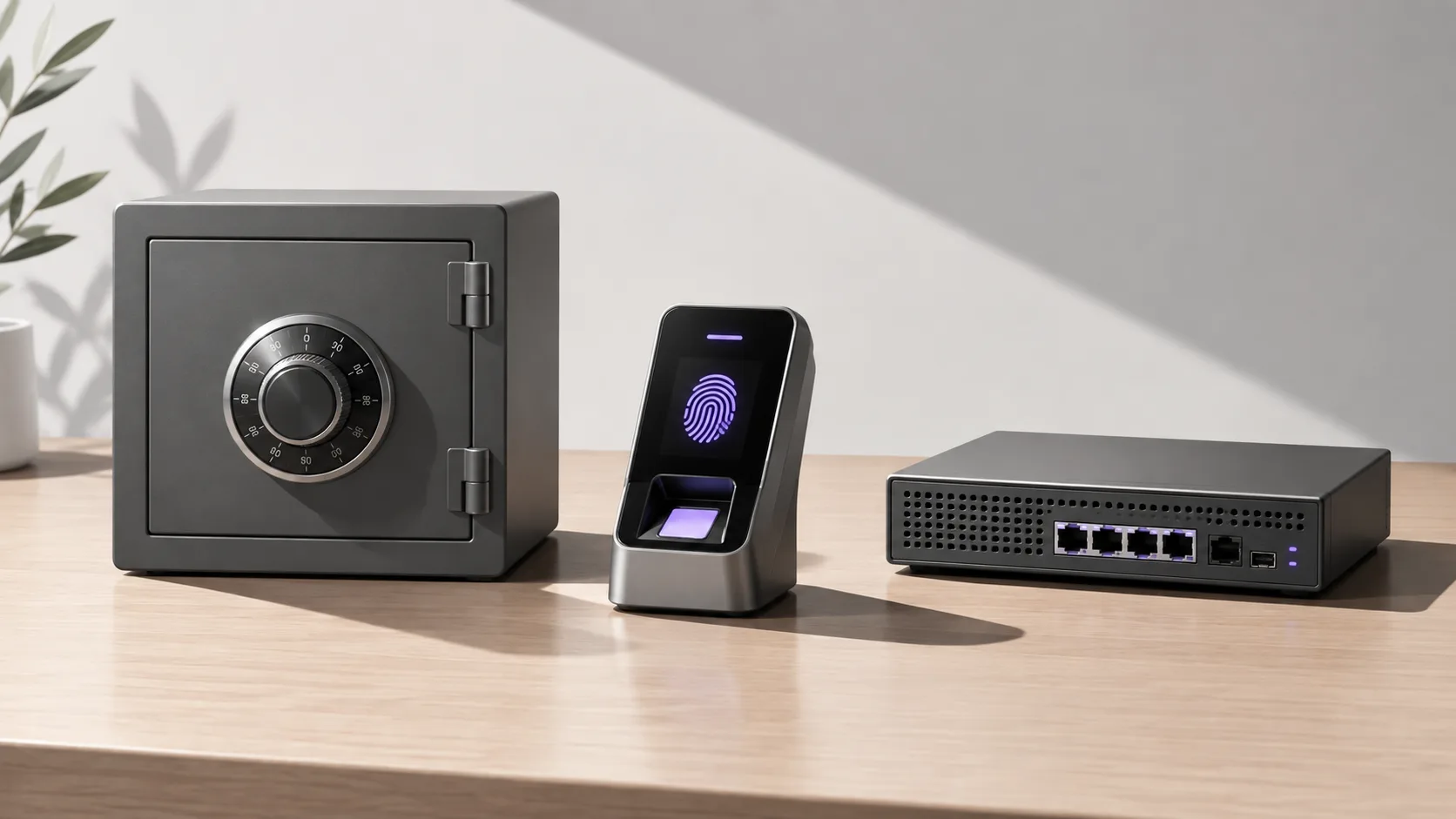
Custody generally falls into three categories, each expressing a different balance of control, operational load, and counterparty exposure. There is no universally correct choice; there is only the choice that matches an institution's mandate, staffing, and risk tolerance.
Self-custody
Self-custody means the institution generates, stores, and signs with its own private keys. Counterparty risk goes to zero. Operational burden goes to one hundred: hardware selection, key ceremonies, geographic redundancy, quorum policies, offboarding procedures, and disaster recovery all sit inside the org. For a small treasury with disciplined operators, it is defensible. For a fund with active trading, redemptions, and multiple signatories across time zones, self-custody is usually a partial solution rather than the whole answer. Practical treasury infrastructure for stablecoin flows increasingly assumes at least some institutional tooling around the raw keys.
Third-party (qualified) custody
Third-party custody delegates key management to a regulated provider such as Fidelity Digital Assets, Anchorage, Coinbase Custody, or BNY, which describes itself as the first G-SIB to offer regulated digital asset custody. Operational overhead drops. Counterparty risk and concentration risk enter the picture and must be diligenced with the same rigor as prime brokerage selection. This is the default posture for allocators, endowments, and regulated funds, and it is the model that most institutional flows into digital assets currently ride on.
Hybrid and MPC-based models
Hybrid custody splits control. The two dominant implementations are multi-signature schemes, where a transaction requires m-of-n signatures across separate hardware devices or parties, and multi-party computation (MPC), where a private key is never assembled in one place; instead, key shards distributed across parties jointly compute a signature without any one party ever holding the whole key. MPC underpins most institutional-grade platforms today because it preserves operational flexibility across cold, warm, and hot storage while removing single points of failure. Wells Fargo's April 2026 note on digital asset custody points out that ETFs offer another route: indirect exposure with third-party custody already embedded, which removes direct key-management requirements for that specific slice of exposure and is increasingly relevant as stablecoin and tokenized product structures proliferate.
Takeaway: most institutions end up in a hybrid posture. Pure self-custody is rare above a certain AUM; pure delegation is rare among sophisticated allocators.
Storage Architecture: Cold, Warm, and Hot Wallets

Storage architecture is orthogonal to the custody model. A self-custodian, a third-party custodian, and an MPC provider all face the same question: how much of the portfolio needs to be signable in seconds, and how much can sit behind an air gap for days? The answer determines wallet tiering.
Cold storage trade-offs
Cold storage generates and stores keys in an offline environment, typically inside a hardware security module (HSM) or dedicated appliance that has never touched a network. It is the strongest defense against remote attackers. It also introduces latency: signing a withdrawal can take hours or days depending on the ceremony. That latency is acceptable, and often desirable, for long-duration reserves, but it is disqualifying for trading desks and DeFi participation. The blunt trade-off is security against operational speed, and cold storage sits at the security-maximizing end. Institutions running on-chain payment rails rarely park working capital in cold storage for exactly this reason.
Hot and warm storage for operational liquidity
Hot wallets maintain persistent network connectivity for near-instant transaction signing. They are necessary for market making, redemptions, exchange settlement, and any workflow measured in seconds. The exposed attack surface is correspondingly larger, so hot wallets typically hold only the balance required for the next few hours of operations. Warm storage sits in between: keys are offline by default but can be brought online through a defined ceremony in minutes rather than days. Institutional platforms such as Fireblocks layer MPC across all three tiers, so treasurers can allocate assets across the storage spectrum based on liquidity needs rather than accepting a binary choice. This tiering is what makes 24/7 settlement rails, including stablecoin settlement compared with SWIFT, operationally realistic for a regulated institution.
Takeaway: tier storage against liquidity needs. Reserves in cold, operational float in warm, execution buffer in hot. Reassess the ratios quarterly.
Regulatory and Compliance Landscape
Regulation is the axis on which institutional custody selection actually turns. Security architecture is table stakes; regulatory standing is what a compliance officer signs off on.
Qualified custodian requirements
The SEC's qualified custodian framework, historically written for securities held by registered investment advisers, is increasingly being interpreted to cover digital assets. Recent rulemaking activity has pushed more digital asset categories under existing custody rules, and the direction of travel is toward requiring bank, trust, or broker-dealer status for anyone holding client crypto. That raises the bar meaningfully for institutions managing outside capital, and it is a running theme in macro coverage of digital asset regulation. Stablecoin-specific custody rules remain an active development area, with issuers navigating both state money-transmission licensing and emerging federal frameworks.
Bankruptcy protection and asset segregation
Asset segregation is the operational expression of qualified-custodian status. Client holdings sit in identifiable, separate accounts rather than commingled pools, which is what allows those assets to remain the client's property in a custodian bankruptcy. BNY cites bankruptcy stay protection and comprehensive audit trails as core differentiators over non-bank custodians, and that framing has become the industry default. Kroll's June 2025 analysis identifies regulatory clarity as the primary driver of the recent acceleration in institutional adoption, particularly following guidance that brought more digital asset categories under existing securities custody rules. For teams evaluating providers, foundational compliance reading is worth doing before the RFP goes out, not after.
Takeaway: if the provider cannot produce a trust charter, a segregation opinion, and a SOC 2 Type II report on request, treat that as a red flag, not a paperwork gap.
Key Risks and How Institutions Mitigate Them

Risk in digital asset custody is not a single-axis problem. It splits into operational, counterparty, and protocol dimensions, and mitigations differ by layer.
Operational and key-loss risk
Key-loss risk is existential. Unlike a forgotten password, a lost private key has no server-side recovery path absent a pre-arranged backup or social-recovery scheme. Key-ceremony design, geographic distribution of shards, quorum policies, and offboarding procedures for departing signatories are the critical operational controls. A well-run institutional wallet stack treats these ceremonies as auditable events, not internal knowledge held by one operations lead.
Counterparty and concentration risk
Counterparty risk materialized visibly with the FTX collapse in 2022, which demonstrated that exchanges acting as informal custodians offered neither bankruptcy protection nor segregated-asset guarantees. Concentration risk is the second-order version: even with a fully regulated custodian, routing an entire portfolio through one provider recreates single-point-of-failure exposure at a higher level of the stack. Distributing holdings across two or more qualified custodians is standard practice for large allocations, and it is the same discipline that mature institutions apply to payment orchestration across providers.
Smart-contract and protocol risk
As institutions participate in DeFi lending, staking, or tokenized-asset protocols, a new risk layer appears: smart-contract exploits, protocol bugs, governance attacks, and oracle failures that can drain custodied assets even when the keys themselves are perfectly secure. Traditional custody frameworks do not cover this. Insurance coverage for digital assets remains limited relative to traditional financial assets; underwriters typically cap coverage well below the full asset value held. That gap must be disclosed to LPs and planned around at the portfolio-construction layer, an issue that recurs across institutional analysis of digital asset exposure.
Takeaway: custody risk decomposes into three layers. A defense on one does not defend the others.
How to Evaluate a Digital Asset Custodian
A custodian RFP is not a feature checklist. It is a diligence exercise, and the answers that matter are the ones the provider can back with an audit report.
Security infrastructure criteria
Start with key management architecture. Is the provider HSM-based, MPC-based, or a combination? What is the signing quorum, and is the shard distribution documented? Has the implementation been audited by a reputable third party, and is that audit available under NDA? Vendor claims about proprietary cryptography without external validation should be treated skeptically. The Fireblocks reference material on custody architecture is a reasonable baseline for the technical questions to ask. Teams working through digital asset payment platform selection will recognize the same diligence pattern.
Regulatory standing and audit history
Ask whether the provider holds a trust charter (state or federal), qualifies as a regulated custodian under applicable SEC or state rules, and maintains SOC 2 Type II or equivalent audit certification. Ask for the segregation opinion and the most recent penetration test summary. Ask what happens to client assets in a wind-down scenario and who the backup service provider is. These are not gotcha questions; they are the questions institutional compliance teams will ask on your behalf if you do not ask them first.
Operational fit for institutional workflows
Security and regulation are necessary but not sufficient. The custodian also has to fit the operational stack. That means API access with production-grade uptime, reporting formats compatible with your fund administrator, settlement finality timelines that match your redemption calendar, and asset coverage broad enough to avoid forcing a multi-custodian model by accident. A custodian that supports Bitcoin and Ether but not USDC, tokenized T-bills, or an emerging chain your strategy touches will constrain the portfolio. Teams building on stablecoin API infrastructure run into this constraint routinely.
Takeaway: score custodians on security, regulation, and operational fit as three independent axes. A provider that maxes out two but fails on the third is not usable.
FAQ: Frequently Asked Questions
What is the difference between digital asset custody and traditional financial custody?
Traditional custody safeguards securities recorded on centralized ledgers that update during business hours. Digital asset custody secures the cryptographic keys that authorize on-chain transactions on a 24/7 network with no reversal mechanism and no central authority to restore lost access.
What is a qualified custodian for digital assets?
A qualified custodian is a bank, trust company, or broker-dealer that meets SEC requirements to hold client assets, including segregated accounts and audit trails. For digital assets, the framework is being extended, and qualification typically requires a trust charter and SOC 2 Type II certification.
What happens to my digital assets if my custodian goes bankrupt?
If assets are held in segregated accounts by a qualified custodian with bankruptcy stay protection, they generally remain client property and are not part of the estate. If commingled at an exchange acting as an informal custodian, recovery is uncertain and litigated, as the institutional response to the FTX collapse demonstrated.
Is self-custody safe for institutional investors?
Self-custody eliminates counterparty risk but shifts the full operational burden onto the institution. It is defensible for small treasuries with disciplined operators and formal key ceremonies. For funds with active trading, multiple signatories, and regulated obligations, hybrid or third-party models are usually more workable.
What is multi-party computation (MPC) and why does it matter for custody?
MPC is a cryptographic technique that splits a private key into shards distributed across separate parties, which jointly compute a signature without ever assembling the full key. It eliminates single points of failure and preserves operational flexibility across cold, warm, and hot storage tiers.
How do stablecoins fit into digital asset custody frameworks?
Stablecoins are custodied under the same key-management model as other on-chain assets, but they carry an additional regulatory overlay covering issuer reserves and money-transmission licensing. Operational treatment often differs because stablecoins move constantly through payment and settlement flows rather than sitting in cold reserve.
What regulations govern digital asset custody in the United States?
Digital asset custody is governed by a patchwork of SEC qualified-custodian rules, state trust and money-transmission licensing, OCC guidance for national banks, and emerging federal stablecoin frameworks. The exact applicable regime depends on the custodian's charter, the asset type, and the client's regulatory status.
How much insurance coverage do digital asset custodians typically carry?
Coverage varies widely and is generally capped well below total assets under custody. Policies typically cover theft from hot wallets and specific operational failures, but exclude smart-contract exploits, protocol governance attacks, and client-side key loss. Institutions should read the policy, not the marketing summary.
Conclusion
Digital asset custody collapses to a single design question: who holds the keys, and under what ceremony can they be used. Everything else, storage tiering, regulatory standing, insurance, DeFi participation, is downstream of that question. Institutions that treat custody as procurement will select on price and integrations and inherit the risks they did not diligence. Institutions that treat it as risk architecture will select on key-management design, regulatory posture, and operational fit, and will typically end up with more than one provider. For ongoing coverage of how these decisions are playing out across treasurers, allocators, and builders, our resources section tracks the operational and compliance developments as they land.