What Is Payment Orchestration? Definition (2026)
What Is Payment Orchestration?
TL;DR
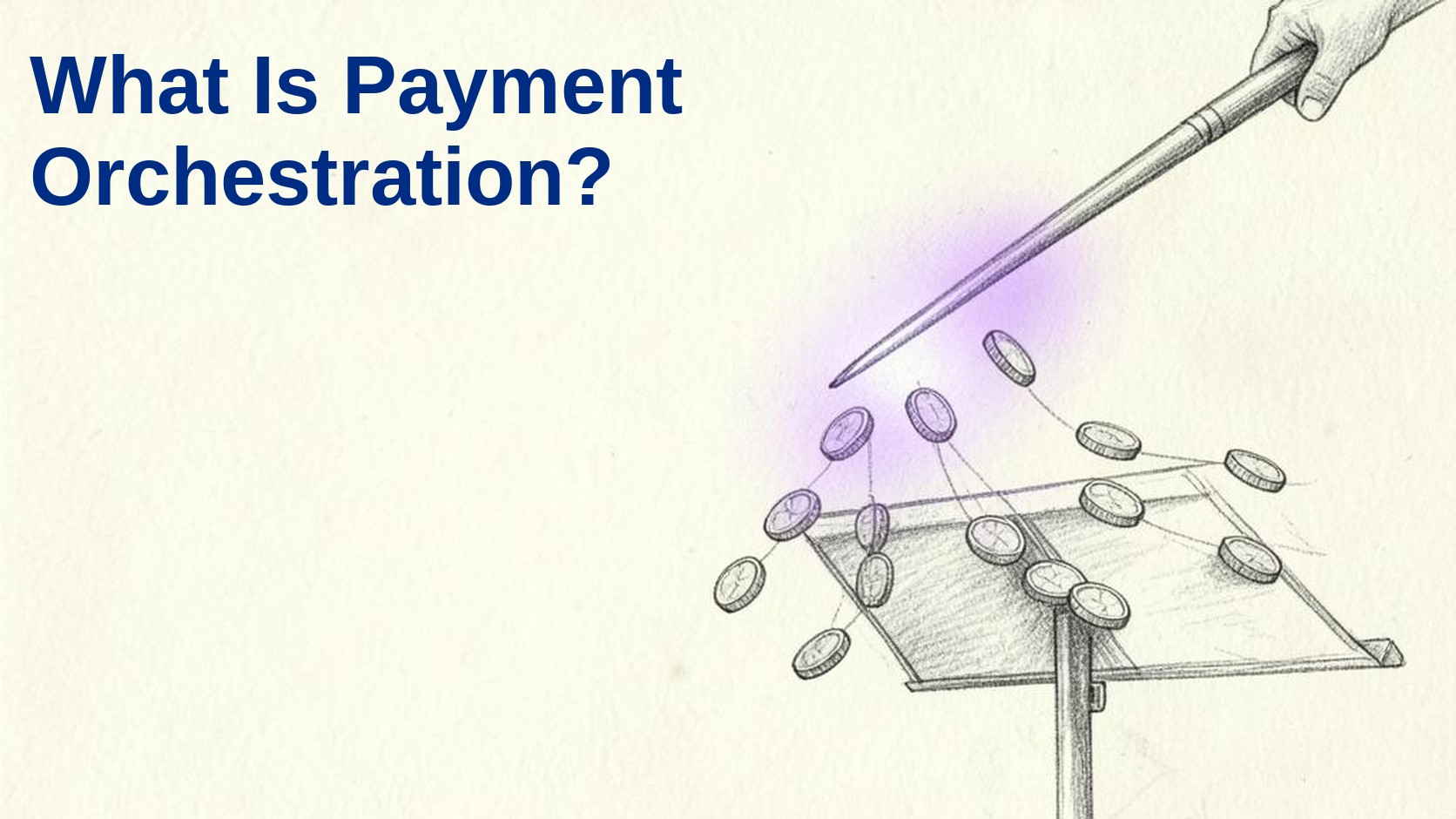
Payment orchestration is the middle layer that connects bank rails, stablecoins, wallets, blockchains, liquidity providers, compliance systems, and payout partners into a single coordinated payment flow. Rather than a business integrating separately with each bank, stablecoin issuer, and compliance vendor it needs, an orchestration platform handles pay-in, conversion, routing, settlement, payout, and reconciliation as one connected process, typically through a single API.
Payment orchestration: definition and positioning
Payment orchestration is not a payment processor, and it is not a single bank rail or blockchain. It is the coordination layer that sits above those individual components, deciding how a payment actually moves from a payer to a payee across whichever combination of rails, stablecoins, and intermediaries gets the money there fastest, cheapest, or most compliantly. This distinguishes it from a narrower tool like a stablecoin issuer, which mints and redeems one specific stablecoin, or a custody platform, which holds assets but does not necessarily route payments between parties. The distinction matters in practice: a business can hold USDC through Circle Mint and still need a separate orchestration layer to actually move that USDC through a fiat payout corridor into a recipient's local bank account.
How payment orchestration works
A payment orchestration platform typically executes a payment through a sequence of coordinated steps. First, a payment is initiated with the amount, currency, and counterparty details captured. Second, compliance checks run, including sanctions screening, Travel Rule verification where applicable, and counterparty identity checks, before any funds move. Third, the platform determines the optimal route across available rails, which might mean converting fiat to a stablecoin, moving that stablecoin across a blockchain, and converting back to local fiat currency on the receiving end. Fourth, the payment settles, either on-chain for the stablecoin leg or through traditional banking rails like SWIFT, SEPA, or ACH for fiat legs. Finally, the platform provides reconciliation data, mapping the transaction back to accounting systems for both sender and receiver.
The specific mix of rails used varies by platform and corridor. A platform like BVNK combines traditional rails, SWIFT, SEPA, Faster Payments, FedWire, with stablecoin settlement under one system. A narrower tool like Bridge focuses more specifically on stablecoin orchestration with automatic conversion at settlement.
Payment orchestration in practice
The clearest real-world example of orchestration's value is cross-border payment. A business paying a supplier in Mexico traditionally routes through correspondent banking, which can take three to five business days and cost several percentage points in fees. An orchestration platform can instead convert the payment to a stablecoin, move it across a blockchain in seconds, and convert it to Mexican pesos through a local payout rail like SPEI, settling in minutes rather than days.
The market signal behind this shift is significant: stablecoin transfer volume reached 27.6 trillion dollars in 2024, exceeding the combined volume of Visa and Mastercard, according to data from Artemis and Dune published in January 2025. Total stablecoin supply stood at approximately 315.3 billion dollars as of mid-2026, with USDT and USDC together accounting for the large majority of that figure. This scale is what has turned payment orchestration from a nice-to-have into infrastructure businesses actively evaluate, since the volume moving through these rails now rivals traditional card networks.
Stripe's 1.1 billion dollar acquisition of Bridge, a dedicated stablecoin orchestration platform, closed in February 2025, and Mastercard's March 2026 agreement to acquire BVNK for up to 1.8 billion dollars, the largest stablecoin infrastructure deal to date and still pending closing as of this writing, both signal that established payment companies view orchestration as core infrastructure worth owning rather than a feature to build internally.
Trade-offs and limitations
Payment orchestration adds a layer of abstraction, and abstraction has a cost. A business routing every payment through an orchestration platform trades direct control over rail selection for convenience, which matters if a specific rail's pricing or speed changes and the orchestration platform is slow to adapt its routing logic. Concentration risk is also real: building a payment stack entirely on one orchestration provider, particularly one recently acquired by a larger company, means that provider's roadmap and pricing decisions now serve its acquirer's priorities rather than standalone infrastructure priorities. Multi-provider redundancy is increasingly standard practice among businesses with significant payment volume specifically to manage this risk.
Orchestration also does not eliminate compliance obligations, it coordinates them. A business still needs to understand which compliance functions the orchestration platform actually owns versus which remain its own responsibility, since the answer varies significantly by provider and jurisdiction.
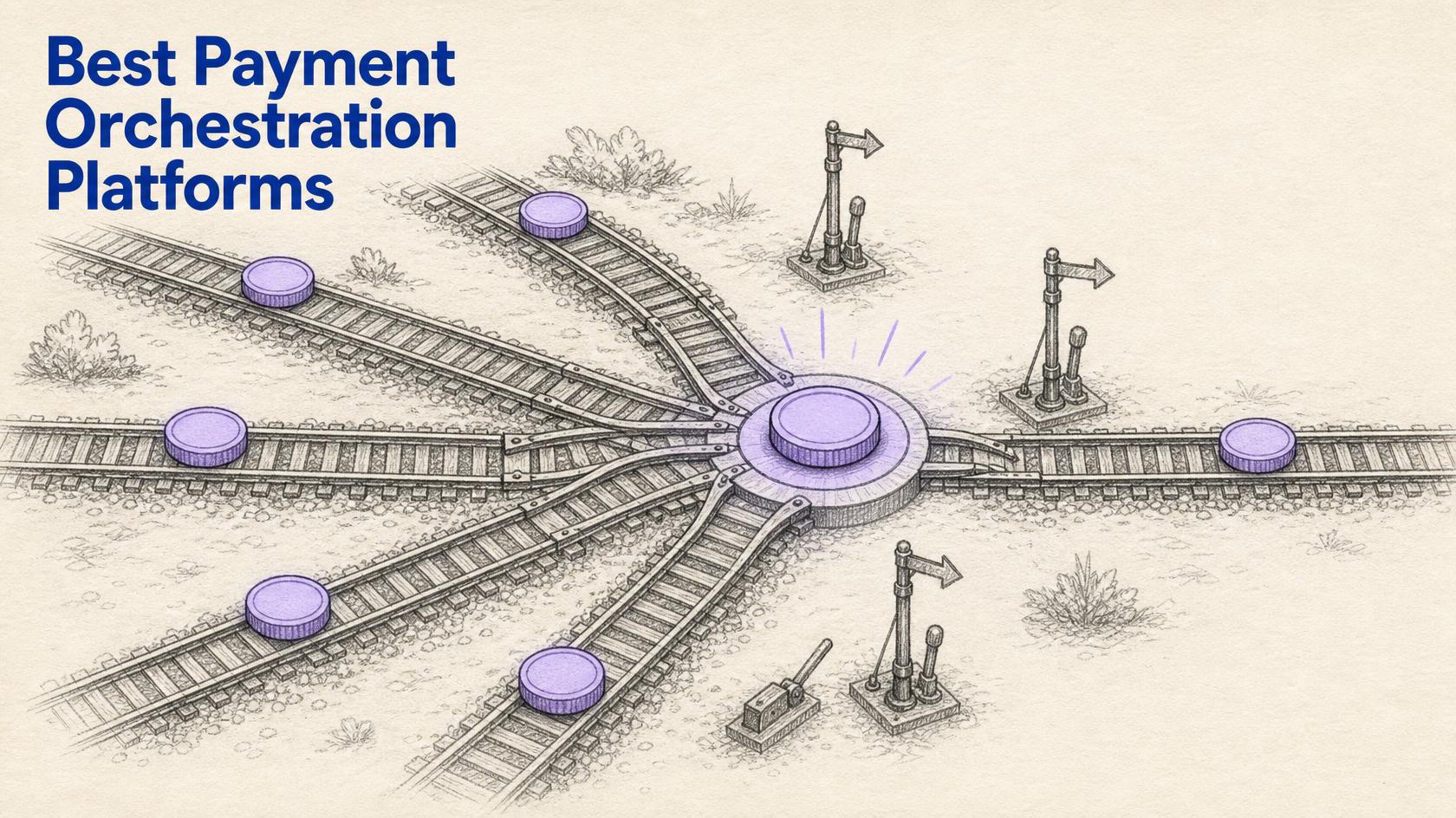
For further reading, check out Best Payment Orchestration Platforms, and Crypto Payment Rails.
FAQs
What is the difference between payment orchestration and a payment processor?
A payment processor typically handles one specific payment method or rail. Payment orchestration coordinates across multiple rails, currencies, and compliance systems simultaneously, choosing the optimal path for each transaction rather than being limited to a single rail.
Do I need payment orchestration if I already use a stablecoin issuer like Circle?
Often yes. A stablecoin issuer mints and redeems its own stablecoin but does not necessarily handle fiat corridor payout, multi-stablecoin routing, or compliance coordination across jurisdictions. Payment orchestration platforms handle that broader coordination layer.
Why are established payment companies acquiring stablecoin orchestration platforms?
Stablecoin transfer volume reached 27.6 trillion dollars in 2024, exceeding combined Visa and Mastercard volume, signaling that stablecoin payment infrastructure has moved from experimental to core financial infrastructure. Stripe's acquisition of Bridge and Mastercard's agreed acquisition of BVNK both reflect established payment companies treating orchestration as infrastructure worth owning directly.
Last updated: September 8, 2026 Written by the stablecoin.nyc Editorial Desk