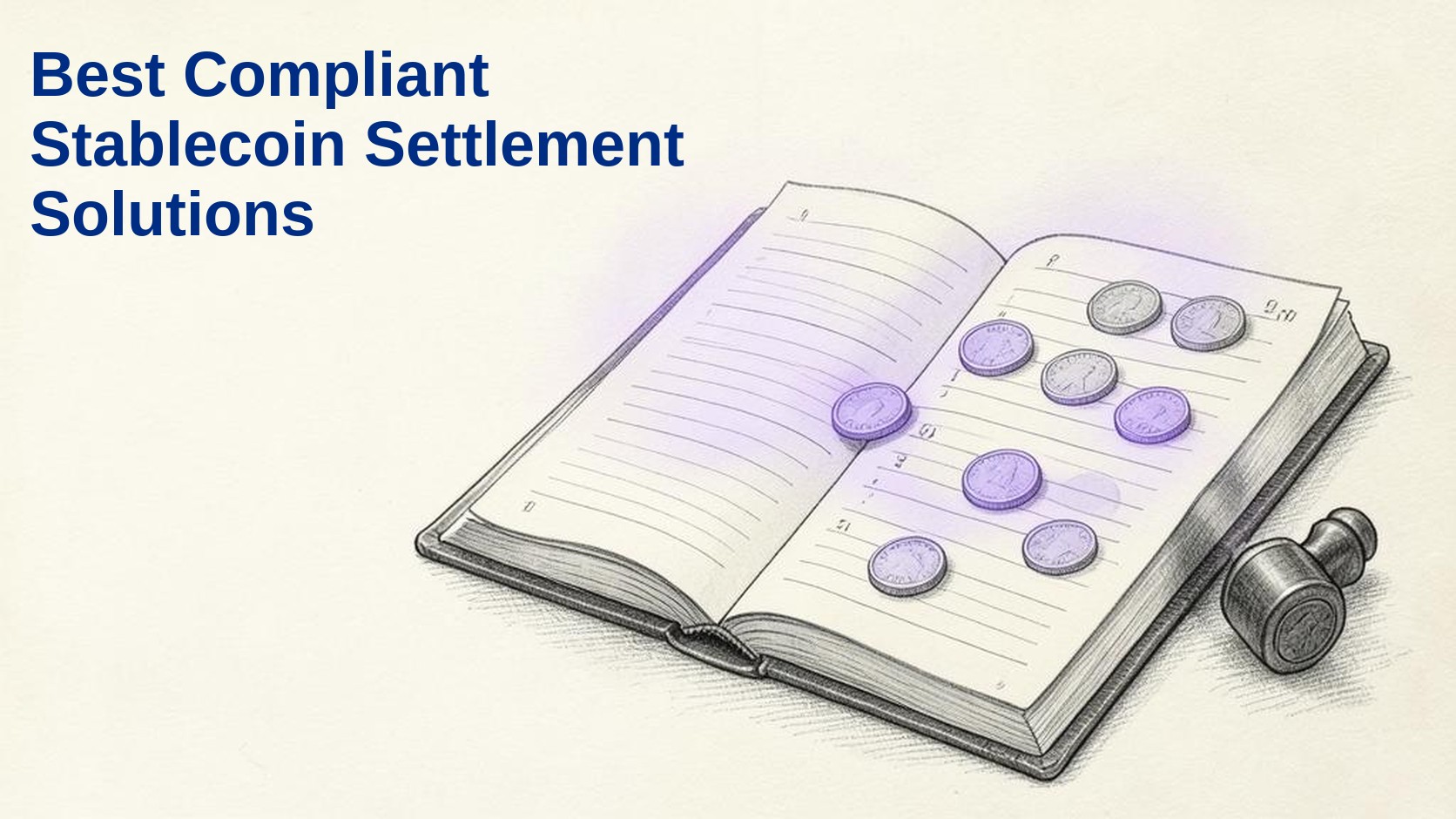
Best Compliant Stablecoin Settlement Solutions (2026)
Best Compliant Stablecoin Settlement Solutions: Compared
TL;DR
Best overall for combining policy enforcement with audit-grade logging is Fireblocks. Best for enterprise buyers wanting settlement and compliance bundled with fiat corridor access is BVNK. Best for US regulated institutions needing a federally chartered custodian is Anchorage Digital. Best for teams settling exclusively in USDC with the cleanest issuer-direct audit trail is Circle Mint. There is no single most compliant option in the abstract, compliance depth needs to be measured against the specific regulatory framework a business answers to.
What actually matters for compliant settlement specifically
Policy enforcement, not just logging. A genuinely compliant settlement solution enforces allowlists, counterparty filters, and route constraints before a transaction settles, not just records what happened afterward.
Audit trail completeness. Reconciliation surface area, meaning how cleanly settlement records map to accounting entries an external auditor can verify, separates institutional-grade platforms from consumer-facing ones repurposed for business use.
Multi-issuer coverage versus single-issuer depth. A platform covering many stablecoin issuers gives broader coverage; a single-issuer platform like Circle Mint gives the cleanest, most direct audit trail for that one stablecoin specifically.
Regulatory charter type. SOC 2 Type II certification, a state trust charter, or a federal charter each carry different weight depending on which regulator a business answers to.
Quick comparison table
| Platform | Policy enforcement | Audit trail | Charter/certification | Best for |
|---|---|---|---|---|
| Fireblocks | Enterprise-grade policy engine | SOC 2 Type II, detailed policy logs | Not a chartered custodian itself, integrates with them | Institutions wanting configurable pre-settlement policy enforcement |
| BVNK | Embedded compliance engine covering AML, Travel Rule, sanctions | Audit logging built into Layer1 | MiCA licensed, 25+ licenses and approvals | Enterprises wanting settlement and compliance in one contract |
| Anchorage Digital | Policy enforcement tied to institutional custody | Federal charter-backed reporting | Federally chartered digital asset bank in the US | US institutions requiring a federally chartered counterparty |
| Circle Mint | Reserve and issuance controls at the mint/redeem level rather than a configurable third-party policy engine | Issuer-direct mint/burn ledger, the cleanest single-stablecoin trail | Regulated USDC issuer | Businesses settling exclusively in USDC wanting the most direct audit trail |
Top options compared
Fireblocks combines a configurable policy engine, enforcing allowlists and counterparty filters at the point of settlement, with SOC 2 Type II certification and detailed policy logs, making it a strong pick for institutions that need both real-time control and after-the-fact evidence. Where it breaks: Fireblocks itself is not a chartered custodian, so institutions needing a specific regulatory charter type still need to pair it with one.
BVNK bundles compliance directly into its settlement engine, with AML, Travel Rule, and sanctions checks embedded rather than bolted on, backed by a MiCA license and more than 25 licenses and regulatory approvals. Where it breaks: this depth of bundling means more implementation surface than a narrower settlement-only tool.
Anchorage Digital is the clearest choice for US institutions specifically required to work with a federally chartered counterparty, a regulatory status that changes what some institutional mandates permit. Where it breaks: Anchorage does not publicly disclose its insurance coverage limit, unlike BitGo ($250M), Coinbase Custody ($320M), or Copper ($500M), which makes coverage-cap comparison impossible without a direct conversation, and its multi-issuer stablecoin settlement speed is not published to the same depth as Fireblocks' or BVNK's.
Circle Mint gives the most direct, issuer-level audit trail available for USDC specifically, since mint and burn records come straight from the issuer rather than an intermediary. Where it breaks: this clean trail exists only for USDC; institutions settling in multiple stablecoins need a broader platform alongside or instead of Circle Mint.
Key differences that actually matter
The real choice is between platforms that enforce compliance policy at the point of settlement, like Fireblocks and BVNK, and platforms that offer the cleanest audit record for a narrower scope, like Circle Mint. An institution's actual regulatory requirement, whether it needs pre-settlement policy enforcement or simply the cleanest possible post-settlement audit trail, should drive this choice more than general reputation.
When compliance depth outweighs settlement speed
An institution operating under a strict regulatory mandate should not default to the fastest or cheapest settlement option if that option's audit trail or policy enforcement does not satisfy its specific regulator. The extra implementation time BVNK or Fireblocks require over a simpler tool is often the correct trade against audit risk, not overhead to be minimized.
See also our breakdowns of Best Stablecoin Compliance Platforms, Best Travel Rule Solutions for Enterprise VASPs, and Best Stablecoin Infrastructure for Regulated Institutions.
FAQs
What is the most compliant stablecoin settlement solution?
There is no single most compliant option in the abstract. Fireblocks and BVNK both offer strong pre-settlement policy enforcement, while Anchorage Digital's federal charter matters specifically for US institutions with mandates requiring that status, and Circle Mint offers the cleanest single-issuer audit trail for USDC-only settlement.
Does a chartered custodian automatically mean compliant settlement?
No. A charter, like Anchorage's federal digital asset bank status, addresses custody regulation specifically. Compliant settlement also requires policy enforcement, Travel Rule handling, and audit trail completeness, which are separate capabilities a charter alone does not guarantee.
Can these platforms be used together?
Yes, and often are. An institution might use Circle Mint for the USDC issuance leg while relying on Fireblocks or BVNK for broader policy enforcement and multi-issuer settlement across the rest of its stablecoin operations.
Last updated: September 8, 2026 Written by the stablecoin.nyc Editorial Desk