Best Push Payment Platforms for Stablecoins (2026)
Best Push Payment Platforms for Stablecoins
TL;DR
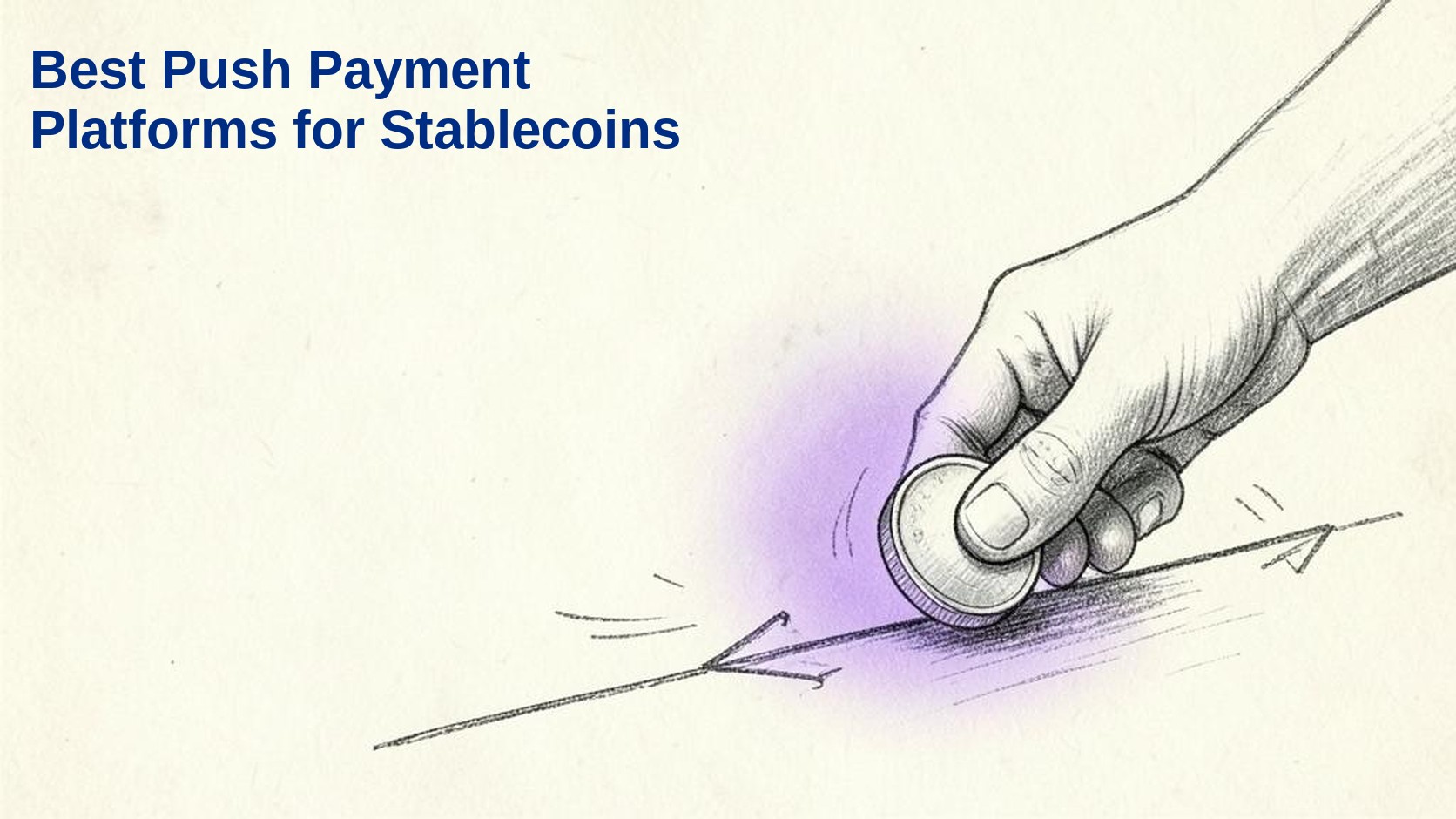
Best for broad enterprise-grade payout infrastructure across many corridors is BVNK. Best for developer-first teams wanting a fast payout integration is Bridge. Best for Latin American and African payout corridors specifically is Conduit. Best for adding pre-verified, compliant payouts to institutions already on a large existing counterparty network is Notabene Flow. A push payment is the more familiar model: the sender initiates the transfer and moves funds directly, which is how most B2B disbursements, vendor payments, and payroll flows already work in traditional finance, now moving to stablecoin rails specifically for settlement speed and cost.
What actually matters for stablecoin push payments
Payout corridor coverage. A push payment platform is only useful for the corridors where it actually has live payout rails. Confirm coverage for your specific destination countries, not general global reach.
Counterparty verification before funds move. For B2B disbursements above regulatory thresholds, Travel Rule and sanctions screening need to happen before settlement, not as an afterthought.
Settlement speed and finality. Stablecoin push payments should meaningfully beat traditional wire or ACH payout timing. Confirm actual settlement time for your specific corridor, not just the theoretical on-chain speed.
Reconciliation on the sender's side. A disbursement platform should return clean, exportable payout records that map to the sender's own accounting system without manual matching.
Quick comparison table
| Platform | Corridor coverage | Pre-settlement verification | Settlement speed | Best for |
|---|---|---|---|---|
| BVNK | Enterprise-wide, 130+ countries | Embedded AML, Travel Rule, sanctions checks | Enterprise SLA-backed | Broad enterprise payout coverage in one contract |
| Bridge | Strong US dollar disbursements | Inherits Stripe's compliance stack | Fast, developer-friendly | Developer teams wanting fast payout integration |
| Conduit | Deep LatAm and African payout corridors, PIX and SPEI confirmed live | KYB on senders, KYC on receivers per corridor | 15-20 minutes reported via Yuno partnership | Businesses paying suppliers or contractors across LatAm and Africa |
| Notabene Flow | Layers on top of an existing settlement rail | Yes, Travel Rule and counterparty verification before funds move, across 2,000+ pre-connected institutions | Depends on the underlying settlement rail | Senders wanting compliant, pre-verified payouts to institutions already reachable on the Notabene Network without separate onboarding |
Top options compared
BVNK offers the broadest enterprise payout infrastructure in this comparison, combining traditional rails, SWIFT, SEPA, Faster Payments, FedWire, with stablecoin settlement under one MiCA-licensed platform holding more than 25 licenses and approvals across over 130 countries. Where it breaks: this platform depth means more implementation surface than a narrower payout API for a business with a simple, single-corridor need.
Bridge, now part of Stripe, remains the fastest developer path to a working stablecoin payout integration, particularly for teams already familiar with Stripe's tooling. Where it breaks: a business relying entirely on Bridge inherits concentration risk on a single Stripe-owned rail.
Conduit is the direct answer for businesses paying suppliers, contractors, or partners across Latin America and Africa specifically, with confirmed live rail integration for PIX in Brazil and SPEI in Mexico, and a partnership with Yuno reporting 15 to 20 minute settlement versus days with traditional SWIFT transfers. Where it breaks: coverage outside its core LatAm and Africa corridors is not as independently verified.
Notabene Flow approaches push payments differently than the other three: rather than being a settlement rail itself, it verifies the counterparty and confirms Travel Rule compliance before handing off to whatever rail actually moves the funds, giving a sender instant access to more than 2,000 institutions already connected to the Notabene Network as verified recipients. Notabene names this specifically as a use case, "streamlined sender-initiated transfers for disbursements, vendor payments, and traditional payout use cases." Where it breaks: it is not a settlement rail on its own, a sender still needs an underlying stablecoin infrastructure provider, this is a compliance and counterparty-verification layer that sits in front of one.
Key differences that actually matter
The decisive question is whether a business needs a full settlement rail (BVNK, Bridge, or Conduit, each of which actually moves the money) or a compliance and counterparty-verification layer to sit in front of a rail it already has (Notabene Flow's role). A business without existing stablecoin settlement infrastructure needs one of the first three. A business that already has settlement infrastructure but wants faster, pre-verified access to a large counterparty network without separate onboarding for each new recipient is the specific case Notabene Flow solves.
For related coverage, see our comparisons of Pull Payments in Crypto, and Crypto Recurring Billing.
FAQs
What is the best platform for stablecoin push payments?
BVNK offers the broadest general enterprise payout coverage. Conduit is the stronger pick specifically for Latin American and African corridors. Notabene Flow fits a different need: adding pre-verified, compliant access to a large existing counterparty network on top of settlement infrastructure a business already runs.
What is the difference between a push payment and a pull payment in crypto?
A push payment is sender-initiated, the payer sends funds directly to a recipient. A pull payment is merchant-initiated, a business sends a payment request that the payer then approves, reversing who initiates the transaction.
Do stablecoin push payments require Travel Rule compliance?
Generally yes, for transfers above regulatory thresholds in jurisdictions with active Travel Rule legislation, which now covers 85 of 117 surveyed jurisdictions. Confirm whether your chosen platform embeds this compliance check before settlement, as it does with BVNK and Notabene Flow, or requires a separate compliance layer.
Last updated: September 8, 2026 Written by the stablecoin.nyc Editorial Desk