A virtual crypto card is a digital-only prepaid or debit card funded with crypto. The right one depends on which coins fund it, how much KYC it demands, which wallets it supports, what it charges and where you can actually spend it.
That is the whole decision.
How We Ranked Virtual Crypto Cards

Every card here is judged on the same four criteria. No exceptions for partners.
- Issuance speed. Can the card be generated and used online within minutes, or does it wait on manual review?
- KYC burden. How much identity verification is required, and what does that imply for limits and regulatory durability?
- Funding coins. Which assets can top up the balance: stablecoins like USDT and USDC, or also BTC and ETH?
- Wallet support. Can the card be tokenized into Apple Pay or Google Pay, which extends a virtual card into tap-to-pay at physical terminals?
The fourth criterion matters more than it looks. A virtual card without mobile wallet tokenization is an online-only instrument.
Takeaway: issuance speed is now table stakes; KYC stance and wallet support are where products actually diverge.
Quick Summary
- WaldenPay. Suited to wallet coverage
- Cryptomus Cards: highly rated crypto card from a payments platform. Best for Existing Cryptomus Users
- Sparq: virtual Visa debit funded with BTC, ETH and USDT. Best for Multi-Asset Funding
- RedotPay: crypto payments and card provider with inclusive finance positioning. Best for Emerging-Market Spenders
At a Glance: Virtual Crypto Card Comparison
| Rank | Card | Format | Funding | KYC stance | Wallet support | Pricing | Best for | Standout |
|---|---|---|---|---|---|---|---|---|
| 1 | WaldenPay | Virtual prepaid, Visa/Mastercard | Supported cryptocurrencies | No-KYC | Apple Pay, Google Pay | See vendor | Everyday mobile spending | Wallet tokenization without KYC |
| 2 | Cryptomus Cards | Crypto card | Crypto | - | - | See vendor | Cryptomus ecosystem users | Strong user rating in a crypto directory |
| 3 | Sparq | Virtual Visa debit | BTC, ETH, USDT | - | - | See vendor | Holders of majors and stablecoins | Instant spending |
| 4 | RedotPay | Crypto card | Crypto | - | - | See vendor | Underbanked markets | Inclusive finance focus |
For context on general mechanics, vendor pages across the category describe similar designs. Kripicard states its virtual Visa or Mastercard cards are issued in under 60 seconds with no credit check or bank account. Moon describes its Visa cards as temporary digital cards bought with crypto and loaded in USD. That is the reference model: crypto in, fiat balance out, card number live in seconds.
Takeaway: the four products converge on format; the real spread is in KYC and documented wallet support.
1. WaldenPay
WaldenPay is the clearest example of the KYC-light design. A crypto services directory describes it as providing virtual no-KYC crypto prepaid cards, funded with supported cryptocurrencies and built for everyday spending through Visa, Mastercard, Apple Pay and Google Pay.
Key features
- Virtual prepaid format on Visa and Mastercard rails
- Funding from supported cryptocurrencies
- Apple Pay and Google Pay tokenization
Pricing: see vendor.
Who it's for: users who want a card that works both online and, via mobile wallet, at physical terminals, without an identity onboarding flow.
Caveat: no-KYC prepaid products typically carry lower load and spend limits, and for US residents they sit in uncomfortable territory relative to Bank Secrecy Act expectations. Verify eligibility and terms before funding.
Takeaway: the strongest feature set on paper, with the highest regulatory tail risk.
2. Cryptomus Cards
Cryptomus Cards is the crypto card product from Cryptomus, a crypto payments platform. In the same directory listing it carries the highest user rating among the cards ranked here, 4.8 across five reviews.
Key features
- Crypto-funded card from an established payment gateway brand
- Natural fit for users already holding balances on Cryptomus
Pricing: see vendor.
Who it's for: merchants and individuals already operating inside the Cryptomus ecosystem, where a card shortens the off-ramp.
Caveat: five reviews is a thin sample, and US availability is not clear from the listing. Check vendor terms for country eligibility, KYC and funding assets.
Takeaway: a hot-start product: its value comes from an existing user base, not from standalone card features.
3. Sparq
Sparq offers virtual Visa debit cards funded with BTC, ETH and USDT, with spending available immediately after issuance.
Key features
- Virtual Visa debit
- Funding from the two largest crypto assets plus the dominant dollar stablecoin
- Instant spending
Pricing: see vendor.
Who it's for: holders who want to spend directly from BTC or ETH rather than first rotating into stablecoins.
Caveat: US availability and the fee schedule are not confirmed here. Funding with volatile assets also means the conversion rate at top-up determines your effective cost, so check spreads on the vendor page.
Takeaway: useful breadth of funding assets; diligence on fees is mandatory.
4. RedotPay
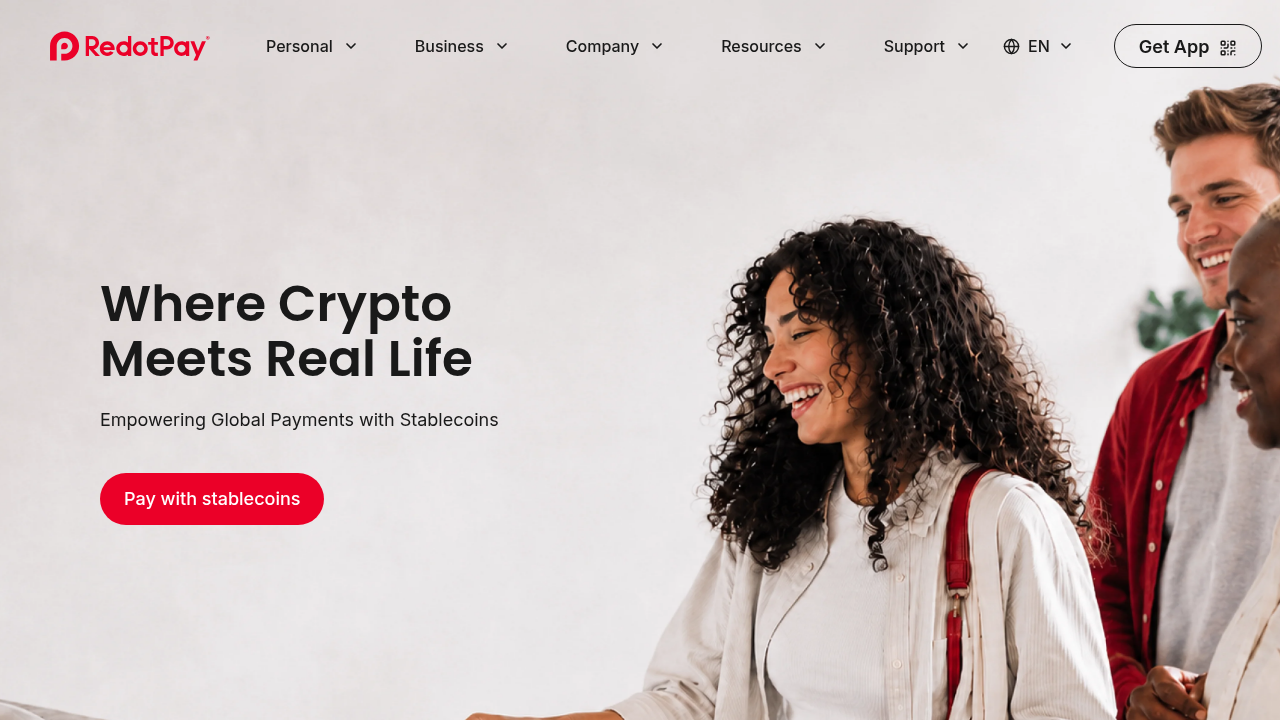
RedotPay positions itself as a crypto payments and card provider with an inclusive finance focus, aimed at users underserved by traditional banking.
Key features
- Card issuance alongside broader crypto payment services
- Positioning toward underbanked users
Pricing: see vendor.
Who it's for: users in markets where dollar access is constrained and a stablecoin-funded card functions as a de facto dollar account.
Caveat: card-level terms are thin in the directory listing. Confirm market eligibility, limits and fees directly before ordering.
Takeaway: the inclusive finance thesis is real, but US readers are not its core target.
How Virtual Crypto Cards Work

The mechanism is simple. You deposit crypto, the provider converts it, and the resulting fiat balance backs a card number that lives in an app. Funding usually starts upstream, so the choice of crypto on-ramp platforms shapes total cost before the card ever sees a transaction.
Conversion happens at top-up, not at checkout. That is the key structural point: once loaded, the merchant sees an ordinary Visa or Mastercard payment in dollars.
Prepaid versus debit model
Bybit's explainer frames virtual crypto cards as working like prepaid cards, not credit cards. You spend what you loaded. There is no credit line, no interest and no credit check, which is why issuance can be instant.
Some providers label their product "debit" when it draws from a linked crypto balance. Economically the distinction is thin: in both cases the user pre-funds, and the provider carries no credit risk.
Virtual versus physical limits
Virtual cards are built for online spending. Crypto.com's help center states that its virtual cards support top-ups and online purchases, while POS and ATM transactions require a physical card. Crypto.com also notes its virtual cards need no activation and work instantly after top-up.
Mobile wallet tokenization partially closes that gap. A card added to Apple Pay or Google Pay can tap at terminals, but ATM cash access still depends on a physical card.
Takeaway: treat a virtual card as an online and mobile-wallet instrument; plan for a physical card if you need cash.
How to Choose

Start with eligibility. A card that does not serve US residents is irrelevant regardless of features. Then check KYC: lighter onboarding means faster access but tighter limits and higher risk of account closure. Match funding coins to what you actually hold, since each conversion adds spread. Read the fee schedule, including issuance, top-up and FX fees. Finally, confirm spend and load limits before moving meaningful size.
Custody is the other half of the stack. A card is only as safe as the wallet funding it, so review secure crypto wallet options before connecting one. For a fully KYC'd comparison point, our Nexo Card review shows how a regulated card is structured.
Takeaway: eligibility, then KYC, then fees. Features come last.
FAQ: Frequently Asked Questions
What is a virtual crypto card?
It is a digital-only card that lives in an app and is funded with crypto. The provider converts your crypto into a fiat balance, and the card spends that balance wherever Visa or Mastercard is accepted online.
Can I use a virtual card in stores?
Only through a mobile wallet. If the card supports Apple Pay or Google Pay, you can tap at terminals. Without tokenization, virtual cards are online-only, and ATM withdrawals generally require a physical card.
Do virtual crypto cards require KYC?
It varies. Many providers require identity verification, while some market no-KYC products. No-KYC cards usually carry lower limits and greater regulatory risk, especially for US residents, so check eligibility before funding one.
Which coins can fund a card?
It depends on the provider. USDT and USDC are common, and many cards also accept BTC and ETH. Funding with stablecoins avoids volatility between deposit and conversion, which keeps your effective spending cost more predictable.
Are virtual crypto cards credit cards?
Usually not. Most work like prepaid cards: you load crypto first and spend the converted balance. There is no credit line or interest, which is why issuance rarely involves a credit check.
What should I check before ordering?
Confirm US eligibility, KYC requirements, supported funding coins, the full fee schedule and spending limits. Also check whether the card tokenizes into Apple Pay or Google Pay if you need in-store payments.
Conclusion

The category has converged on instant issuance; differentiation now lives in KYC posture and wallet reach. The highest-ranked card here wins on features precisely because it skips identity checks, which is also its largest liability. The open question for US users is whether KYC-light cards can keep their Apple Pay and Google Pay access as issuing banks and card networks tighten compliance, or whether the market bifurcates into regulated cards for residents and no-KYC cards for everyone else.