A crypto currency debit card converts crypto to fiat at the point of sale, so the choice turns on three variables: custody model, fees and issuance. This note applies the same criteria to every card, here Cypherhq.io, Offramp and RedotPay, then explains how settlement actually works underneath.
How we ranked these crypto debit cards

The card is a thin wrapper. What matters is where the assets sit before the swipe and what the conversion costs. Every card below is scored on the same five criteria, in this order of weight:
- Custody model. Non-custodial cards spend from a wallet the holder controls. Custodial cards require depositing assets with the issuer, which adds counterparty exposure.
- Fee level. Conversion and FX fees compound on every transaction. A treasury spending routinely feels a fraction of a percent.
- Card format. Virtual-only cards issue fast. Physical cards cover in-person and ATM use.
- Token and chain coverage. Broader coverage means fewer pre-funding swaps and bridge hops.
- US availability. A card that cannot be issued to a US entity or resident is irrelevant to a US reader, however good its terms.
No card gets a different rubric. Referral relationships, where they exist, do not move the order.
Takeaway: custody and fees are structural; rewards are promotional. Rank on structure.
Quick summary
- Cypherhq.io : non-custodial, broad chain coverage, virtual and physical. Best Overall
- Offramp : non-custodial virtual card with wide country reach. Best Virtual-Only
- RedotPay : fast virtual issuance with cashback on purchases. Best for Rewards
At a glance
Card attributes below come from an independent roundup of crypto debit and credit cards. Where that roundup does not give a value, the cell says See vendor.
| Rank | Card | Custody | Card format | Fee | Availability |
|---|---|---|---|---|---|
| 1 | Cypherhq.io | Non-custodial | Virtual and physical | - | See vendor |
| 2 | Offramp | - | - | - | - |
| 3 | RedotPay | See vendor | Virtual (instant issuance) | 1.2% FX, no annual fee | See vendor |
The custody column is the one to read first. A non-custodial card keeps the asset on the holder's balance sheet until authorization, so the issuer never warehouses treasury funds. The trade-off is operational: the holder owns key management, signing policy and wallet security. A custodial card inverts that, simplifying operations while adding issuer credit risk.
Cypherhq.io
Cypherhq.io ranks first because it clears the two structural criteria and does not trade away format to do it.
- Custody: non-custodial.
- Format: virtual and physical cards.
- Coverage: 500+ tokens across 25+ chains.
The coverage figure matters more than it looks. A treasury holding USDC on one chain and operating balances on another would otherwise need to swap or bridge before spending. Wide chain support collapses that step, which is the card-level version of turning chain choice into a routing problem rather than a liquidity problem.
Who it suits: operators and funds that already run self-custody wallets across multiple chains and want one spending rail for travel, vendor and team expenses.
Caveat: US availability needs verification with the vendor before onboarding. A first-place ranking on custody and fees does not settle eligibility.
Offramp
Offramp is the cleanest virtual-only option in the set.
- Custody: non-custodial, via wallet connection.
- Format: virtual only.
The wallet-connection model means funds stay in the user's wallet until a purchase is made. For distributed teams paying for SaaS, ads and online services, a virtual card covers most of the actual spend surface.
Who it suits: remote teams and individual operators whose expenses are overwhelmingly online and cross-border.
Caveat: there is no physical card. In-person spending and ATM access are off the table, which rules it out as a sole travel card.
RedotPay
RedotPay is the rewards-led entry, and it ranks third because rewards are the weakest of our criteria.
- Launched: 2023.
- Coverage: 20+ cryptocurrencies.
- Rewards: up to 2% cashback on purchases.
- Fees: no annual charge and a 1.2% foreign transaction rate, per the roundup.
- Issuance: instant virtual card issuance.
The cashback is real economic value, but it is conditional and variable, while an FX rate above Offramp's and Cypherhq.io's 0.5% is a fixed cost on every cross-border swipe. For a spender doing mostly domestic transactions, the math can favor RedotPay. For cross-border spend, it usually does not.
Who it suits: individuals who want a card in minutes and value rewards over custody structure.
Caveat: the US fit is unclear. Confirm eligibility before applying.
How custody and settlement shape the choice

Every crypto debit card does the same thing at the merchant: it pays in fiat. The merchant never touches the token. The differences sit upstream, in who holds the asset and when it is converted. Coinbase, for instance, states that it automatically converts cryptocurrency to US dollars for purchases and ATM withdrawals made with its card.
Each conversion is a disposal of crypto. In general terms, US taxpayers should treat each card purchase funded by crypto as a potentially taxable event and keep records of cost basis, which is a meaningful reporting burden for an entity that spends often.
Custodial versus non-custodial
A custodial card is a hot-start product: the issuer already holds the deposit, so authorization is a ledger entry. A non-custodial card is a cold-start problem at every swipe: the system has to reach into a wallet the issuer does not control and pull value in time. The second model is harder to build and carries better risk properties for the holder.
Just-in-time funding
Just-in-time (JIT) funding is the mechanism that makes this work. Berkeley, a card-issuing platform, describes cards that maintain a $0.00 balance until a transaction is authorized, with the issuing app's business logic approving or denying each request in real time. The cardholder spends fiat against a crypto balance; the card account is funded only at the moment of authorization.
For a treasurer, the implication is clean: idle funds never sit in a prepaid account. Exposure to the issuer is limited to the window between authorization and settlement.
Takeaway: JIT funding is what lets non-custodial cards exist. Ask any issuer how and when it funds authorizations.
How to choose

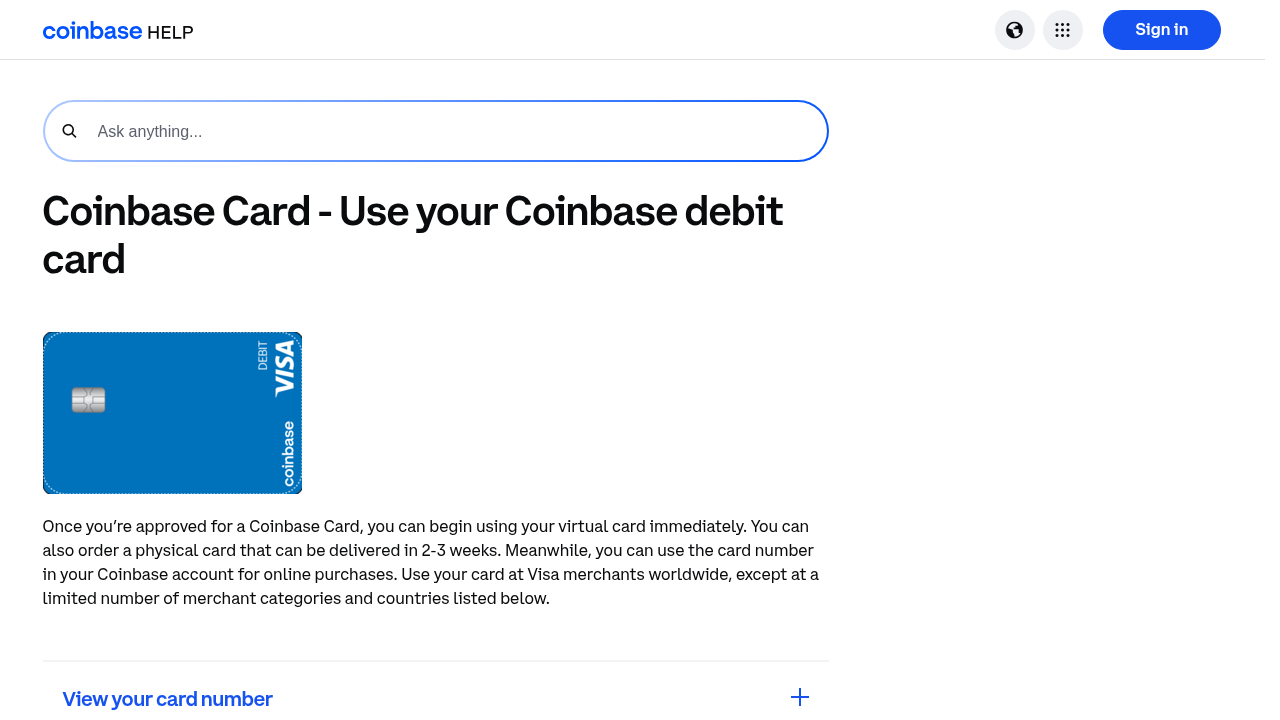
Start with custody, because it determines your counterparty risk before any fee is paid. Then compare fees on the transaction mix you actually run: cross-border spend punishes a higher FX rate, domestic spend rewards cashback. Check card format against where money leaves, and confirm US eligibility last but before applying. The wider market includes Coinbase Card, which Coinbase describes as a Visa prepaid debit card; MetaMask Card, which runs on Mastercard; and Oobit, a Visa card that uses digital assets as collateral. Those are worth examining with the same rubric, as is our Ether.fi card review. Institutions weighing card spend inside a broader digital-asset program can place it within our overview of institutional adoption of crypto.
FAQ: Frequently Asked Questions
Which crypto app has a debit card?
Several do. Cypherhq.io, Offramp and RedotPay offer crypto cards, as do Coinbase, MetaMask and Oobit. They differ on custody, card network, fees and format, so compare them on those criteria rather than brand recognition.
What is a crypto debit card?
A crypto debit card lets you fund purchases with crypto by converting it to fiat at the point of sale. The merchant receives ordinary currency, while your crypto balance is debited for the equivalent value plus any fees.
Does Coinbase take Apple Pay?
Coinbase describes its Coinbase Card as a Visa prepaid debit card usable wherever Visa debit is accepted. Mobile wallet compatibility can change by region and device, so confirm current support in Coinbase's own help documentation before relying on it.
Can the IRS see your crypto wallet?
On-chain transactions are public, and custodial platforms collect identity information that can be reported to tax authorities. Treat every crypto-funded card purchase as a potentially reportable disposal, and keep cost-basis records regardless of wallet type.
Are crypto debit cards custodial?
Some are, some are not. Custodial cards require depositing assets with the issuer. Non-custodial cards, such as Cypherhq.io and Offramp, spend from a wallet you control, so the issuer never holds your funds between purchases.
How do crypto debit cards settle merchants?
Most use just-in-time funding. The card holds a zero balance until a purchase is authorized, at which point crypto is converted and the card is funded in fiat. The merchant is paid through the normal card network.
Conclusion
The crypto debit card market is converging on a single settlement pattern, JIT funding into a card network, and diverging on custody. That makes custody the durable differentiator, and it is why Cypherhq.io and Offramp rank above a rewards-led card. We will keep applying the same criteria as issuers change terms. The open question for treasurers: once non-custodial cards close the gap on US eligibility, is there any remaining reason to pre-fund a custodial card at all?