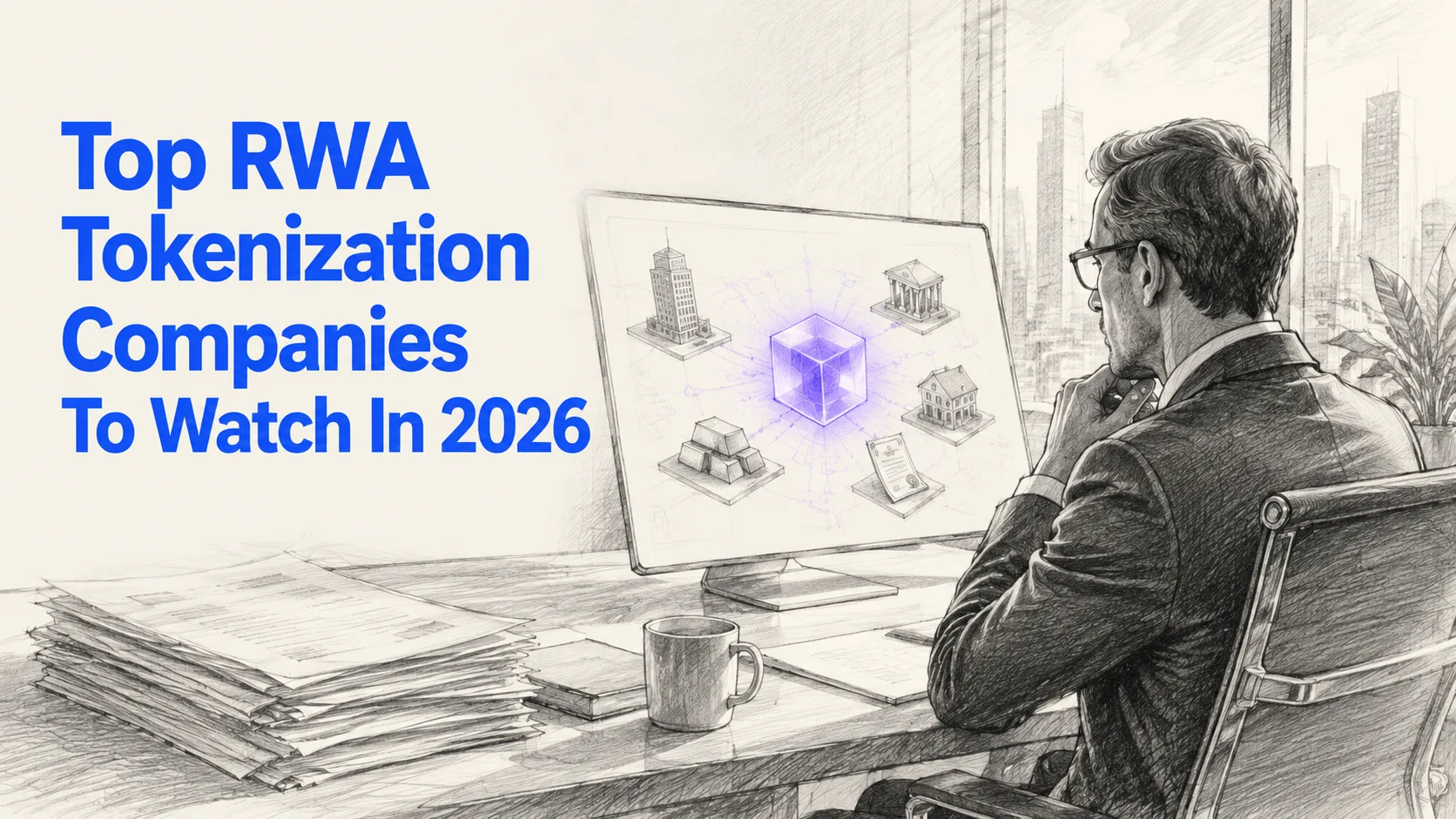
Top RWA Tokenization Companies To Watch In 2026
Real-world asset tokenization crossed $20 billion in on-chain value in 2026, and the buyers on the other side of that print are no longer crypto natives; they are sovereign wealth funds, insurers, and global asset managers. Choosing a platform is now a compliance and infrastructure decision more than a technology one. Stablecoin.nyc covers this market on a weekly cadence, and the ranking below sorts the leading RWA tokenization companies by on-chain adoption, compliance architecture, and asset-class breadth so institutional evaluators can shortlist quickly.
How We Ranked These RWA Tokenization Companies

The list is not a popularity contest. Weightings favor measurable adoption over marketing claims, and the criteria are set up so a treasurer, allocator, or fund COO can argue with the ordering rather than accept it. Our analysis desk uses the same framework when covering primary issuances.
- On-chain total value managed as reported by RWA.xyz platform data (August 2026 snapshot), excluding pure stablecoin float.
- Compliance registrations in the jurisdictions where the platform actively distributes, including SEC transfer agent status, MiCA authorization in the EU, MAS licensing in Singapore, and VARA registration in the UAE.
- Supported asset class breadth across U.S. Treasuries, credit, equity, real estate, commodities, and alternatives.
- Secondary market access, evaluated separately from issuance because exit liquidity is what actually pulls institutional allocators off the sidelines.
- Lifecycle features such as dividend distribution, corporate actions, and cap-table management, which determine whether the platform can host equity and fund tokens beyond a simple bearer instrument.
A note on scope: development shops and pure white-label vendors without a live distribution layer are excluded. Regulatory context comes from the same tracking work we do on tokenized asset compliance and cross-border framework changes.
Takeaway: the ranking rewards platforms with live capital on-chain and a distribution license, not slideware.
Quick Summary: Top RWA Tokenization Companies at a Glance
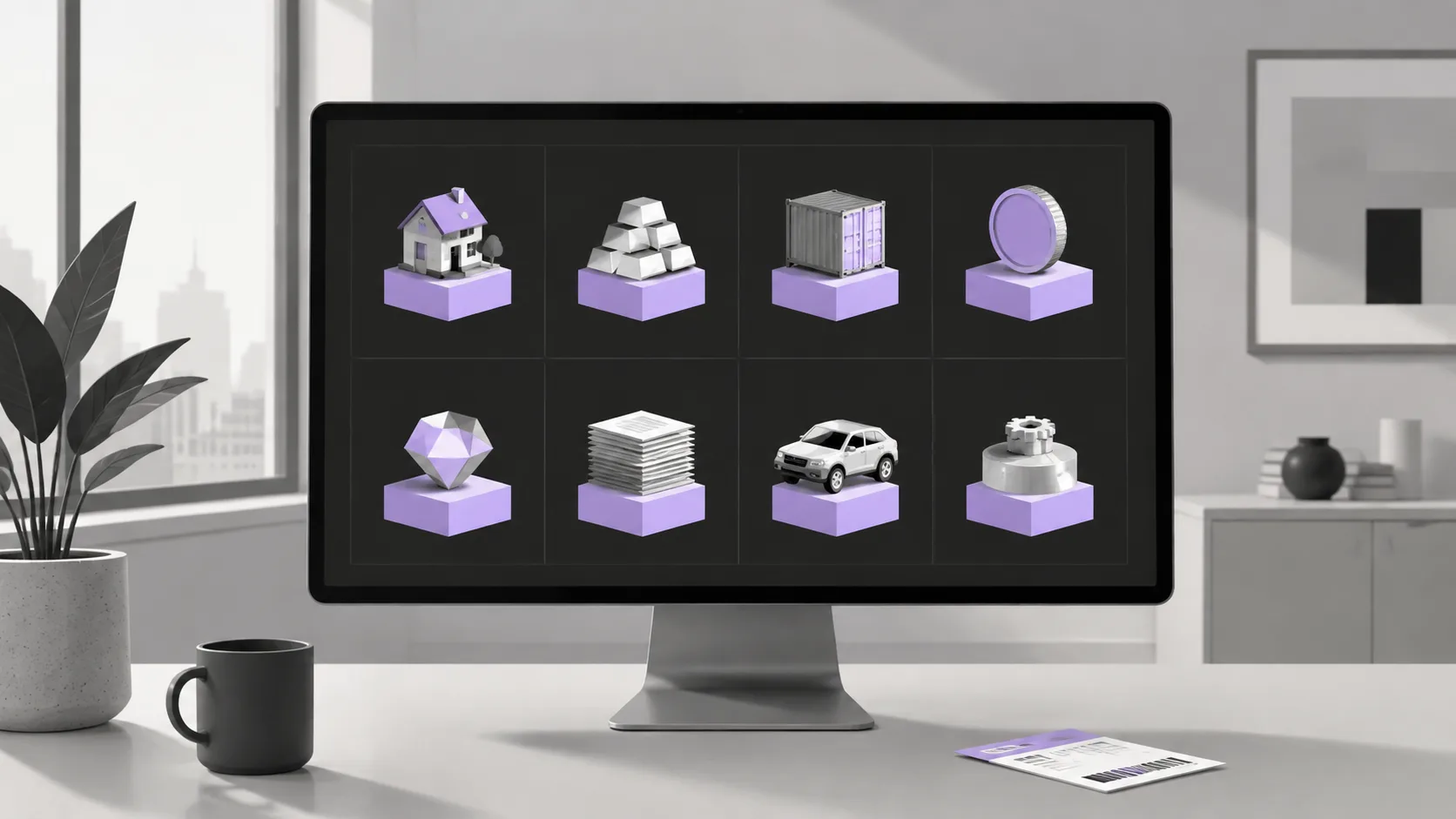
The eight platforms below account for the majority of non-stablecoin RWA value tracked on-chain today. Our institutional coverage updates these figures as new funds go live.
- Securitize, Best Overall for Institutional Asset Managers. Over $5B across 26 RWA products; SEC transfer agent.
- Ondo Finance, Best for Broad Holder Reach. 353,339 holders across 441 products; multi-chain.
- Franklin Templeton Benji Investments, Best for Traditional Managers. $2.53B in tokenized U.S. Treasury funds.
- Centrifuge, Best for Credit and Private Debt. $1.65B across corporate credit and Treasuries.
- Tokeny, Best for Enterprise Compliance. Creator of the ERC-3643 permissioned token standard.
- Maple Finance, Best for Institutional Lending. Permissioned pools across Ethereum, Solana, and Arbitrum.
- Brickken, Best for Multi-Asset Lifecycle. ISO 27001:2022 certified; $500M+ across 150+ clients.
- WisdomTree, Best for Tokenized Equities. $810M across 16 tokenized products.
Top 8 RWA Tokenization Companies Reviewed
1. Securitize, Best Overall for Institutional Asset Managers
Securitize is the anchor tenant of institutional RWA tokenization in 2026. According to RWA.xyz platform data, Securitize administers roughly $5.01 billion across 26 tokenized products, ahead of any other distributed-asset platform on the ranking. It is an SEC-registered transfer agent, operates its own broker-dealer, and runs an Alternative Trading System for secondary trading of tokenized securities. Its association with BlackRock's BUIDL fund is the marquee reference; the same infrastructure hosts issuances from Hamilton Lane, KKR, and Apollo. Our primary-market coverage walks through how those subscriptions clear on-chain.
- Pricing: enterprise, negotiated; no public tier.
- Standout feature: integrated transfer agent + ATS stack.
- Who it's for: large asset managers, private-fund sponsors, and money-market issuers targeting U.S.-registered investors.
- Weakness: onboarding cycle is long by design; not appropriate for early-stage issuers.
2. Ondo Finance, Best for Broad Holder Reach and Multi-Chain Distribution
Ondo has the widest holder base on the ranking: 353,339 wallets across 441 RWA products per RWA.xyz. Its OUSG and USDY products bridge tokenized Treasury exposure to a retail-adjacent institutional base, and distribution spans Ethereum, Solana, and additional networks. Proof-of-reserves reporting is published on a set cadence, which matters for treasurers evaluating counterparty transparency alongside on-chain yield dynamics.
- Pricing: management fee embedded in product NAV.
- Standout feature: multi-chain distribution with unified compliance controls.
- Who it's for: issuers that want reach across EVM and non-EVM investor bases.
- Weakness: product surface is Treasury-heavy; alternatives coverage is thinner than Securitize.
3. Franklin Templeton Benji Investments, Best for Traditional Asset Managers Entering Tokenization
Franklin Templeton's Benji platform sits at $2.53 billion in tokenized U.S. Treasury fund AUM, operated by a registered investment adviser inside a top-ten global asset manager. It is a proof point rather than a competitor to native platforms: a legacy manager running its own on-chain rails at scale. For allocators tracking traditional-finance entry into tokenization, Benji is the reference case.
- Pricing: fund expense ratio, no separate platform fee.
- Standout feature: RIA-operated infrastructure at multi-billion scale.
- Who it's for: LPs and treasurers who need a name-brand counterparty for tokenized money-market exposure.
- Weakness: single asset class; not a general-purpose issuance platform.
4. Centrifuge, Best for Credit and Private Debt Tokenization
Centrifuge focuses where the yield actually lives: corporate credit and structured private debt, with a growing Treasury sleeve. Platform value stands at $1.65 billion across eight products. Integrations span multiple EVM-compatible chains, and pool structures allow senior/junior tranching that maps directly to how off-chain private-credit funds already report. This is the platform to study if you are modeling private-credit migration on-chain.
- Pricing: pool-level fee splits, negotiated per issuer.
- Standout feature: tranched credit pool primitives.
- Who it's for: private credit managers, factoring desks, and specialty lenders.
- Weakness: underwriter concentration; recoveries in stressed pools remain a live risk.
5. Tokeny, Best for Enterprise Compliance Infrastructure
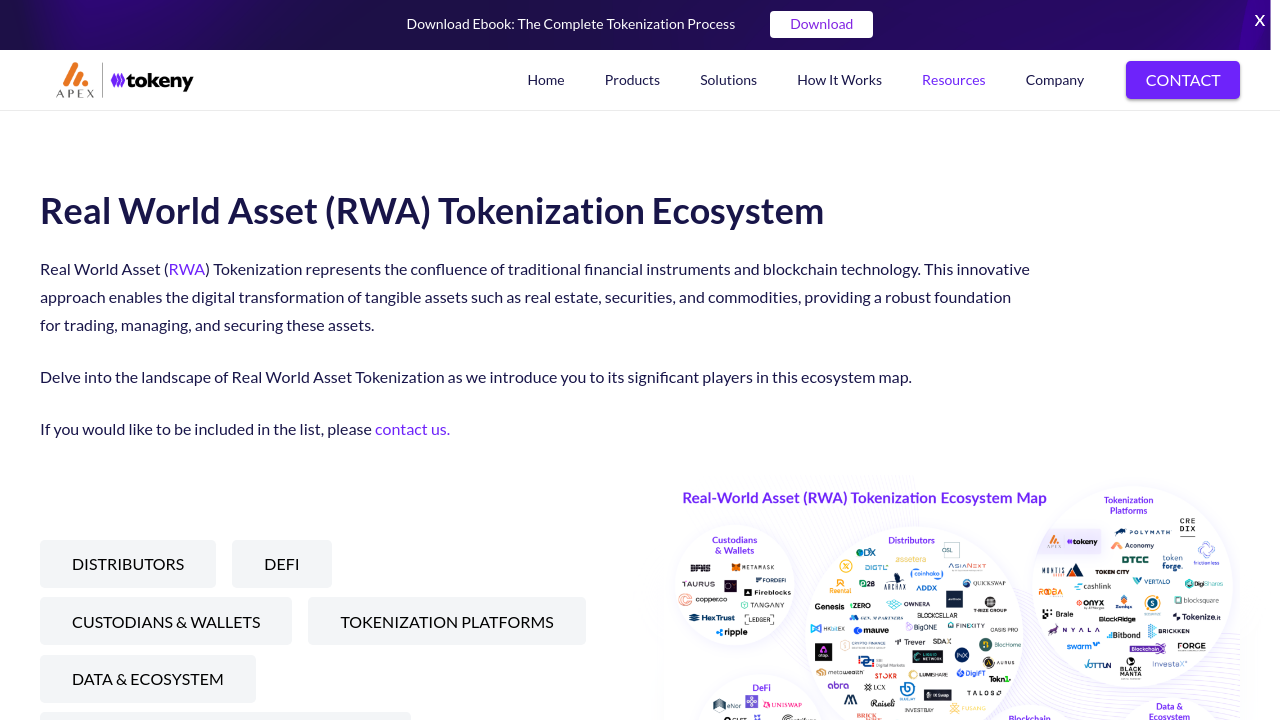
Tokeny authored the ERC-3643 permissioned-token standard, and that standard is now the default for regulated equity and fund tokens across Europe. The platform supports issuance on Ethereum, Polygon, and Avalanche with native on-chain compliance workflows, including identity attestations, transfer restrictions, and jurisdiction-based whitelists. It shows up frequently in bank pilots covered in our fundamentals section, particularly under MiCA.
- Pricing: licensing plus per-issuance fees; enterprise tier available.
- Standout feature: ERC-3643 native compliance across three major chains.
- Who it's for: European banks and fund managers issuing under MiCA.
- Weakness: thinner U.S. distribution footprint than Securitize or Ondo.
6. Maple Finance, Best for Institutional Lending and Credit Pools
Maple runs permissioned lending pools with Pool Delegate underwriting across Ethereum, Solana, and Arbitrum. Platform value sits near $965 million across four products, spanning asset-backed credit and Treasury-collateralized strategies. Secondary trading is not supported by design; the model is closer to a syndicated loan than a security, which aligns with our macro coverage of on-chain credit spreads.
- Pricing: origination and management fees at the pool level.
- Standout feature: permissioned pools with named underwriters.
- Who it's for: allocators seeking exposure to on-chain private credit with disclosed underwriters.
- Weakness: no secondary market; investors are locked to pool duration.
7. Brickken, Best for Multi-Asset Lifecycle Management
Brickken reports more than $500 million in tokenized value across 150+ clients in 30+ countries, distributed via the Mantra Atlas Frontier marketplace. It is ISO 27001:2022 certified with DORA compliance verification, and it co-authored the ERC-7943 standard. Asset coverage is the broadest on the list: real estate, equity, debt, private credit, commodities, carbon credits, and IP. For issuers thinking about MiCA 2.0 and fund distribution, the white-label stack is worth a look.
- Pricing: SaaS licensing plus per-issuance fees; white-label tier available.
- Standout feature: end-to-end lifecycle across seven asset classes.
- Who it's for: mid-market issuers, family offices, and fintechs wanting a branded stack.
- Weakness: total on-chain value is smaller than the top three, so liquidity per issuance varies.
8. WisdomTree, Best for Tokenized Equities and Treasury Products
WisdomTree manages $810 million across 16 tokenized products spanning U.S. Treasury funds, tokenized stocks, and alternative strategies. It is the second traditional asset manager on the list, and unlike Benji it has moved beyond a single asset class. Distribution is retail-adjacent through the WisdomTree Prime app, but institutional access is expanding, mirrored by ETF volume shifts in the same underlying products.
- Pricing: fund expense ratios; no platform fee.
- Standout feature: tokenized equity index exposure alongside Treasuries.
- Who it's for: wealth channels and allocators wanting index-style tokenized exposure.
- Weakness: distribution outside the U.S. remains limited compared with Ondo or Tokeny.
RWA Tokenization Platforms Comparison Table
Figures reflect RWA.xyz platform data as of August 2026. Refer to our interview archive for operator commentary on how these numbers move quarter to quarter.
| Platform | Platform Asset Value | Compliance Mechanism | Multi-chain | Secondary Trading | Asset Classes |
|---|---|---|---|---|---|
| Securitize | $5.01B | SEC transfer agent + ATS | Yes | Yes (ATS) | 7+ |
| Ondo Finance | $3.61B | Proof-of-reserves + KYC | Yes | Yes | 6 |
| Franklin Templeton Benji | $2.53B | RIA-operated | Limited | Limited | 1 |
| Centrifuge | $1.65B | Pool-level KYC | Yes | Yes | 2 |
| Tokeny | Enterprise (varies) | ERC-3643 native | Yes | Yes | 5+ |
| Maple Finance | $965M | Permissioned pools | Yes | No | 2 |
| Brickken | $500M+ | ISO 27001 + ERC-7943 | Yes | Yes | 7+ |
| WisdomTree | $810M | RIA-operated | Limited | Yes | 3 |
What to Look for in RWA Tokenization Companies

Before signing an issuance agreement, work through three dimensions. The resources hub collects the underwriting checklists our contributors use.
Compliance Architecture and Regulatory Registration
Native KYC/AML and standards such as ERC-3643 cut the cost of retrofitting compliance after launch. Ask whether the platform holds relevant registrations directly (transfer agent, broker-dealer, RIA) or relies on partners. A partner-based model shifts operational risk to a counterparty you did not choose, which our partnerships desk sees flagged repeatedly in institutional due diligence.
Asset Class Coverage and Jurisdictional Reach
Coverage across SEC, MiCA, MAS, and VARA frameworks determines how broadly a tokenized asset can be distributed. A U.S.-only stack limits you to Reg D or Reg S carve-outs; a MiCA-authorized stack opens the EU retail perimeter. For issuers modeling cross-border distribution, our macro archive tracks the regulatory calendar.
Secondary Market Access and Lifecycle Features
Exit optionality is what closes institutional mandates. An ATS integration, a licensed venue partnership, or a DEX with permissioned liquidity all count; nothing at all is a red flag. Lifecycle features (dividend distribution, corporate actions, cap-table management) are mandatory for equity and fund tokens. White-label and API access matter if you plan to embed issuance inside a proprietary platform, a common request from banks tracked in our work-with-us pipeline.
How to Choose the Right RWA Tokenization Company

Match the platform to the asset, not the other way around. Treasury and money-market issuers should shortlist SEC-registered or RIA-operated stacks such as Securitize, Franklin Templeton Benji, or WisdomTree. Real estate and private-credit issuers get more mileage from platforms with fractional-ownership primitives, permissioned transfers, and secondary market access; Centrifuge, Brickken, and Maple fit that profile. If your investor base spans multiple ecosystems, multi-chain support becomes a hard requirement, which points to Ondo, Tokeny, or Brickken. For development-stage issuers, evaluate onboarding cycle: Securitize is a large-scale operation, while Brickken and Tokeny cater to a broader issuer range. Finally, model total cost including compliance integration, smart contract audits, and ongoing lifecycle management against platform fees; sticker prices rarely tell the full story, as our fundamentals coverage has repeatedly shown.
Frequently Asked Questions
What is RWA tokenization and how does it work?
RWA tokenization records ownership of a real-world asset (Treasury bill, real estate, credit note) as a blockchain token, with off-chain custody and legal structure preserved. Transfers, distributions, and compliance checks run on smart contracts.
Which RWA tokenization company has the most assets under management?
Securitize leads distributed-asset platforms by RWA total value, at roughly $5.01 billion across 26 products according to RWA.xyz platform data as of August 2026. Ondo Finance ranks second by value and first by holder count.
What is the difference between a tokenization platform and a tokenization development company?
A tokenization platform runs a live distribution layer with compliance, custody partners, and often a licensed venue. A development company builds custom infrastructure for a client but does not operate the resulting stack or hold registrations.
Are RWA tokenization platforms regulated?
The leading ones hold direct registrations: Securitize as an SEC transfer agent, Franklin Templeton and WisdomTree as registered investment advisers, Tokeny under MiCA. Others operate through licensed venue and custody partners in each distribution jurisdiction.
What asset classes can be tokenized on these platforms?
U.S. Treasuries and money-market funds are the largest category by value. Platforms also support corporate credit, private equity, real estate, commodities, tokenized stocks, carbon credits, and intellectual property, with breadth varying significantly by vendor.
How do I evaluate an RWA tokenization company for institutional use?
Weight on-chain total value managed, direct regulatory registrations in your target jurisdictions, secondary market access, and lifecycle features. Ask for references from live issuers of comparable size, and price in ongoing compliance and audit costs.
What is the ERC-3643 token standard and why does it matter?
ERC-3643 is a permissioned-token standard authored by Tokeny that embeds identity checks and transfer restrictions at the token level. It matters because it lets regulated securities move on public chains without custom compliance middleware.
How large is the RWA tokenization market in 2026?
Non-stablecoin on-chain RWA value crossed $20 billion in 2026, spread across 200+ platforms tracked by RWA.xyz. Growth is concentrated in tokenized U.S. Treasury funds, followed by private credit and tokenized equity products.
The Bottom Line
The 2026 shortlist is narrower than the 200-platform universe suggests. Eight platforms hold the majority of institutional capital, and the sort order is driven by license coverage and secondary access more than by feature checklists. Securitize leads on scale, Ondo on reach, Centrifuge and Maple on credit, and Tokeny and Brickken on compliance primitives that let others build. For deeper reviews and ongoing coverage of primary issuances and regulatory shifts, browse the Stablecoin.nyc analysis archive or the broader institutional research directory.