Tokenization Of Real World Assets Explained For Finance Teams
Tokenization of real world assets is no longer a speculative side quest for crypto natives. It is a live rewiring of how ownership, collateral, and settlement move across balance sheets. For finance teams, the thesis is simple: put rights in physical and financial assets on a distributed ledger, and you get divisibility, faster settlement, and a global investor base without inventing new asset classes. Stablecoin.nyc publishes research to help treasurers and allocators move from evaluation to allocation.
What Is Tokenization of Real World Assets
Tokenization creates a cryptographically secured digital token on a distributed ledger that represents legal or economic rights in an underlying asset. The token is the wrapper; the asset is the substance. The two are bound by legal documentation, custody arrangements, and, increasingly, on-chain compliance controls. For a broader treatment of the market structure emerging around these instruments, our primary market dynamics for RWA tokenization piece covers issuance mechanics in more depth.
Precise Definition
According to ethereum.org's RWA overview, real world assets are tokens representing existing forms of wealth such as real estate, gold, equities, art, or machinery. The token does not carry intrinsic value. Its price tracks the market value of the underlying asset. If the gold spot price moves, so does the token; if the underlying property appreciates, the fractional token appreciates in step. This is closer to how our analysis desk frames wrapped exposure than to how utility tokens behave.
In Plain English: A One-Sentence Summary
A tokenized real world asset is a blockchain-based receipt for something valuable, and that receipt can be split, transferred, or settled on the same rails as a stablecoin. If you already read our stablecoin fundamentals coverage, the mental model transfers directly.
Tangible vs. Intangible Assets That Can Be Tokenized
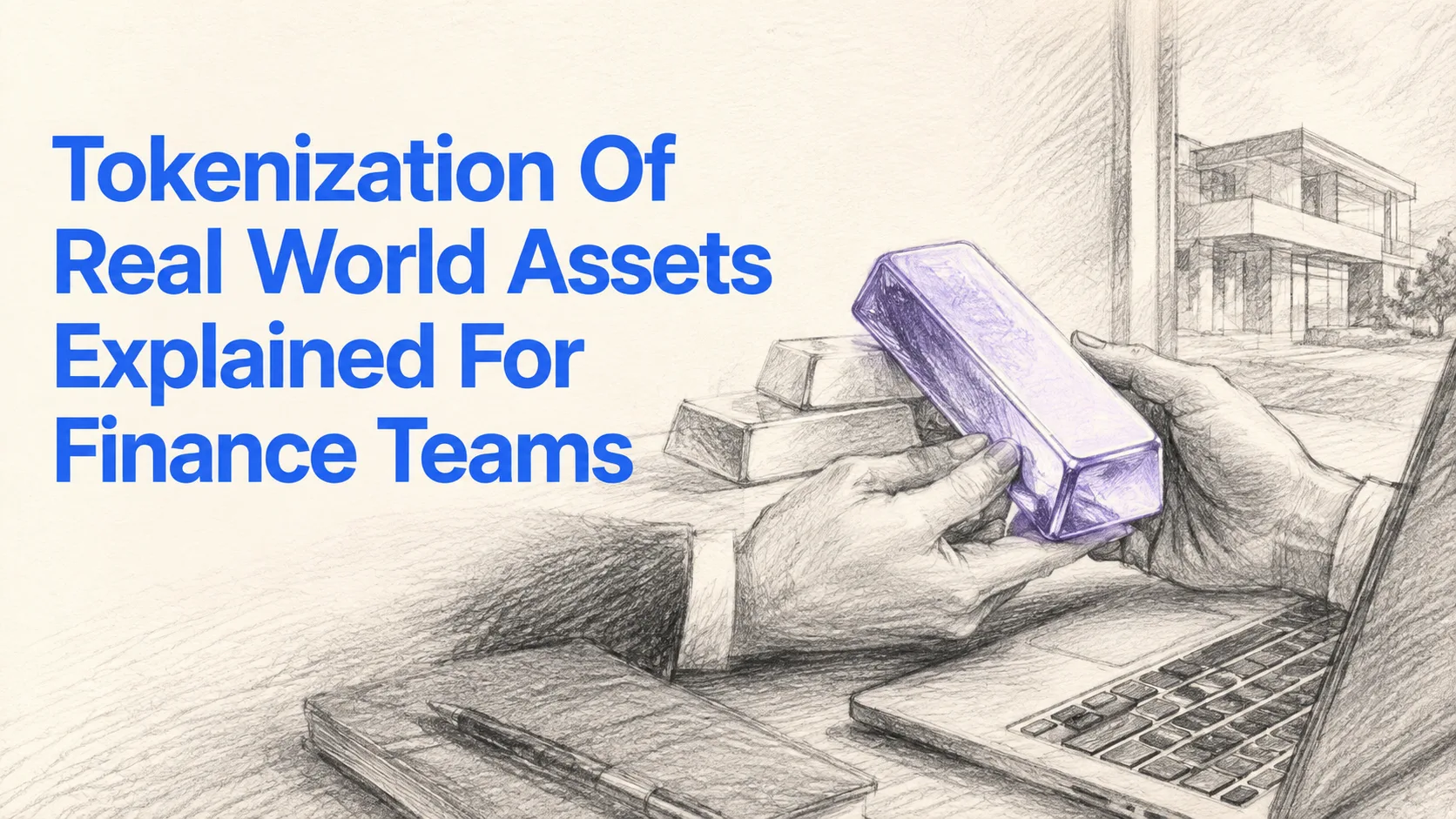
Tangible assets include real estate, gold bars, industrial commodities, and fine art. Intangible assets include government debt, private credit, equity, and intellectual property. Paxos translates 400-ounce gold bars into 400 individual tokens on Ethereum, each redeemable for one ounce. Tether Gold subdivides units as small as 0.000001 of a token, illustrating the granular fractionalization tokenization enables. For finance teams tracking institutional flows into digital assets, the takeaway is that almost any asset with clear title and a defensible valuation methodology is a candidate.
Takeaway: The token is a rights wrapper, not the asset itself. Legal design and custody design determine whether the wrapper actually holds up.
How the Tokenization Process Works

The workflow spans legal structuring, asset verification, smart contract deployment, token issuance, and secondary market trading. Each stage introduces distinct counterparties and distinct failure modes. Finance teams underwriting a program should map the full stack before selecting a vendor, and our work-with-us page outlines how research partnerships often begin at this diligence stage.
Legal Structuring and Asset Verification
Before a single line of Solidity is written, counsel drafts the legal wrapper that binds the token to the asset. A special purpose vehicle typically holds the deed or the security, and token holders receive economic rights against that SPV. Asset verification, appraisals, audits, and title checks, happens in parallel. This is the least glamorous step and the one most likely to blow up a program if skipped, a pattern we have flagged in coverage of SEC custody rule revisions for digital asset managers.
Token Issuance on the Blockchain
Once the legal shell is in place, smart contracts encode the token's supply, transfer restrictions, and rights. Smart contracts automate dividend distribution, compliance screening, and settlement, cutting out manual intermediaries. Platforms such as Securitize specialize in this layer for regulated financial products and, in 2024, partnered with BlackRock to launch an on-chain fund. This kind of issuer-side infrastructure is a running theme in our macro coverage of how traditional balance sheets meet public ledgers.
Trading, Settlement, and Custody
Custodians and wallets are a distinct layer. They safeguard the digital tokens and, in some structures, the physical asset behind them. Regulated venues such as SIX Digital Exchange (SDX) offer end-to-end services covering issuance, listing, trading, settlement, and custody of digital securities. Goldman Sachs is building in the same direction, as we noted in Goldman Sachs expanding its asset tokenization desk.
Takeaway: Tokenization is a pipeline, not a product. The weakest link, usually legal wrapper or custody, sets the risk profile for the whole issuance.
Key Benefits for Finance Teams
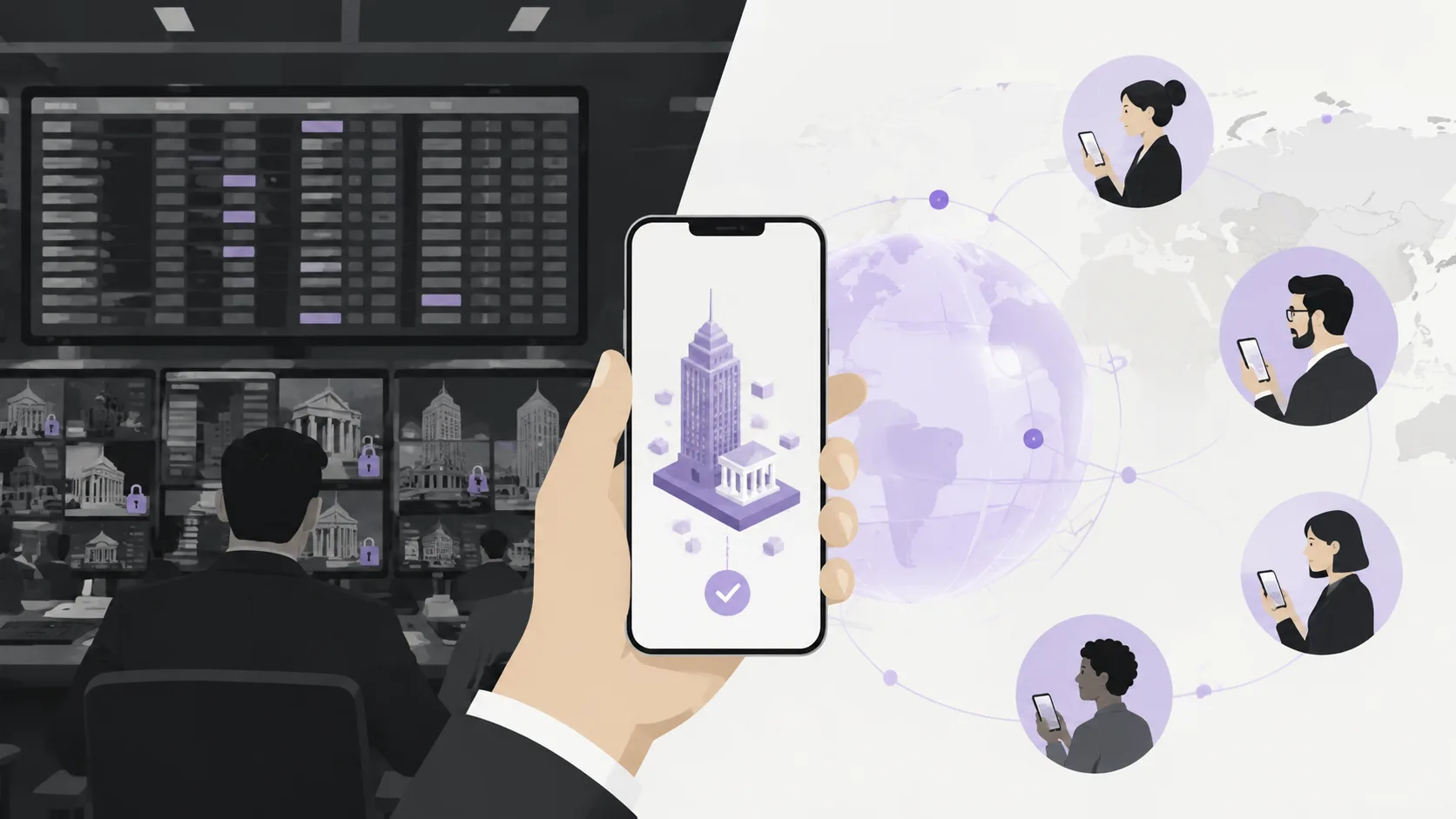
The benefits break into three categories: access, liquidity, and operational efficiency. Each is measurable, and each has real precedent in shipped products. For teams sizing the opportunity against traditional yield, our note on treasury-backed assets redefining yield is a useful benchmark.
Fractional Ownership and Democratized Access
Fractional ownership drops the minimum ticket size. LABS Group enables tokenized real estate investment from as little as $100 USD. This changes the addressable investor base from accredited-only to something closer to retail brokerage economics, and it changes how allocators think about position sizing across previously indivisible assets. It is the same democratization pattern we see with spot ETF volumes hitting record monthly highs.
Enhanced Liquidity for Illiquid Assets
RealT reports returning over $15 million USD in net rental income to token-holding investors, showing that tokenized real estate can produce real cash yield on top of price exposure. Tokenization also removes geographic friction: a token trades globally on the same rails as any ERC-20, so a Singapore-based family office can hold Detroit rental exposure without a cross-border wire chain. That said, liquidity is not automatic, a nuance we unpacked in the de-pegging paradox on liquidity cycles.
Operational Efficiency and Cost Reduction
Per Ripple's public research, tokenized RWAs expand market access and enhance operational efficiency by compressing settlement times and cutting reconciliation costs. BlackRock CEO Larry Fink has stated plans to eventually tokenize $10 trillion USD of BlackRock assets, a signal of institutional conviction that has downstream implications for how fundamentals-level infrastructure is built out over the next cycle.
Takeaway: The benefit is not "blockchain magic." It is faster settlement, smaller unit sizes, and one investor pool instead of many, priced into a single tradable instrument.
Common Misconceptions About RWA Tokenization
Most confusion around RWAs comes from conflating the token with the underlying asset. The token inherits legal, regulatory, and liquidity constraints from the asset; it does not dissolve them. Our resources hub tracks the standards and legal wrappers as they evolve.
Misconception: Tokenization Eliminates Legal Ownership Complexity
Reality: Legal structures still apply. Minting a token does not automatically transfer legal title. Ownership depends on the jurisdiction and the legal wrapper. RealT, for example, uses an LLC to hold each property deed, and token holders own membership interests in the LLC rather than the deed itself. If the legal chain breaks, the token is a claim without an enforceable counterparty, a governance problem we cover often in our interviews with legal and structuring specialists.
Misconception: All RWA Tokens Are the Same
Reality: Token standards and structures vary widely. Security tokens are not payment tokens, and payment tokens are not governance tokens. Standards differ across blockchains, and compliance requirements, investor accreditation, disclosures, transfer restrictions, vary by country. A US Reg D offering and a Swiss DLT security look different on-chain even if the underlying asset is identical. Regional divergence is a running thread in our reporting on EU MiCA 2.0 and its impact on funds.
Misconception: Tokenized Assets Are Always Liquid
Reality: Secondary market depth varies by asset class. Tokenization enables liquidity; it does not create it. Depth depends on the number of active buyers and sellers on regulated platforms, and for many asset classes those venues are still maturing. RWA tokens are also structurally different from speculative crypto: their value is anchored to the underlying, not to reflexive on-chain flows. Not every network is fit for regulated issuance either. Enterprise-grade platforms typically choose networks based on compliance controls, throughput, and settlement finality, considerations we explore in our analysis of AMM arbitrage loops.
Takeaway: The token does not rewrite the asset's underlying risk. It just changes the plumbing.
Risks and Regulatory Considerations

The risk stack has three main layers: technology, regulation, and counterparty. Each requires a distinct control set, and finance teams should not assume that a vendor SOC report covers all three. Our partnerships page lists specialist firms we have worked with on due diligence frameworks.
Smart Contract and Technology Risk
Smart contract vulnerabilities have cost the industry billions. Institutional platforms mitigate through independent audits, formal verification, upgradability controls, and, increasingly, on-chain insurance. Finance teams should demand audit reports covering the specific contract version deployed, not an earlier commit. This scrutiny mirrors the standards we outlined in our note on sovereign debt and the pivot to digital collateral.
Regulatory and Compliance Risk
Regulatory frameworks vary sharply. The EU runs the DLT Pilot Regime, the US applies existing SEC securities law with no bespoke tokenization statute, and Singapore's MAS has issued dedicated digital asset guidance. KYC and AML apply to most tokenized security offerings, so on-chain transfers are often restricted to allowlisted wallets via smart contract controls. The legislative picture keeps shifting, as our coverage of the Stablecoin Act's Senate committee hurdle illustrates.
Counterparty and Custody Risk
Counterparty risk survives tokenization. If the custodian holding the physical asset fails, the token becomes an unsecured claim against the estate. Finance teams should verify asset segregation, insurance coverage, and rehypothecation policies. Valuation risk also persists, especially for illiquid underlyings such as fine art or private credit where marks are infrequent and subjective. These are the same failure patterns we surface in our liquidity trap analysis.
Takeaway: Three risk stacks, three control regimes. Audit the vendor across all three or accept unmodeled tail exposure.
How Finance Teams Can Get Started With RWA Tokenization
Getting started is less about picking a vendor and more about scoping a defensible pilot. Assets with clear title, high value, and low liquidity are the strongest candidates. Our about page explains how we typically frame this evaluation for institutional readers.
Assess Your Asset and Use Case
Map the balance sheet. Which line items are illiquid, high-value, and have unambiguous legal title? Real estate, private credit, and receivables tend to score well. Tokenizing something already liquid, like listed equities, is possible but rarely the highest-ROI first pilot. The framing here echoes our earlier work on CBDC adoption roadmaps for 2025.
Select the Right Platform and Legal Structure
Platform choice tracks jurisdiction, asset class, and target investor base. Regulated platforms such as Archax (UK), Assetera (EU), and Securitize (US) each serve distinct regulatory environments. Engage securities counsel before any technical build; a token structured wrong at inception is nearly impossible to unwind cleanly. This is a common thread in Stablecoin.nyc's institutional coverage.
Build Internal Competency and Monitor the Market
Internal competency should cover blockchain fundamentals, smart contract risk, custody workflows, and investor communications for a digital-first asset. The World Economic Forum (August 2025) notes that asset tokenization is positioned to transform future finance, which underscores the urgency for finance teams to move from evaluation to pilot. Sentiment on this is also shifting quickly, as we track in the psychology of the bull.
Takeaway: Pick one illiquid, high-conviction asset. Structure it correctly. Ship a small pilot. Iterate.
Frequently Asked Questions
What is the difference between tokenization and securitization?
Securitization pools cash-flowing assets into new financial instruments sold to investors. Tokenization represents ownership rights on a blockchain. They overlap when securitized instruments are then tokenized, but tokenization by itself does not repackage cash flows.
Which real world assets can be tokenized?
Tangible assets such as real estate, gold, commodities, and fine art, and intangible assets such as government debt, private credit, equity, and intellectual property, are all candidates. The practical filter is clear legal title and a defensible valuation methodology, not the asset category itself.
How do investors receive returns from tokenized assets?
Returns flow through smart contracts as stablecoin distributions, redemption at maturity, or price appreciation of the token tracking the underlying. RealT, for example, pays rental income in stablecoins pro rata to token holders, while tokenized treasuries typically pay yield directly on-chain.
Is tokenization of real world assets legal?
Yes, in most major jurisdictions, when structured under existing securities law. The EU's DLT Pilot Regime, US SEC rules, and Singapore's MAS framework each permit tokenized securities under specific conditions. Legality depends on the wrapper, the offering exemption, and investor eligibility.
What blockchain networks are used for RWA tokenization?
Ethereum dominates by volume, with growing use of Polygon, Avalanche, Stellar, and permissioned chains for regulated issuances. Selection typically hinges on compliance features, transaction finality, throughput, and the ability to enforce allowlist-based transfer restrictions at the contract level.
How does fractional ownership work with tokenized assets?
An SPV holds the underlying asset and issues tokens representing pro rata economic interests. Each token entitles the holder to a fraction of income and, at exit, a fraction of sale proceeds. Minimums can drop as low as $100 USD on platforms like LABS Group.
What are the main risks of investing in tokenized real world assets?
Smart contract exploits, regulatory changes, custodian failure, and thin secondary market liquidity are the primary risks. Valuation risk is also material for illiquid underlyings such as art or private credit, where marks are infrequent and depend on subjective methodology.
How large is the real world asset tokenization market?
Estimates vary widely, but BlackRock CEO Larry Fink has publicly cited a $10 trillion USD target for tokenizing BlackRock's own assets over time. Third-party research houses project the broader RWA market into the multi-trillion range by the end of the decade.
Conclusion
Tokenization of real world assets is a plumbing upgrade with balance sheet consequences. It compresses settlement, expands the investor base, and makes previously indivisible assets tradable in smaller units, without inventing a new asset class. The friction is not the technology; it is legal wrapping, custody design, and secondary market depth. Finance teams that scope a narrow pilot on one illiquid, high-conviction asset will learn faster than those waiting for a fully mature market. For ongoing research on how tokenized assets, stablecoin rails, and institutional flows intersect, Stablecoin.nyc publishes primary analysis for allocators, treasurers, and builders working at that boundary.