TL;DR
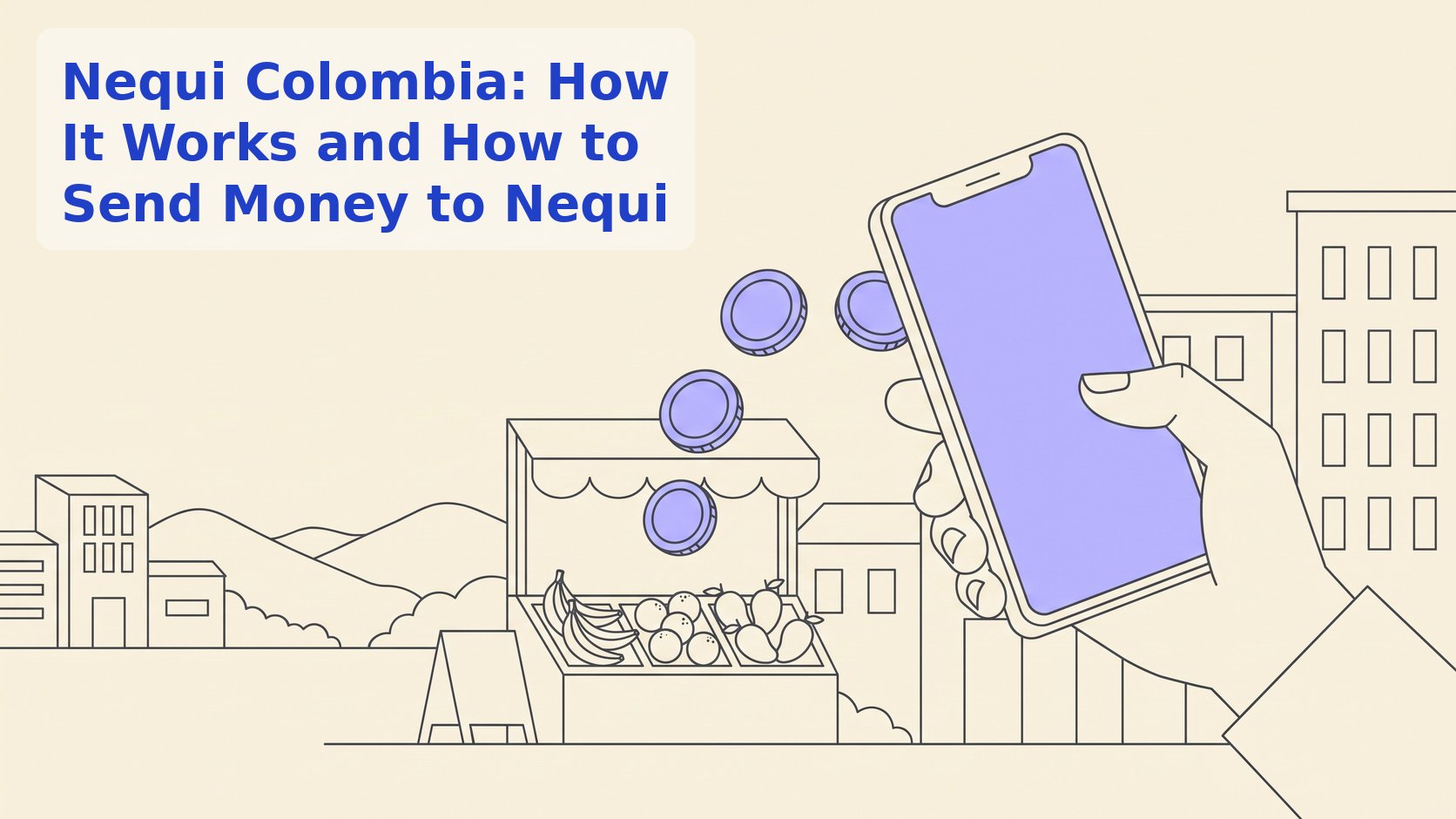
Nequi is a digital financial platform, born at Bancolombia and now run by Nequi S.A. Compañía de Financiamiento, that lets people in Colombia hold, send, and spend Colombian pesos from a phone, using just a mobile number as the account identifier. From the US, you can send money straight to a Nequi wallet through remittance apps such as Ria, Paysend, and BOSS Money. Nequi itself cannot send money abroad.
Nequi Colombia: definition and positioning
Nequi is a mobile-first financial platform that started inside Bancolombia, Colombia's largest bank, in the mid-2010s and has grown into one of the most used financial apps in the country, alongside Daviplata from Banco Davivienda.
Nequi has since become an independent regulated entity: Nequi S.A. Compañía de Financiamiento, a financing company supervised (vigilado) by the Superintendencia Financiera de Colombia, the country's financial regulator, and still part of the Bancolombia group. It is not a crypto wallet and not a foreign fintech, which is part of why it earned trust so quickly with first-time users.
What makes Nequi matter is reach. Millions of Colombians who never opened a traditional bank account use Nequi as their main account: to get paid, to pay for groceries with a QR code, to split bills, and to receive remittances from family abroad. For anyone sending money to Colombia, "can I send it to Nequi?" is now often the first question.
The distinction that matters in practice: Nequi is a destination, not a rail. Money reaches a Nequi wallet through a provider that connects to it, and the recipient then spends or withdraws it in Colombia.
How Nequi works
- Sign-up. A Colombian resident downloads the app, verifies their identity with their cédula (national ID), and links the account to their mobile number. That phone number becomes the account identifier.
- Funding. Users add money by bank transfer from any Colombian bank, cash deposits at Bancolombia branches and correspondent points, salary deposits, or incoming transfers from other Nequi users and international remittance providers.
- Spending. Nequi users pay merchants through QR codes, a linked debit card, and online payments, and can pay bills, top up phones, and buy tickets in the app.
- Sending. Transfers between Nequi users are free and instant using the recipient's phone number. Transfers to other Colombian banks are also supported, increasingly through Colombia's instant payment infrastructure.
- Cash out. To withdraw cash, users generate a withdrawal code in the app and use it at Bancolombia ATMs or correspondent points, with no card needed.
Beyond the basics, the Nequi app lets users pay contactless with the Nequi Visa card, receive money from PayPal and remittances from abroad, pay utility bills (servicios públicos), recharge a phone, buy plane and bus tickets, save in goal pockets, and buy digital dollars inside the app.
Accounts carry balance and monthly transaction limits that depend on the account type and level of verification, which also caps how much a recipient can receive from abroad in a given period.
Is Nequi a bank?
Not exactly. Nequi is a compañía de financiamiento (financing company), a regulated financial institution supervised by the Superintendencia Financiera de Colombia, rather than a full commercial bank. In practice, for users it works like a bank account on a phone: deposits, transfers, a debit card, and savings. The Bancolombia group stands behind it, which answers the most common question Colombians ask about Nequi: which bank backs it.
How to send money to Nequi from the US
You cannot send money to Nequi from a US bank account directly. You need a remittance provider that pays out to Nequi wallets. Several do, including Ria Money Transfer, Paysend (which added Nequi delivery in November 2024), and BOSS Money, which allows up to $3,000 per transfer.
- Choose a provider that lists Nequi as a delivery option and compare its USD to COP exchange rate with the mid-market rate. As with any remittance, the exchange rate margin is usually the biggest cost.
- Select Colombia and Nequi as the destination and delivery method.
- Enter the recipient's details: their full name as it appears on their cédula and the mobile number linked to their Nequi account. A mismatched name or number is the most common reason a transfer fails or gets returned.
- Pay by debit card or bank account. Since January 1, 2026, cash-funded transfers from the US carry a 1% federal remittance tax; card and bank-funded transfers do not.
- Confirm and track. Most transfers to Nequi arrive within minutes to the same business day, paid out in Colombian pesos.
For a full comparison of providers on the Colombia corridor, including the stablecoin route, see our guide to sending money to Colombia.
Nequi in practice
For families receiving remittances, Nequi removes the trip to a cash pickup counter. Money lands on the phone and can be spent immediately by QR code or withdrawn with a code at an ATM.
For merchants, Nequi QR payments have become a standard way to accept money from customers, from street vendors to small shops, without a card terminal.
For businesses paying people in Colombia, paying out to Nequi wallets reaches workers and gig earners who do not use traditional banks. Payout and payment infrastructure providers increasingly offer Nequi as a payout destination alongside bank accounts, often funded behind the scenes in dollars or stablecoins and converted to pesos at payout. If you build payment products for Latin America, this is the same pattern as SPEI in Mexico and PIX in Brazil: the local rail or wallet is the last mile, and the cross-border leg is where costs differ most.
Trade-offs and limitations
No international sending. Nequi cannot send money abroad, so it is a receiving wallet for cross-border flows, not a two-way account.
Limits. Balance and monthly movement caps mean large transfers may need a regular bank account instead.
Colombia only. Opening an account requires Colombian identification, so senders abroad cannot hold a Nequi account themselves.
Exchange rate costs sit with the sender's provider. Nequi pays out in pesos, so the conversion cost is set by the remittance app you use, not by Nequi. Compare providers on pesos delivered, not on fees.
FAQs
What is Nequi in Colombia?
Nequi is a digital financial platform from the Bancolombia group, run by Nequi S.A. Compañía de Financiamiento, that lets Colombians manage money from their phone. Users send and receive pesos with a mobile number, pay by QR code or debit card, pay bills, and withdraw cash at ATMs with a code, without visiting a bank branch.
Can I send money to Nequi from the USA?
Yes, through remittance providers that pay out to Nequi wallets, such as Ria, Paysend, and BOSS Money. You need the recipient's full legal name and the mobile number linked to their Nequi account. Funds arrive in Colombian pesos, usually within minutes.
Is Nequi safe?
Yes, Nequi is legit. It is operated by Nequi S.A. Compañía de Financiamiento, supervised by the Superintendencia Financiera de Colombia, and is part of the Bancolombia group. Users can lock their account or disable transactions in the app if they notice suspicious activity.
Can Nequi receive money from PayPal?
Yes. Nequi users can link PayPal and receive money from PayPal into their Nequi account in Colombian pesos, in addition to receiving remittances from abroad through providers such as Ria, Paysend, and BOSS Money.
Can you send money from Nequi to another country?
No. Nequi does not support international outgoing transfers. It can receive money from abroad through remittance providers, and it can send money to other Nequi users and Colombian bank accounts.
How do you withdraw cash from Nequi?
Generate a withdrawal code in the Nequi app and use it at a Bancolombia ATM or a supported correspondent point. No card is needed, and the code expires after a short time for security.
Related: how SPEI payouts work in Mexico.
Last updated: October 13, 2026.