The verdict
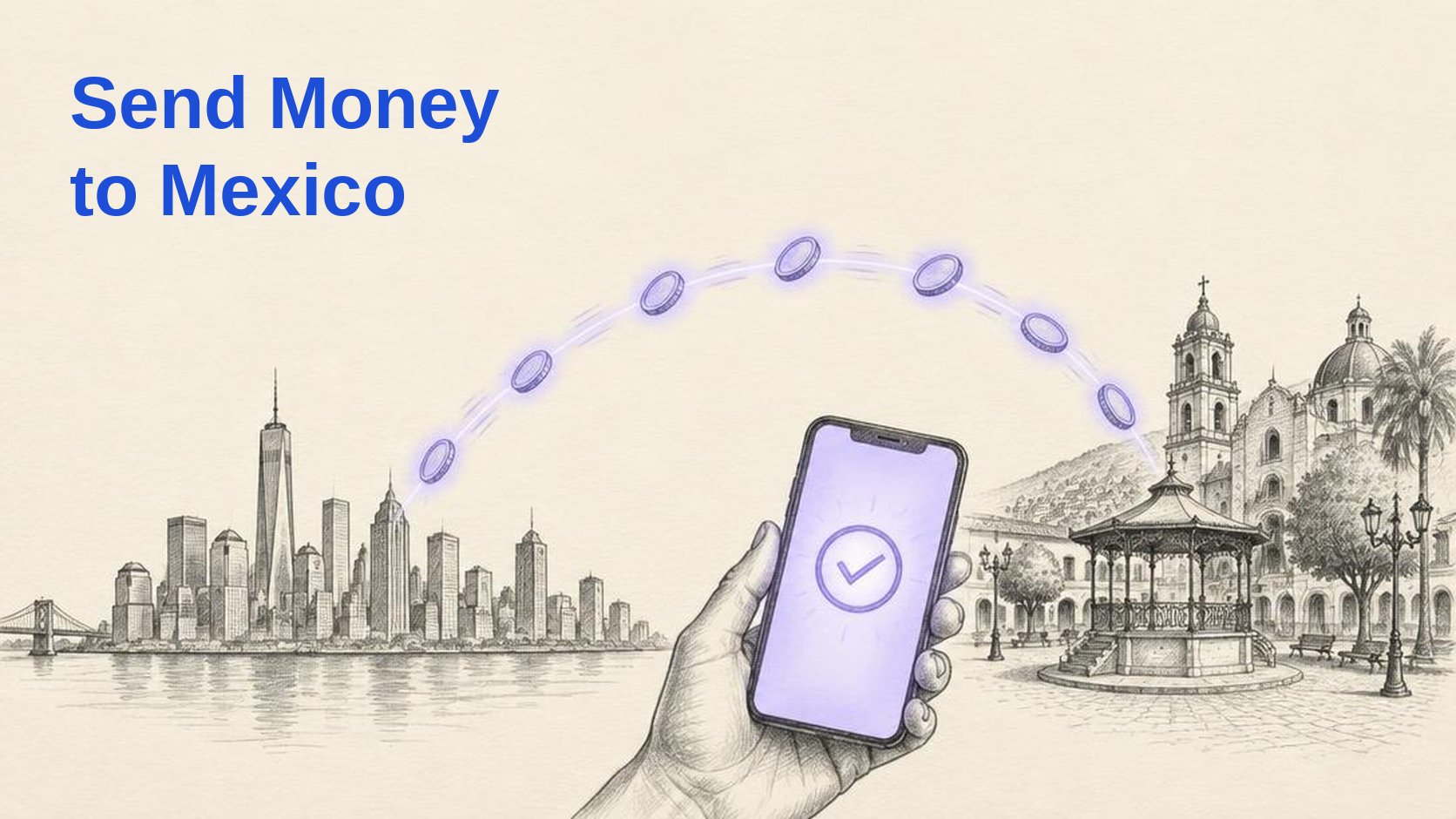
The cheapest way to send money to Mexico in 2026 is a bank-funded digital transfer: Wise or Félix for most people, or the stablecoin route (USDC cashed out through Bitso via SPEI) for repeat senders moving larger amounts, at roughly 0.5 to 1% total cost. Cash counters are now the most expensive option, because a 1% federal remittance tax applies to cash-funded transfers since January 1, 2026. Cash pickup still wins when your recipient has no bank account.
Some links on this page are referral links. They never affect our verdicts.
What actually matters when sending money to Mexico
Mexico is the largest remittance corridor in the world. Over $60 billion flows from the US to Mexican families every year, and the industry built on that flow prices itself in a deliberately confusing way. Four things decide what you actually pay and how fast the money arrives:
The exchange rate margin, not the fee. A provider advertising a $0 transfer fee usually takes 1 to 3% inside the USD to MXN exchange rate. Compare the rate you are quoted against the mid-market rate before looking at any fee.
How you fund the transfer. Since January 1, 2026, the US charges a 1% federal excise tax on remittances funded with cash, money orders, or cashier's checks. Transfers funded from a US bank account, debit card, credit card, or digital wallet are exempt. The same Western Union transfer costs 1% more paid in cash at a counter than paid by card online.
How your recipient gets paid. A bank deposit needs their 18-digit CLABE and arrives through SPEI, Mexico's instant payment system, which settles in seconds and runs 24/7. Cash pickup works at more than 40,000 locations including Oxxo, Elektra, and Walmart, but pickup networks charge more.
Speed claims versus reality. Most digital transfers to a Mexican bank account land within minutes. Anything quoting days is routing through correspondent banking and taking a margin for the delay.
Everything below follows from one reframe: the quoted fee is marketing, the exchange rate is the price.
Quick comparison: ways to send money to Mexico
| Method | Typical total cost on $1,000 | Speed | Payout options | 2026 remittance tax |
|---|---|---|---|---|
| Wise | ~$6 to $12 (upfront fee, mid-market exchange rate) | Minutes to hours | CLABE bank deposit | Exempt (bank or debit funded) |
| Félix (WhatsApp) | ~$0 to $10 (no fee, margin in rate) | Minutes | Bank deposit, 50,000+ pickup points | Exempt (digital) |
| Remitly | ~$0 to $20 (low fee, 1 to 2% rate margin, first transfer promo) | Minutes on Express | Bank deposit, cash pickup, wallet | Exempt if card or bank funded |
| Stablecoin route (USDC + Bitso) | ~$5 to $10 (exchange spread, SPEI payout, network fee under $0.10) | Minutes | SPEI to any CLABE, or hold USD value | Exempt |
| Western Union / MoneyGram online | ~$10 to $30 (fee plus 2 to 3% rate margin) | Minutes to hours | Bank deposit, Oxxo, Elektra, Walmart pickup | Exempt if card funded |
| Cash at a counter | ~$25 to $50 (fee, widest rate margin, plus 1% tax) | Minutes | Cash pickup | Taxed at 1% |
Costs verified October 2026 against provider pricing pages. Exact pricing moves with the amount, funding method, and promotional rates, so treat the ranges as the honest version of "fees vary".
How to send money to Mexico, step by step
Every online money transfer service follows the same four steps. Pick a provider and check its live exchange rate against the mid-market rate, since that margin is where the real cost hides. Choose the payment method: paying from a bank account or with a debit card keeps the international money transfer exempt from the remittance tax, while a debit or credit card adds speed and credit cards add cash-advance costs. Enter the recipient's details, which means their full name as it appears on their ID plus their CLABE for a deposit in Mexican pesos, or just a name and pickup location for cash. Confirm and track the transfer; costs vary depending on amount and funding, and every serious app shows the delivery estimate before you pay.
The main options, compared
Wise: the mid-market benchmark
Wise charges one visible fee and converts at the mid-market exchange rate, which makes it the benchmark everything else should be measured against. Transfers fund from a US bank account or debit card and pay out to any Mexican bank account by CLABE. The catch: no cash pickup, so it only works for banked recipients, and large transfers can trigger verification delays.
Félix: remittances inside WhatsApp
Félix lets you send money to Mexico through a WhatsApp chat, with payout to a bank account or cash pickup. Under the hood it is a stablecoin service: transfers settle in USDC on the Stellar network through Bitso, which is why it can run zero-fee promotions and still move money in minutes. It is the clearest sign that the traditional remittance category and the stablecoin category are becoming the same thing.
Remitly: the polished app with promo pricing
Remitly's first-transfer promotional exchange rate is genuinely cheap, and its Express option delivers to Mexican banks and pickup points in minutes. After the promo, the exchange rate margin typically sits between 1 and 2%, so regular senders pay more than the headline suggests. Strong choice for cash pickup at Elektra and Oxxo when funded by card to stay tax-exempt.
The stablecoin route: USDC to Bitso to SPEI
The direct version of what Félix does in the background. You convert dollars to USDC on a US exchange, send it to a Bitso account (the recipient's or your own), convert to pesos, and withdraw to any Mexican bank account through SPEI. Bitso built this corridor in partnership with Circle, USDC's issuer. Total cost lands around 0.5 to 1%: the network transfer costs cents on chains like Stellar or Solana, Bitso's conversion spread is the main cost, and SPEI payout is instant. Two properties no traditional provider offers: the recipient can hold value in dollars instead of converting immediately, and the cost does not scale up on larger amounts the way percentage-margin providers do.
Western Union and MoneyGram: pay for the network
The legacy networks still matter for one reason: reach. Tens of thousands of pickup locations across Mexico, including rural areas no app serves. Funded online by card, they are mid-priced. Funded with cash at a counter, they are now the most expensive option in the corridor, because the widest exchange rate margins stack with the 1% federal tax.
The difference that actually matters in 2026
The remittance tax quietly redrew the map. It does not apply to digital transfers at all, so the practical effect is a 1% penalty on exactly the senders least likely to read IRS regulations: people walking into a counter with cash. If you currently send cash, moving to any bank-funded or card-funded method, even with the same provider, removes the tax entirely and usually gets a better exchange rate at the same time.
For everyone already sending digitally, the decision for any international money transfer collapses to one variable: the exchange rate margin. Wise and the stablecoin route price closest to mid-market. App providers sit 1 to 2% above it. Legacy networks sit 2 to 4% above it. On $500 a month, that spread is $60 to $240 a year.
When the stablecoin route is the wrong choice
Three cases. If your recipient has no bank account and no smartphone, cash pickup through Remitly, Western Union, or Félix is the only route that works. If you send small amounts occasionally, the apps are simpler and the savings do not justify managing an exchange account. And if neither of you holds USDC already, the onboarding (US exchange account, Bitso account, identity verification on both) takes longer than any single transfer will ever save. The route earns its cost advantage on frequency and size.
FAQ: sending money to Mexico
Is there a tax on sending money to Mexico in 2026?
Only on cash-funded transfers. Since January 1, 2026, a 1% federal excise tax applies to remittances funded with cash, money orders, or cashier's checks, collected by the provider at the point of transfer. Transfers funded from a US bank account, debit card, credit card, or digital wallet are exempt, regardless of amount or the sender's immigration status.
Can I use Zelle or Venmo to send money to Mexico?
No. Zelle and Venmo only work between US accounts. PayPal reaches Mexico through its Xoom service, which supports bank deposits, cash pickup, and mobile reloads.
What is the cheapest way to send money to Mexico?
For occasional transfers to a bank account, Wise or Félix funded from a bank account. For regular or larger transfers, the stablecoin route through Bitso typically costs 0.5 to 1% all-in. For first transfers, Remitly's promotional rate is hard to beat once.
What does my recipient need to receive a bank deposit?
Their 18-digit CLABE, the standardized bank code every Mexican account has. Deposits route through SPEI, Banco de México's instant payment system, and typically arrive within seconds once the provider releases the transfer.
Can money be picked up at Oxxo or Walmart in Mexico?
Yes. Western Union, MoneyGram, Remitly, and Félix all pay out across Mexican retail networks including Oxxo, Elektra, Banco Azteca, and Walmart, with more than 40,000 pickup locations between them.
How long does a transfer to Mexico take?
Digital transfers to a bank account usually arrive within minutes, and SPEI itself settles around the clock. Cash pickup is typically ready within minutes of sending. Bank wires through SWIFT remain the slow exception at one to three business days.
Related corridors: send money to Colombia, Argentina, and Venezuela.
Last updated: October 13, 2026. Rates and fees verified at publication; always check the provider's live quote before sending.