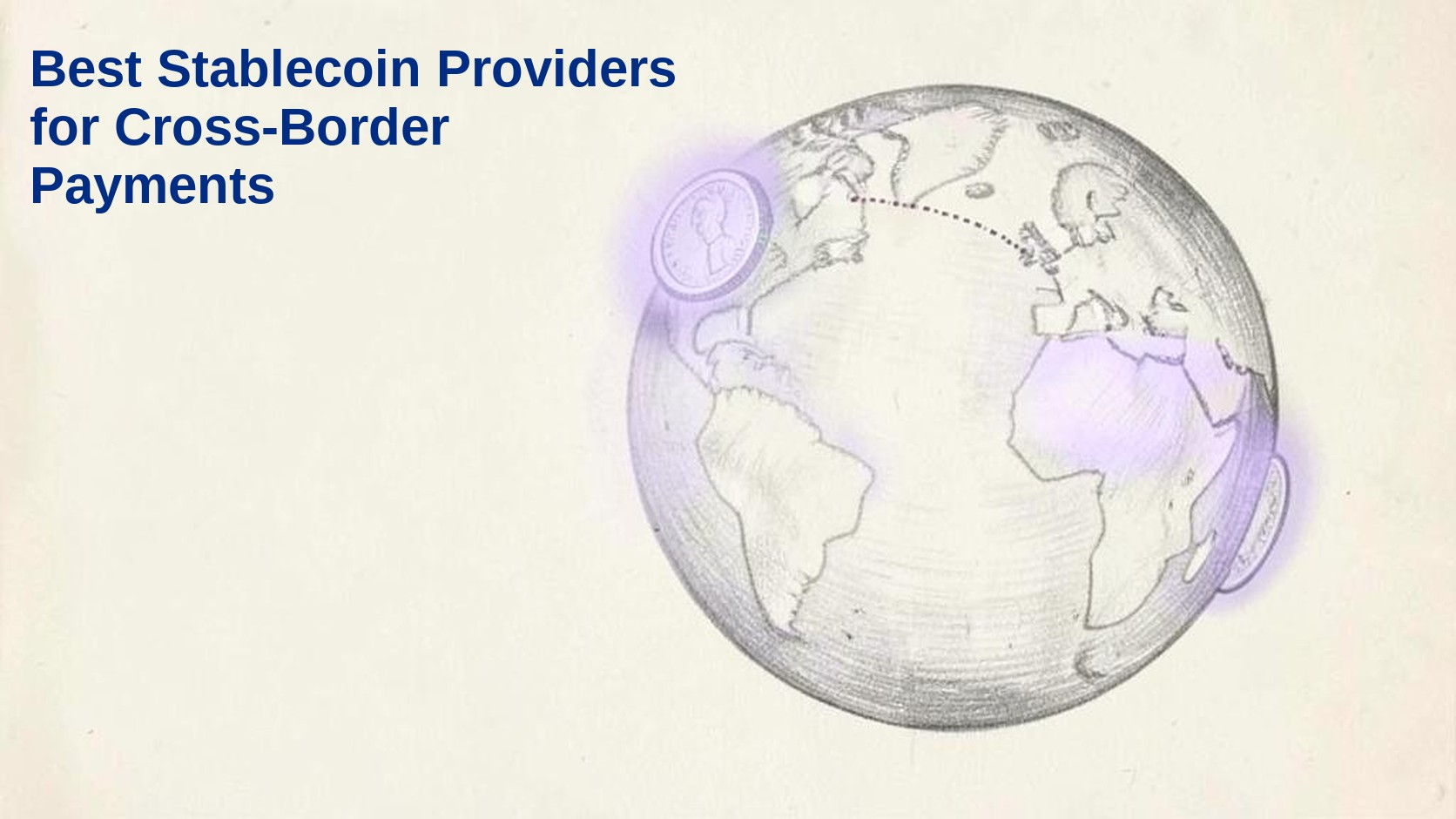
Best Stablecoin Providers for Cross-Border Payments (2026)
Best Stablecoin Providers for Cross-Border Payments: Compared
TL;DR
Best overall for enterprise-grade cross-border coverage is BVNK, on licensing depth across 130+ countries. Best for Latin American corridor depth specifically is Conduit. Best for businesses needing Latin American on/off-ramp alongside payouts, leveraging an existing exchange footprint, is Bitso Business. Best for businesses that already work with dLocal's local payment method coverage and want to add stablecoin settlement is dLocal. The right pick depends almost entirely on which corridors your actual payment flows touch, broad global coverage and deep regional coverage are different products.
What actually matters for cross-border stablecoin payments
Corridor-specific payout coverage, not blockchain coverage. Moving a stablecoin across chains is the easy part. What determines whether cross-border payments actually work is local currency payout coverage: does the platform have a live payout rail into the specific country your recipient is in.
Settlement speed versus settlement cost. Instant on-chain settlement does not always translate to instant local currency delivery, since the final leg often depends on local banking rails.
Local payment method support. PIX in Brazil, SPEI in Mexico, and similar local rails matter more to actual delivery success than generic wire transfer support.
Compliance ownership across jurisdictions. Cross-border payments touch multiple regulatory regimes at once. Confirm which jurisdictions the platform holds direct licenses in versus relies on partners for.
Quick comparison table
| Platform | Corridor strength | Local payment methods | Compliance model | Best for |
|---|---|---|---|---|
| BVNK | Broad enterprise coverage across 130+ countries | SWIFT, SEPA, Faster Payments, FedWire, plus stablecoin rails | 25+ direct licenses and approvals | Businesses needing broad global cross-border coverage in one contract |
| Conduit | Deep Latin American pay-in and pay-out, plus meaningful Africa exposure | PIX (Brazil) and SPEI (Mexico) confirmed live, plus Interac and mobile money rails | FinCEN MSB (Montana) and FINTRAC MSB (Canada); no banking charter, settles through a network of roughly 30 partner banks | Businesses whose primary cross-border need is Latin America |
| Bitso Business | Strong Latin American coverage via Bitso's exchange footprint | Local LatAm banking rails via Bitso's licensed operations | Licensed across multiple LatAm jurisdictions | Businesses needing LatAm on/off-ramp alongside payouts |
| dLocal | Local payment method infrastructure with stablecoin settlement added on top rather than a stablecoin-native build | Extensive local payment method coverage across emerging markets | Not independently verified in this comparison; dLocal's core licensing is for its established local payment method business, confirm stablecoin-specific coverage directly | Businesses already using dLocal for local payment methods wanting to add stablecoin settlement |
Top options compared
BVNK is the strongest broad-coverage pick, combining traditional rails (SWIFT, SEPA, Faster Payments, FedWire) with stablecoin settlement under one MiCA-licensed platform holding more than 25 licenses and approvals across over 130 countries. Where it breaks: broad global coverage does not automatically mean the deepest coverage in any single corridor, a business whose flows are concentrated in one region may find a regional specialist outperforms BVNK there specifically.
Conduit is the direct answer for businesses whose cross-border need is concentrated in Latin America, connecting named accounts, wallets, and payouts through one API into a region where general orchestration platforms often have thin coverage, with PIX and SPEI confirmed as live rails and Nigeria and Kenya together accounting for roughly 20 percent of its volume as of August 2024. Where it breaks: it operates as a registered MSB rather than under a banking charter, settling through a network of nearly 30 partner banks worldwide, worth understanding relative to BVNK's direct multi-jurisdiction licensing, and coverage outside its core LatAm and Africa corridors is not independently verified to the same degree.
Bitso Business leans on Bitso's existing exchange and licensing footprint across Latin America, giving it a different kind of corridor depth than a pure orchestration API, useful for businesses that also need on/off-ramp liquidity alongside payout. Where it breaks: its strength is regional, businesses with cross-border needs outside Latin America should look elsewhere.
dLocal brings extensive local payment method coverage across emerging markets from its existing payments business, making it a natural fit for businesses that already route local payment methods through dLocal and want to add stablecoin settlement to that relationship. Where it breaks: its core regulatory footprint was built for traditional local payment methods rather than stablecoin settlement specifically, so this is better evaluated as an add-on to an existing dLocal relationship than as a primary stablecoin cross-border provider, confirm current stablecoin-specific product depth directly.
Key differences that actually matter
The decisive question is regional concentration versus regional breadth. A business moving money broadly across many corridors gains more from BVNK's licensing breadth. A business whose flows are concentrated specifically in Latin America gains more from Conduit's or Bitso Business's regional depth than from a broader platform's global but shallower coverage in that specific region.
When a regional specialist beats a global platform
A business whose cross-border payment need is entirely within Latin America should not default to a global enterprise platform if a regional specialist like Conduit or Bitso Business has deeper local payout coverage in exactly the corridors that matter. Global breadth is not a substitute for regional depth when the business only operates in one region.
See also our breakdowns of Best Stablecoin Payments for LATAM Cross-Border, Stablecoin vs SWIFT, and Best Payment Orchestration Platforms.
FAQs
What is the best stablecoin provider for cross-border payments?
BVNK is the strongest broad-coverage pick for businesses moving money across many corridors globally. For Latin America specifically, Conduit and Bitso Business both offer deeper regional coverage than a general global platform.
Does stablecoin settlement make cross-border payments instant?
On-chain settlement itself can be near-instant, but the final delivery to a recipient's local bank account still depends on local banking rails and off-ramp partners, which vary in speed by corridor and provider.
Do cross-border stablecoin providers require local licenses in every country?
Coverage models vary. Some platforms, like BVNK, hold direct licenses across many jurisdictions. Others operate through local partners in some markets. Confirm the specific compliance model for your target corridors rather than assuming broad country counts mean direct licensing everywhere.
Last updated: September 8, 2026 Written by the stablecoin.nyc Editorial Desk