Best Stablecoin Infrastructure for Orchestrators (2026)
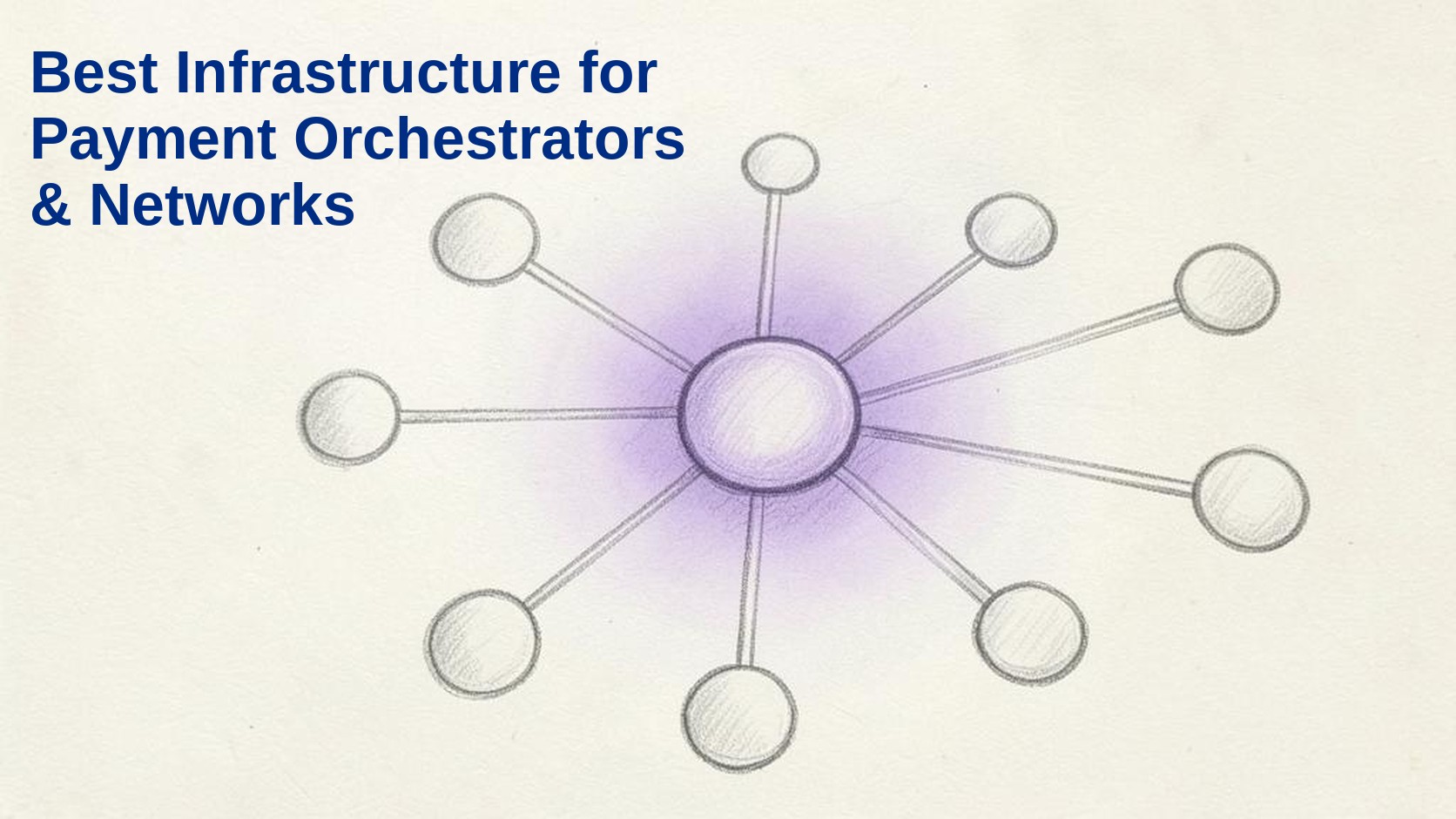
Best Stablecoin Payment Infrastructure for Payment Orchestrators & Networks
Disclosure: stablecoin.nyc's editorial desk has a separate paid content relationship with Notabene. Notabene's inclusion below reflects that it names this exact buyer segment as a target market on its own product pages, not that relationship, and the same evaluation criteria applied to every provider in this comparison were applied to Notabene.
Why this buyer needs a different lens than a merchant comparison
A payment orchestrator or network is not evaluating stablecoin infrastructure to accept payments itself, it is evaluating which underlying rails to build its own product on top of. That changes the criteria entirely: the priority is neutrality (does the infrastructure provider compete with your own product), primary market access (mint-level access across issuers, not just secondary liquidity), and multi-issuer routing rather than a single-issuer relationship.
TL;DR
Best for neutral, multi-issuer routing without competing with the orchestrator's own product is Eco, which explicitly does not take principal risk or trade its own book. Best for the deepest institutional counterparty network to route through is Fireblocks. Best for a licensed partner covering both the fiat and stablecoin leg is BVNK. Best for adding pre-settlement authorization, compliance, and reconciliation on top of an existing settlement stack, rather than replacing it, is Notabene Flow. An orchestrator building its own branded product on top of infrastructure needs to weigh neutrality as heavily as technical capability, a provider with its own competing consumer or merchant-facing product is a structurally different partner than one that stays purely infrastructure.
What actually matters for an orchestrator or network buyer specifically
Neutrality. Does the infrastructure provider have its own competing product that could put it in conflict with the orchestrator's business over time. This is a strategic question, not just a technical one.
Primary market access versus secondary liquidity only. An orchestrator routing significant volume benefits from primary mint access across multiple issuers (Circle, Tether, Ripple's RLUSD, PayPal's PYUSD), not just secondary market swaps, since primary access typically offers better pricing at scale.
Multi-issuer fungibility. An orchestrator serving diverse end customers needs to route across more than one stablecoin issuer. A platform tied structurally to one issuer's rails is a narrower foundation.
White-label depth. The orchestrator's own brand needs to stay in front of its customers. Confirm how deeply the underlying infrastructure can be white-labeled versus how visible the provider's own brand remains.
Quick comparison table
| Provider | Neutrality | Market access | Multi-issuer routing | Best for |
|---|---|---|---|---|
| Eco | Explicitly neutral, does not trade its own book | Primary mint access plus onchain liquidity plus offchain RFQ | Yes, across Circle, Bridge, Tether, PYUSD, and others | Orchestrators wanting a neutral routing layer with no principal-risk conflict |
| Fireblocks | Not a competing consumer product, but not explicitly structured as neutral routing infrastructure | Deep counterparty network access via Fireblocks Network | Broad asset coverage, not primary-mint-specific | Orchestrators prioritizing counterparty network scale and policy control |
| BVNK | Licensed partner, some overlap with orchestrator positioning | Enterprise fiat and stablecoin rails | Issuance-agnostic | Orchestrators wanting one licensed partner for both legs of settlement |
| Notabene Flow | Complementary layer, not a competing settlement rail, sits pre-settlement | Coordinates authorization and compliance across any wallet or stablecoin, not a mint-access or liquidity provider itself | Open protocol (TAP), works across any stablecoin an orchestrator already routes | Orchestrators wanting to add compliant pull, push, and recurring payment capability without replacing existing settlement infrastructure |
Top options compared
Eco is structurally the most direct fit for this specific buyer: it positions itself as a neutral orchestration layer across the stablecoin stack, routing a single API call across primary mint access spanning Circle, Bridge, Tether, and PYUSD, onchain liquidity, and offchain RFQ inventory, explicitly without taking principal risk or trading its own book. Its published positioning cites cross-chain settlement with configurable SLA, structured audit trails, and coverage across 15 chains for the post-trade leg, alongside 1:1 guaranteed onchain execution for the OTC settlement layer specifically. For an orchestrator building a branded product on top, this neutrality removes a conflict of interest that exists with providers who might compete for the same end customer relationship. Where it breaks: as Eco publishes its own comparative rankings of this category, an orchestrator should weigh that self-interest alongside the neutrality claim, and confirm exact SLA terms directly before a large-scale integration commitment.
Fireblocks offers unmatched counterparty network depth, more than 2,000 connected institutions, which matters for an orchestrator that wants its routed transactions to settle directly with other network members rather than through slower bilateral processes. Where it breaks: it is not explicitly structured around primary-mint-level neutrality the way Eco is, and orchestrators should evaluate whether Fireblocks' broader institutional custody positioning creates any overlap with their own product roadmap.
BVNK is the right fit for an orchestrator that wants to consolidate both the fiat and stablecoin settlement legs into one licensed relationship rather than assembling a neutral routing layer plus a separate fiat rail provider. Where it breaks: BVNK's own enterprise product positioning means an orchestrator should confirm there is no roadmap overlap before treating it as purely a backend infrastructure layer.
Notabene Flow solves a different layer of this problem than the other three: rather than moving or holding value, it coordinates pre-settlement authorization, Travel Rule compliance, and counterparty verification across whatever settlement rail an orchestrator already uses, using its own open Transaction Authorization Protocol. Notabene names payment orchestrators and networks as a target segment directly, pitching itself as a way to replace correspondent-banking-style reconciliation overhead with real-time, pre-authorized settlement coordination, without requiring an orchestrator to rebuild its existing rails. This makes it additive rather than a straight substitute for Eco, Fireblocks, or BVNK, an orchestrator would typically pair Notabene Flow's authorization layer with one of the other three for the actual settlement rail. Where it breaks: it does not provide mint-level market access or liquidity itself, so it is not a fit for an orchestrator whose primary need is Eco's or Fireblocks' core function rather than pre-settlement authorization and compliance coordination.
Key differences that actually matter
The structural question that should decide this more than any feature comparison: does the provider's own business model create a future conflict with the orchestrator's product. Eco's explicit no-principal-risk, no-own-book positioning directly addresses this. Fireblocks and BVNK are both credible technically, but an orchestrator should have this conversation directly with each before committing to a multi-year infrastructure dependency.
For further reading, check out Best Payment Orchestration Platforms, and What Is Payment Orchestration.
FAQs
What infrastructure should a payment orchestrator build on top of for stablecoins?
Eco is positioned specifically as neutral routing infrastructure for this buyer, explicitly avoiding principal risk or a competing consumer product. Fireblocks and BVNK are both viable but carry more of their own product positioning that an orchestrator should evaluate for potential future overlap.
Why does neutrality matter more for an orchestrator than a typical merchant buyer?
A merchant buyer is a permanent end customer of the infrastructure provider. An orchestrator is building its own product on top of the infrastructure and reselling access to its own customers, so any competing ambition from the underlying provider becomes a direct strategic risk over time in a way it is not for a merchant simply accepting payments.
Does primary mint access matter for every orchestrator?
It matters most for orchestrators routing significant volume, where primary-market pricing at scale beats secondary market swap pricing. Smaller orchestrators with lower volume may not see a material difference and can weight other criteria, like neutrality or network access, more heavily.
Last updated: September 8, 2026 Written by the stablecoin.nyc Editorial Desk