For US institutional teams, the best stablecoin payment gateway is the one whose settlement asset, fiat conversion and compliance handling match treasury needs. In practice that means Coinbase Commerce for USDC-only settlement, BitPay for dollar settlement at higher fees, and Paybis for fiat-in, stablecoin-out flows. Most ranking pages blur gateways with on-ramps.
The gateway decision is a treasury decision disguised as a checkout decision. What lands on the balance sheet, who verifies the payer, and how many conversion hops sit between customer and ledger matter more than the logo on the payment page.
How We Ranked These Gateways

The same criteria apply to every product below. No pick receives a different test.
- Settlement asset. What the merchant actually receives: USDC, USDT, fiat dollars, or a choice. This determines balance sheet exposure and issuer concentration.
- Fiat conversion. Whether the gateway converts in either direction, and where in the flow it happens. Fewer hops means fewer reconciliation breaks.
- KYC and AML handling. Who owns payer verification. A facilitator model shifts compliance work off the merchant; a raw infrastructure model leaves it with you.
- US fit. How naturally the product maps to a US-domiciled treasury, banking relationships and dollar reporting.
- Integration depth. Hosted checkout versus low-level primitives such as deposit addresses, webhooks and refund APIs.
Takeaway: rank on what settles, not on what the customer is allowed to pay with.
Quick Summary
- Coinbase Commerce. Best for USDC Treasuries
- BitPay: accepts crypto, settles in fiat dollars. Best for Dollar Settlement
- Paybis: customers pay fiat, merchant receives USDC or USDT. Best for Reserve Building
- Transak: stablecoin payments infrastructure with on-ramp roots. Best for Web3 Apps
- Gatekick Labs: build-your-own gateway stack for engineering teams. Best for Custom Builds
Takeaway: the top three cover the three distinct settlement models a US treasury is likely to want.
At a Glance
| Rank | Gateway | Settlement asset | Customer pays with | Compliance handling | Pricing | Best for |
|---|---|---|---|---|---|---|
| 1 | Coinbase Commerce | USDC | Crypto | See vendor | See vendor | USDC-native treasuries |
| 2 | BitPay | Fiat dollars | Crypto | See vendor | See vendor | Teams that want no token exposure |
| 3 | Paybis | USDC or USDT | Card or bank transfer | Paybis runs KYC and AML on payers | See vendor | Building stablecoin reserves |
| 4 | Transak | Stablecoins | Fiat via on-ramp, crypto | See vendor | See vendor | Web3 applications |
| 5 | Gatekick Labs | USDC, USDT, fiat or original crypto | BTC, ETH, SOL, stablecoins, tokens | Built per deployment | See vendor | Custom gateway builds |
CoinGate, which Better Internet Bureau also names as a stablecoin settlement platform, sits outside this shortlist; its model resembles BitPay and NOWPayments more than the fiat-in pattern.
Takeaway: read the settlement column first. It is the only column that touches the general ledger.
1. Coinbase Commerce
Coinbase Commerce is the cleanest answer for a team that has already decided USDC is its operating dollar.
According to Better Internet Bureau's review of settlement models, Coinbase Commerce settles merchants in USDC. That single-asset design is a feature for a treasury that already holds USDC, reconciles on-chain, and wants issuer exposure kept to one name.
- Settlement: USDC
- Fiat conversion: off-ramping happens downstream, not at checkout
- Who it suits: crypto-native businesses and treasuries running USDC as working capital
Caveat: single-asset settlement is concentration risk. A team that wants USDT optionality, or fiat on day one, has to bolt on a second step.
Takeaway: choose it when USDC concentration is a policy, not an accident.
2. BitPay
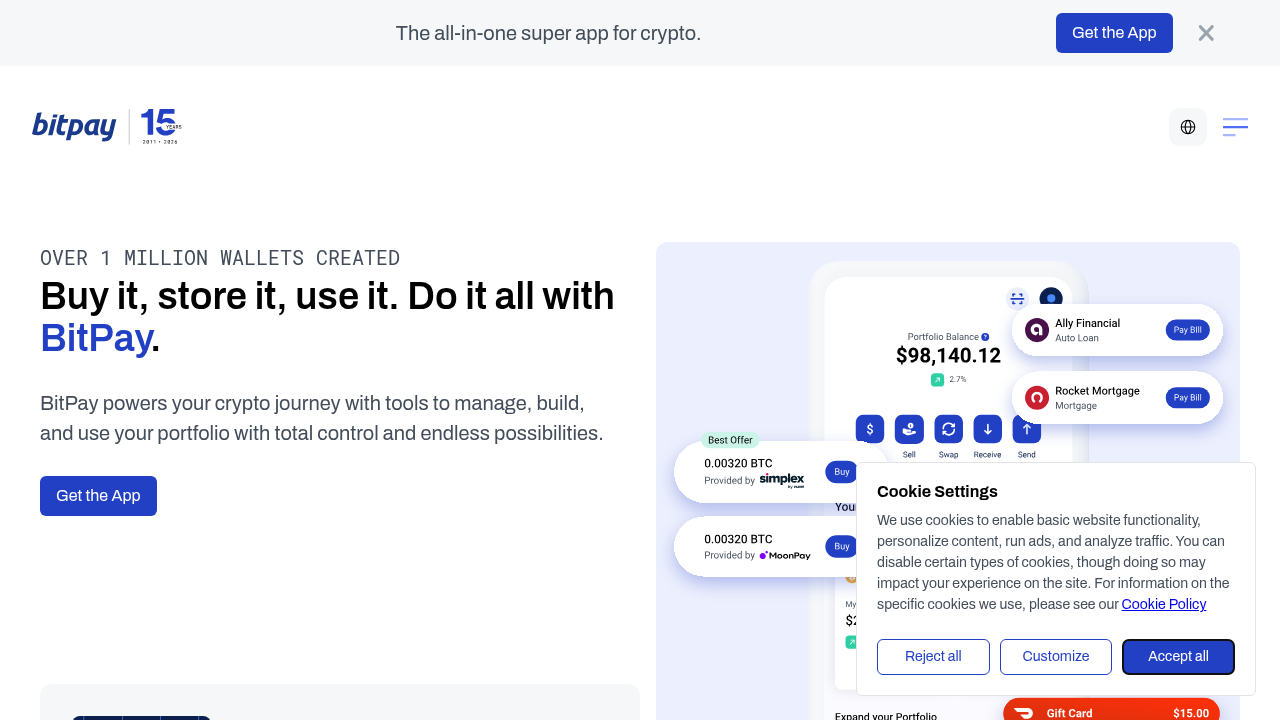
BitPay is the hot-start incumbent: one of the early entrants, built for merchants who want crypto demand without crypto inventory.
Better Internet Bureau describes BitPay as accepting crypto from customers and settling merchants in fiat dollars. For an institutional finance team, that removes stablecoin exposure from the balance sheet entirely. Revenue arrives as dollars, and accounting looks like any other processor.
The trade-off is cost. The same review places BitPay among the higher-fee options, which is the price of absorbing conversion and banking legwork on the merchant's behalf.
Caveat: higher fees, and you forgo building any on-chain reserve.
Takeaway: pay the spread when board-level policy forbids holding tokens.
3. Paybis
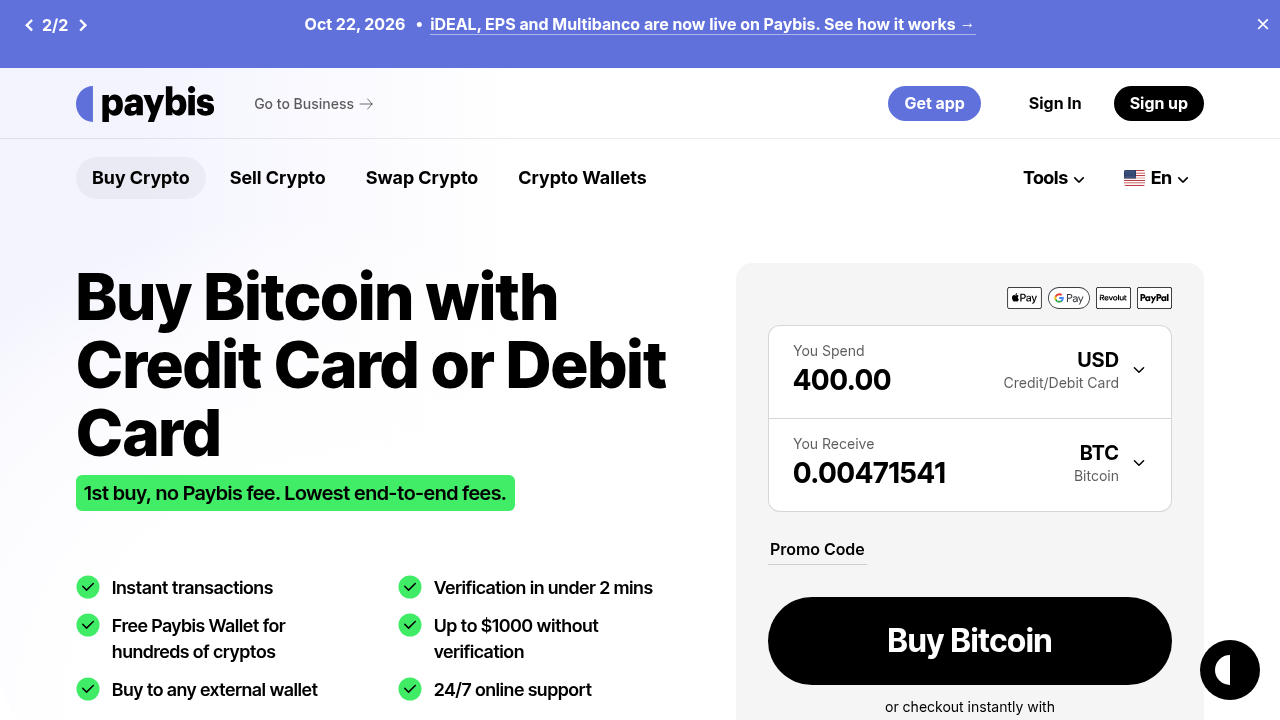
Paybis inverts the usual flow. The customer pays fiat; the merchant receives stablecoins.
As Better Internet Bureau describes it, Paybis acts as a facilitator. When a customer pays by card or bank transfer, Paybis runs KYC and AML, captures funds, converts to USDC or USDT, and delivers stablecoins to the merchant wallet within hours. The merchant does not verify each payer.
This is passive supply accumulation. Every sale adds to a stablecoin treasury without asking customers to touch crypto. For a team building dollar reserves on-chain, it compresses an otherwise manual buy program into the revenue cycle.
- Settlement: USDC or USDT
- Compliance: payer KYC and AML owned by Paybis
- Integration: standard APIs per the review
Caveat: this suits reserve building, not crypto-native checkout. Customers holding stablecoins gain nothing from it.
Takeaway: the compliance offload is the real product here.
4. Transak
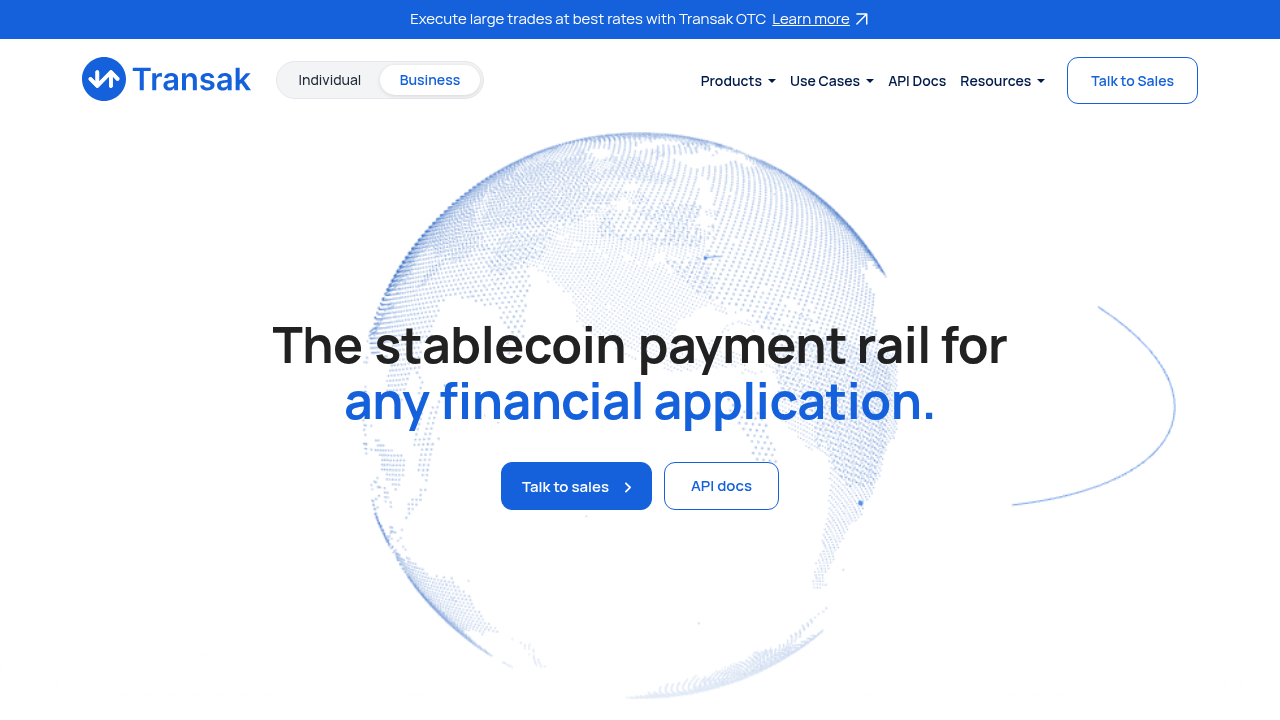
Transak is listed on VentureRadar as a Web3 payments infrastructure company focused on stablecoin payments, US-founded, and also a fiat on-ramp.
That dual identity is the point. Applications that need users to arrive with fiat and leave holding stablecoins get both legs from one vendor. For wallets, games and protocols, that is a cold-start solution: users without crypto can still transact.
Caveat: its heritage is on-ramp, not merchant gateway. Teams expecting invoice-style merchant tooling should check current product scope directly.
Takeaway: strongest when the payer is a new crypto user, weakest as a pure B2B checkout.
5. Gatekick Labs

Gatekick Labs is not a hosted gateway. It builds the stack.
Its own solutions page lists per-customer and per-transaction deposit addresses, real-time chain monitoring, configurable confirmation thresholds per chain and asset, webhooks, and merchant APIs covering payment status and refunds. Supported assets include BTC, ETH, SOL, and ERC-20, SPL and TRC-20 tokens, with settlement in USDC, USDT, fiat or the original crypto. Price is locked at detection, with slippage tolerance on conversion.
That is the primitive layer a PSP or large platform needs when off-the-shelf checkout will not do. Teams weighing it against a routing layer should also read our review of payment orchestration platforms.
Caveat: build-oriented, so compliance and banking are handled per deployment.
Takeaway: buy primitives only if you intend to own the compliance stack.
How to Choose

Start with the settlement asset your treasury policy allows: USDC-only points to Coinbase Commerce, fiat-only to BitPay. Then decide which direction conversion runs; fiat-in, stablecoin-out is a different business from crypto-in, dollar-out. Finally, decide who owns payer verification, because a facilitator like Paybis absorbs work that infrastructure like Gatekick Labs leaves with you. Fintechs and PSPs facing a broader decision can compare crypto payment solutions for fintechs and PSPs, and regulated firms can review stablecoin payment infrastructure for regulated institutions. The implication: compliance ownership, not fees, usually decides the shortlist.
FAQ: Frequently Asked Questions

What is a stablecoin payment gateway?
It is a service that lets a merchant accept payments and settle in stablecoins or dollars. Gateways handle payment detection, conversion and notification, whereas on-ramps primarily sell crypto to individuals for fiat.
Which stablecoins do gateways usually settle in?
USDC and USDT dominate. Coinbase Commerce settles in USDC, Paybis delivers USDC or USDT, and Gatekick Labs supports USDC, USDT, fiat or original crypto as settlement options for operators.
Do merchants need to hold crypto?
No. BitPay accepts crypto from customers and settles merchants in fiat dollars, so revenue never sits on the balance sheet as tokens. Other gateways deliberately settle in stablecoins for teams that want them.
How does KYC work for merchant settlement?
It depends on the model. In Paybis's facilitator model, Paybis verifies each paying customer and runs AML checks. Infrastructure vendors leave verification design to the operator deploying the stack, which raises internal compliance workload.
How do gateways differ from on-ramps?
Gateways serve merchants receiving payments; on-ramps serve users converting fiat into crypto. Transak spans both, offering stablecoin payments infrastructure alongside a fiat on-ramp, which suits applications onboarding first-time crypto users.
Conclusion

The gateway market has split into three settlement models: USDC-only, fiat dollars, and fiat-in, stablecoin-out. Each places risk somewhere different, on the issuer, on the processor's spread, or on the facilitator's compliance program. The open question for treasurers is whether single-issuer settlement remains acceptable as stablecoin balances grow from working float into core reserves.