TL;DR
Crypto counterparty risk platforms tell institutions how risky the wallets, transactions, and businesses they deal with are, using blockchain analytics to trace exposure to sanctions, fraud, and illicit funds. Best overall for enterprises: Chainalysis. Best for cross-chain exposure: Elliptic. Best single-vendor stack: TRM Labs. Best for investigations and evidence: Crystal Intelligence. Best value: Merkle Science or Scorechain.
What crypto counterparty risk means for institutions
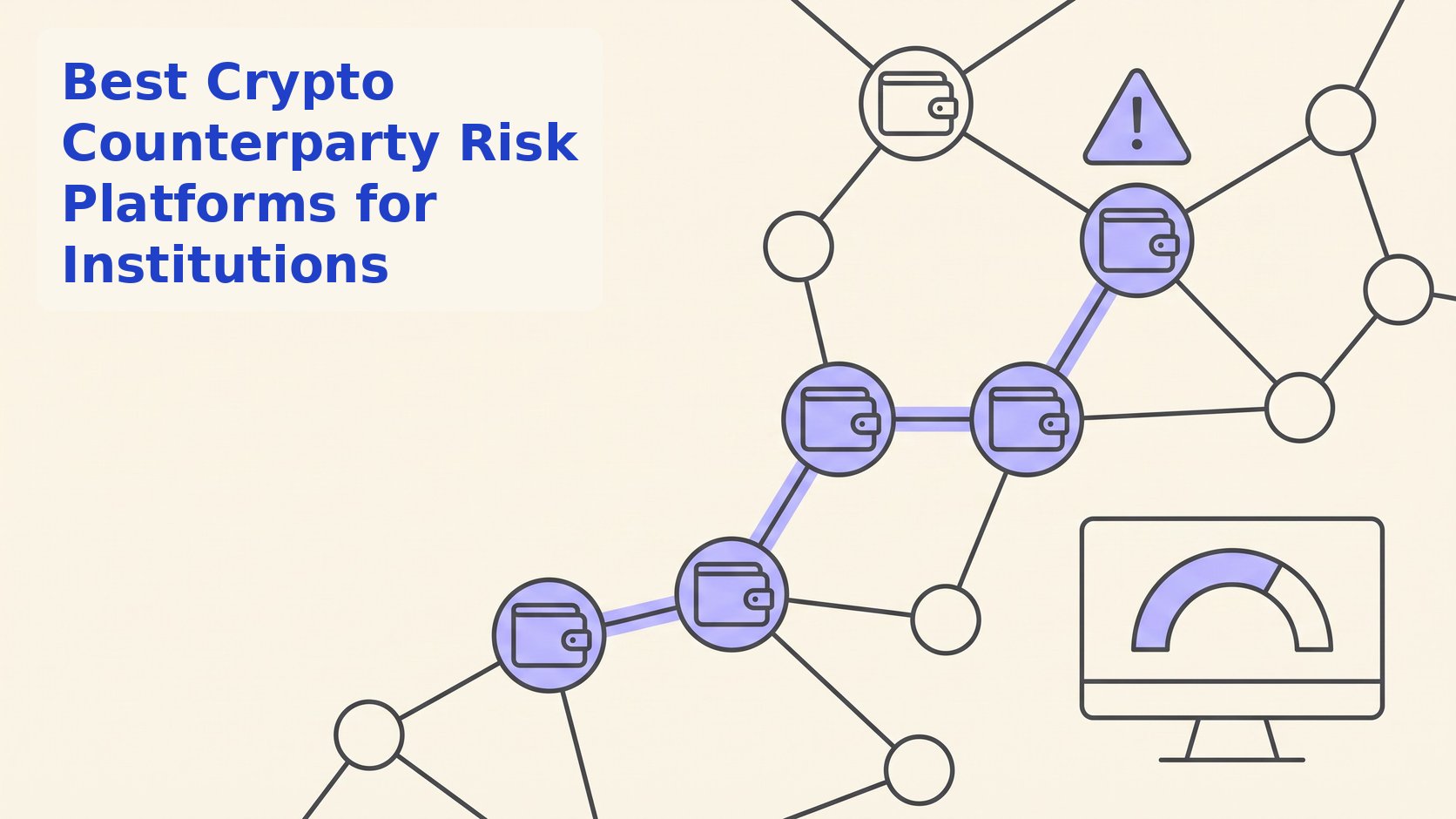
In traditional finance, counterparty risk is the chance the other side of a deal fails to pay. In crypto, institutions face that risk plus a second one: the chance that funds they receive, or the party they send to, are tied to sanctions, hacks, scams, or money laundering. Because blockchains are public, that exposure can be measured.
Counterparty risk platforms do this measuring. They attribute addresses to real-world entities, score risk, and flag direct and indirect exposure, for example a deposit that passed through a mixer two hops earlier. For a bank, fund, payment firm, or exchange, that is the difference between knowing and guessing what touches your balance sheet. Generic lists of "crypto compliance software" bundle these platforms with KYC and Travel Rule tools; this page focuses on the analytics layer that measures counterparty exposure.
Criteria that matter
Attribution depth. How many addresses and entities are identified, and how reliably.
Chain and asset coverage. Bitcoin and Ethereum are table stakes; stablecoins on Tron, Solana, and layer 2s, plus cross-chain bridges, are where coverage gaps hide.
Risk scoring and rules. Whether scoring is transparent and configurable to your risk appetite.
Real-time screening. Sub-second wallet and transaction checks before funds move.
Entity-level views. Risk profiles of counterparty businesses, not only addresses.
Integrations. APIs and links to Travel Rule, KYC, and case management tools.
Quick comparison table
| Platform | Core strength | Cross-chain | Configurable risk rules | Entity due diligence | Pricing | Best for |
|---|---|---|---|---|---|---|
| Chainalysis | Deepest attribution, wide law enforcement adoption | Yes | Yes | Yes | Premium, quote-based | Large exchanges and banks |
| Elliptic | Holistic cross-chain screening | Yes, 100+ chains and many bridges | Yes | Yes (Discovery) | Quote-based | Multi-chain and DeFi exposure |
| TRM Labs | Screening, monitoring and forensics in one platform | Yes | Yes, highly configurable | Yes (Know Your VASP) | Quote-based | Fintechs and multi-chain businesses |
| Crystal Intelligence | Visual tracing and evidence packs | Yes, 330+ blockchains | Yes | Yes (VASP Check) | Quote-based | Investigations and compliance evidence |
| Merkle Science | Predictive risk and VASP module | Yes | Yes | Yes (KYBB) | Quote-based, mid-market | Growing VASPs |
| Scorechain | EU-based analytics | Yes | Yes | Partial | Quote-based, mid-market | European CASPs |
Based on vendor documentation and independent comparisons, checked October 2026. No vendor publishes list pricing; all quote by volume and modules.
Top options compared
Chainalysis
What it does well: the broadest entity attribution dataset and the deepest adoption among regulators and law enforcement, which makes its risk labels widely accepted in audits. KYT handles continuous monitoring and address screening covers pre-transaction checks. Where it breaks: typically the most expensive option, and smaller teams may pay for depth they do not use. Best for: large exchanges, banks, and institutions where defensibility to regulators matters most.
Elliptic
What it does well: holistic screening that merges risk across assets and chains into one assessment, with strong bridge and DeFi coverage. Elliptic Lens screens wallets and transactions, and Elliptic Discovery adds entity due diligence on VASPs. Where it breaks: fewer investigative features for law enforcement-style work than Chainalysis. Best for: institutions with multi-chain and stablecoin exposure, and European CASPs.
TRM Labs
What it does well: one platform for wallet screening, transaction monitoring, forensics, and Know Your VASP entity profiles, with a highly configurable risk engine. Where it breaks: configuration takes work to tune well. Best for: fintechs and multi-chain businesses that want a single vendor and control over scoring.
Crystal Intelligence
What it does well: visual tracing, attribution across more than 330 blockchains, and evidence packs that compliance officers can defend, plus continuous VASP monitoring. Integrates with Travel Rule providers including 21 Analytics and Sumsub. Where it breaks: less of a market default in enterprise procurement than the top three. Best for: teams that investigate as well as screen.
Merkle Science and Scorechain
What they do well: capable analytics at mid-market pricing. Merkle Science adds a Know Your Blockchain Business module for VASP due diligence; Scorechain is an EU-based option with Travel Rule integrations. Where they break: smaller attribution datasets than the leaders. Best for: growing VASPs and regional institutions.
Key differences that actually matter
Attribution data is the moat: the platform that knows who owns more addresses produces fewer false negatives. Configurability is the trade-off: tunable engines reduce false positives but need analyst time. And entity-level due diligence is now a separate product line at most vendors, so check whether VASP risk is included or sold separately. For that layer specifically, see our guide to the best VASP screening and due diligence tools.
When the top pick is not the right choice
If you process modest volume, a mid-market vendor will cover the risk at a fraction of the cost. If your exposure is mostly stablecoins on a few chains, prioritize coverage of those chains over overall attribution breadth. Some institutions run two vendors to cross-check high-risk alerts, which is common at large exchanges.
The verdict
Chainalysis for maximum attribution and regulatory acceptance. Elliptic for cross-chain and stablecoin exposure. TRM Labs for an all-in-one configurable stack. Crystal Intelligence for investigation-heavy teams. Merkle Science or Scorechain for value. Pair any of them with a Travel Rule provider for full counterparty coverage.
FAQs
What is crypto counterparty risk?
Crypto counterparty risk is the risk that a wallet, transaction, or business you deal with is linked to sanctions, fraud, hacks, or money laundering, or fails to meet its obligations. Blockchain analytics platforms measure it by tracing on-chain exposure and attributing addresses to entities.
How do institutions manage crypto counterparty risk?
They screen wallets and transactions in real time, run due diligence on counterparty VASPs, monitor ongoing exposure, set risk-based rules for blocking or escalating, and keep audit evidence. Most use a blockchain analytics platform plus a Travel Rule provider.
Which blockchain analytics platform is best?
There is no single best. Chainalysis leads on attribution depth, Elliptic on cross-chain screening, TRM Labs on configurable all-in-one coverage, and Crystal on investigations. Choose by chains covered, volume, and how much configuration your team can manage.
Do stablecoin businesses need counterparty risk tools?
Yes. Stablecoins move across chains and jurisdictions quickly, and issuers can freeze tainted funds. Screening counterparties before accepting or sending stablecoins protects against frozen balances, sanctions breaches, and regulatory penalties.
Related: crypto treasury management and stablecoin payment infrastructure for regulated institutions.
Last updated: October 13, 2026.