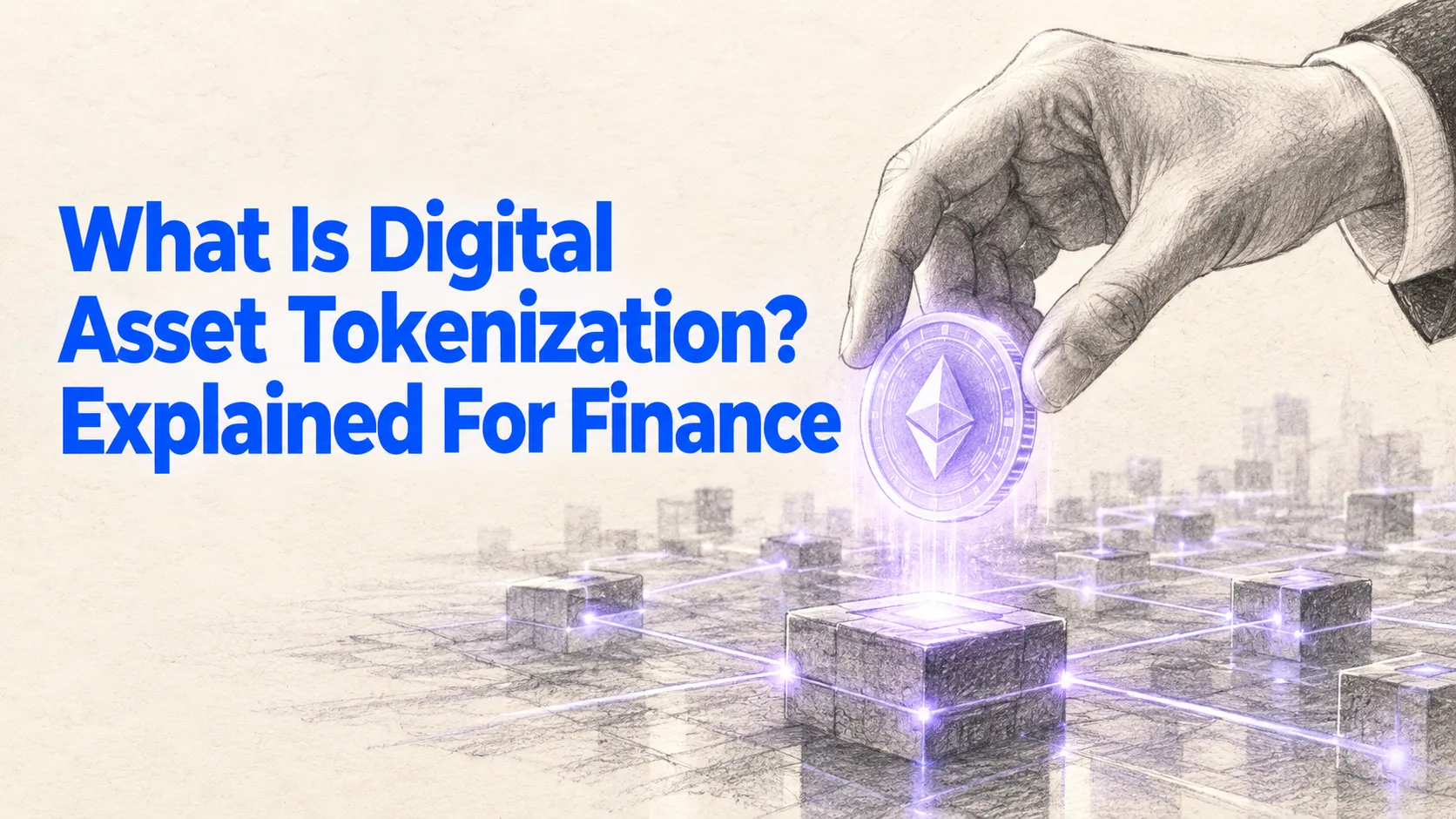
What Is Digital Asset Tokenization? Explained For Finance
Digital asset tokenization is the process of converting ownership rights to a real-world asset into a digital token recorded on a blockchain. For finance teams and institutional operators, this shift matters because it restructures how assets are issued, settled, and held, compressing multi-day clearing cycles into near-real-time finality and opening previously illiquid markets to fractional ownership. Stablecoin.nyc tracks how these structural changes intersect with compliance and institutional adoption.
The thesis is straightforward. Tokenization is not a new asset class; it is a new plumbing layer for existing ones. Whether it delivers on efficiency and access depends less on the token contract than on the surrounding market infrastructure, custody arrangements, and legal enforceability of on-chain claims.
Definition: What Digital Asset Tokenization Actually Means
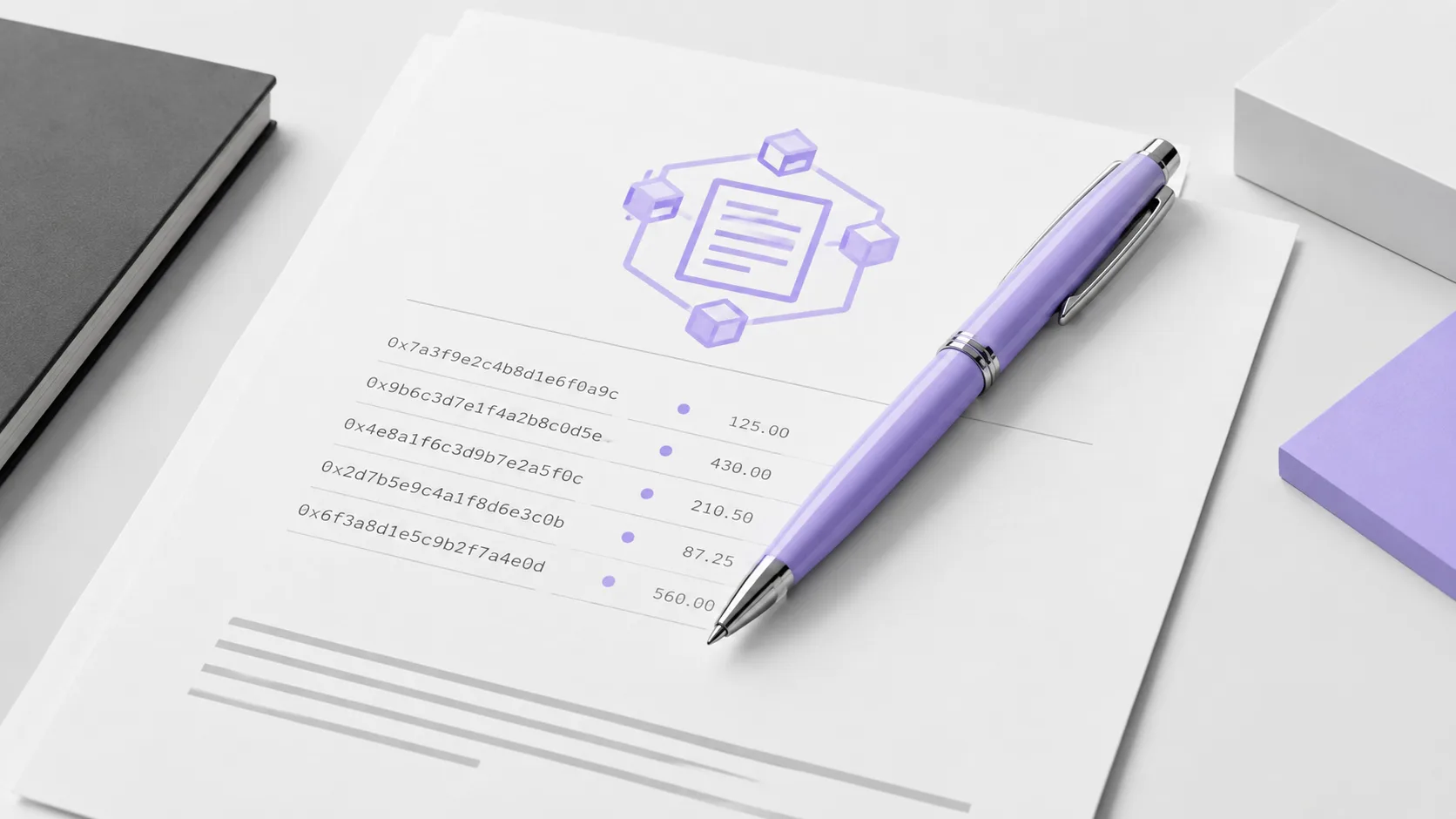
At its core, a token is a digital certificate of ownership created by a smart contract on a blockchain. The contract maps a holder's wallet address to a balance or entitlement in the underlying asset. That mapping is the record. Everything else, transfer restrictions, dividend logic, redemption windows, is code layered on top. This is the same primary-market mechanic explored in real-world asset tokenization primary market dynamics, where issuance design determines whether secondary liquidity ever forms.
The Token as a Legal and Technical Construct
The token itself is technical. The rights it represents are legal. A tokenized bond is a digital instrument whose enforceability depends on the issuer's contractual terms and the jurisdiction in which those terms sit. BlackRock frames tokenization as blockchains recording ownership of, or exposure to, assets as digital tokens that can be programmed, traded, and settled on-chain. That framing is important: the token records the exposure; the paperwork still governs the claim. This is why custody rules for digital asset managers matter as much as the smart contract audit.
Tokenization vs. Traditional Digitization
Digitization automates paper workflows. Tokenization replaces them. The distinction is worth being precise about. A PDF bond certificate stored in a vendor database is digitized. A bond represented as an ERC-20 balance that can be transferred atomically against stablecoin cash is tokenized. Tokens can represent fungible assets like bonds, equities, and commodities, or non-fungible assets like real estate parcels and intellectual property. Because tokens live on-chain, ownership history is transparent and immutable, which is the underlying premise of the fundamentals coverage that anchors most institutional education on this topic. The consequence for finance teams is a reduction in reconciliation friction across counterparties, not the elimination of legal risk.
How Digital Asset Tokenization Works: The Technical Process
Tokenization is a pipeline, not a single event. It begins with issuance and continues through trading, settlement, and reporting, with distinct technical and legal steps at each stage.
Asset Onboarding and Token Issuance
The process begins with an asset owner partnering with a technology platform to create smart-contract-based tokens linked to the underlying asset through a contractual agreement specifying enforceable ownership terms. Wells Fargo Advisors frames this contractual link as the operative legal hook. Without it, the token is a database entry with no enforceable claim. Issuers typically define transfer restrictions, whitelisted counterparties, and jurisdictional constraints inside the contract itself. For institutions building programs today, this pattern echoes what appears in Goldman Sachs' expansion of its asset tokenization desk, where issuance rails and eligible-holder logic are treated as first-class product features.
The Role of Oracles and Off-Chain Data
Tokens on-chain need reliable off-chain data. Secure oracles are required to feed pricing and asset data on-chain during minting, trading, and management. Without reliable data feeds, token valuations cannot reflect the underlying asset, and any programmatic behavior tied to price, coupon payments, NAV updates, margin calls, degrades or breaks. Oracle design is one of the most under-appreciated risk vectors in tokenized markets; the same dynamics that create arbitrage loops in automated market makers apply when a stale price feed diverges from the true market.
Settlement and Custody in a Tokenized System
Tokenized assets can be bought, sold, or traded 24/7 on digital marketplaces, with settlement occurring at the token-transfer layer rather than through traditional clearing intermediaries. According to DTCC's analysis of tokenization in finance, a tokenized U.S. Treasury bond can settle in minutes with compliance checks embedded in the token's code, compared to the multi-day T+2 or T+1 cycle of traditional markets. Custodians in this model become digital safekeepers; fund administrators use on-chain data for real-time compliance reporting rather than end-of-day batch reconciliation. The operating implication, covered in more depth across institutional analysis, is that middle- and back-office functions collapse into the settlement event itself.
Asset Classes Being Tokenized: A Finance-Focused Map

Tokenization is not asset-agnostic in practice. Certain instruments have matured further than others because their legal wrappers, custody arrangements, and secondary venues line up cleanly with on-chain rails.
Fixed Income and Equities
Tokenized treasuries and money market funds are the leading institutional entry point. BlackRock, Vanguard, and Franklin Templeton have all launched or piloted tokenized fund products, and the yield dynamics behind that flow are explored in the great decoupling: how treasury-backed assets redefined yield. Equities have moved more slowly, largely because of transfer-agent obligations and the tangled state-level securities law that governs shareholder records in the United States.
Real Assets and Alternative Investments
Real estate tokenization allows fractional ownership of property by dividing high-value assets into smaller tradable units, lowering minimum investment thresholds for retail and institutional investors alike. Commodities, carbon credits, intellectual property, and fine art have also been tokenized, with the common requirement that off-chain asset custody or legal title must be secured independently of the token. The friction point is enforcement: if a tokenized parcel of real estate is transferred on-chain, the county recorder still needs to reflect the change offline. Coverage of this gap sits in the broader macro landscape around asset digitization.
Cash and Money Market Instruments
Stablecoins function as tokenized cash. They provide the settlement medium for tokenized asset transactions and enable 24/7 cross-border transfers without correspondent banking delays. Chainlink's education materials note that Microsoft and Vanguard have announced or gone live with tokenization projects, signaling adoption across both industrial and securities contexts. The recent expansion of yield-bearing dollar instruments is discussed in the liquidity trap: why yields are stalling, which frames stablecoin issuance against short-duration Treasury demand.
Why Tokenization Matters for Financial Infrastructure

The efficiency case is not incremental. It touches three distinct areas of the trade lifecycle, each of which matters independently to a treasurer, a compliance officer, and a portfolio manager.
Settlement Efficiency and Liquidity
Tokenization compresses settlement from T+1 or T+2 to near-real-time. That reduction has second-order effects: counterparty risk falls, collateral posted against unsettled trades is released, and intraday liquidity becomes usable rather than trapped. The knock-on for market structure is significant, and it is one reason ETF issuers and prime brokers are watching this space closely, as covered in spot ETF volumes hitting record monthly highs.
Fractional Ownership and Market Access
Fractional ownership lowers barriers to entry for high-value asset classes historically accessible only to institutional investors or ultra-high-net-worth individuals. That is the demand-side story. The supply-side story, less discussed, is that issuers gain access to a wider pool of capital and can price primary offerings more efficiently when a broader bid stack exists. This dynamic is one thread in analysis of on-chain markets, which tracks how token structure shapes distribution.
Transparency and Programmable Compliance
Smart contracts can embed compliance rules, KYC/AML checks, and transfer restrictions directly into the token, enabling automated regulatory enforcement at the asset layer rather than through post-trade reporting. On-chain transparency also provides auditors and regulators with a single, immutable record of all transactions, reducing reconciliation costs and the risk of fraudulent double-counting. DTCC frames tokenization as a long-term infrastructure evolution, with current activity concentrated in pilot programs and hybrid models that run alongside legacy clearing systems. The regulatory sequencing implications for European funds are analyzed in EU MiCA 2.0: what the next phase means for funds.
Common Misconceptions About Digital Asset Tokenization
Three misconceptions recur in institutional conversations. Each is worth naming precisely because each leads to a different operational error if left unchallenged.
Misconception: Tokenization Eliminates Legal Title / Reality: Off-Chain Rights Still Govern
Holding a token does not automatically confer the legal rights to the underlying asset. Those rights are established by the contractual agreement and the legal jurisdiction of the issuer, not the token's existence on-chain. This distinction matters most in bankruptcy scenarios, where the enforceability of a tokenized claim against a defaulting issuer depends entirely on the paper stack behind the token. The custody-versus-claim tension is a recurring theme in sovereign debt and the silent pivot to digital collateral.
Misconception: Any Token Is Liquid / Reality: Liquidity Depends on Market Infrastructure
Token liquidity depends on the depth of secondary markets and compatible trading infrastructure. Many tokenized assets remain illiquid in practice because regulated secondary venues are still nascent, order books are thin, and cross-venue compatibility is limited. The behavior of shorter liquidity cycles under these conditions is explored in the de-pegging paradox: why liquidity cycles are shortening.
Misconception: Tokenization Means Decentralization / Reality: Most Institutional Tokenization Is Permissioned
Most institutional tokenization projects use permissioned blockchains or private ledgers rather than public decentralized networks, preserving access controls and counterparty vetting. Tokenization also does not remove custody risk; the custodian of the underlying physical or financial asset remains a critical link in the trust chain, per Wells Fargo Advisors. Regulatory frameworks for tokenized securities are still evolving across jurisdictions, making cross-border transfers legally complex despite the technical capability to move tokens globally in minutes. The legislative side of this is tracked in the stablecoin act facing new hurdles in Senate committee.
Institutional Adoption and the Road Ahead
Adoption is uneven but directional. The dollar figures thrown around are large; the current live volumes are smaller. Both facts can be true.
Where the Market Stands Today
BCG and ADDX project that tokenized assets could reach $16 trillion by 2030. JPMorgan, BlackRock, and Franklin Templeton are among the institutions already running live tokenized product programs. Pilot programs and hybrid models are the dominant entry point; institutions are testing tokenized versions of familiar instruments, treasuries and money market funds, before committing to full on-chain issuance. Central bank experimentation with adjacent infrastructure is captured in the global CBDC adoption roadmap, which shapes what sovereign counterparties are willing to accept on-chain.
Key Risks Finance Teams Should Monitor
The risk map is concrete. Smart contract vulnerabilities can freeze or drain positions. Oracle manipulation can misprice programmatic behavior. Regulatory uncertainty can force unwinds. The operational complexity of bridging on-chain token records with off-chain legal ownership structures introduces reconciliation risk that is different from, but not smaller than, the reconciliation risk of legacy systems. The WEF's May 2025 report on asset tokenization highlights that digital asset exchanges offering compatible trading services are critical to secondary liquidity and market depth. For teams evaluating exposure, primary-source guidance and independent research resources are worth consulting alongside vendor collateral.
Finance and legal teams evaluating on-chain exposure must assess both the technical infrastructure and the jurisdictional legal enforceability of token-based ownership claims before committing capital. That dual assessment, technical plus legal, is what separates a live tokenization program from a headline.
Frequently Asked Questions
What is the difference between asset tokenization and cryptocurrency?
Cryptocurrencies are native digital assets whose value derives from the network itself. Tokenized assets represent claims on external real-world instruments like bonds, equities, or real estate, with legal rights defined off-chain.
Is a tokenized asset legally enforceable as proof of ownership?
Enforceability depends on the issuer's contractual terms and the governing jurisdiction, not the token itself. The token is the record; the legal claim rests on the paperwork linking the token holder to the underlying asset's rights.
What types of assets can be tokenized?
Practically any asset with definable ownership rights: treasuries, money market funds, equities, real estate, commodities, carbon credits, intellectual property, and fine art. Fungible instruments have matured fastest because their legal wrappers align cleanly with on-chain transfer mechanics.
How does settlement work for tokenized assets compared to traditional securities?
Tokenized settlement happens at the moment of transfer on-chain, often in minutes, with compliance checks embedded in the smart contract. Traditional securities settle T+1 or T+2 through clearing intermediaries, tying up collateral and introducing counterparty exposure.
What role do stablecoins play in asset tokenization?
Stablecoins function as tokenized cash and serve as the settlement medium for tokenized asset trades. They enable atomic delivery-versus-payment on-chain and support 24/7 cross-border transfers without correspondent banking delays or currency-conversion friction.
What are the main regulatory risks of digital asset tokenization?
Jurisdictional fragmentation, unclear securities classification, evolving custody rules, and cross-border transfer restrictions. Compliance treatment can differ sharply between markets, and enforcement postures continue to shift, making legal review essential before institutions commit capital to tokenized programs.
How do smart contracts enforce compliance in tokenized assets?
Contracts encode whitelisted addresses, transfer restrictions, KYC/AML gating, and jurisdictional rules directly into the token logic. Transfers that violate these rules revert automatically, moving compliance enforcement from post-trade reporting to the settlement layer itself.
Which financial institutions are currently using asset tokenization?
BlackRock, Franklin Templeton, JPMorgan, Goldman Sachs, and Vanguard have live or piloted programs, primarily in tokenized treasuries and money market funds. Microsoft has explored industrial asset tokenization. Most activity remains in permissioned pilots rather than fully public issuance.
Conclusion
Digital asset tokenization restructures the infrastructure beneath finance rather than replacing the assets themselves. The efficiency gains are real, but so are the legal, custody, and liquidity constraints that determine whether a given program produces value or just a compliant demo. For treasurers, allocators, and legal counsel, the operative question is not whether to engage with tokenization but how to evaluate the specific paper stack, oracle design, and secondary venue behind any given token before capital moves. Continued coverage of these structural questions sits with Stablecoin.nyc as institutional programs move from pilot to production.