Tokenization in Finance: How On-Chain Assets Work
Asset tokenization is the conversion of real-world assets such as real estate, bonds, and money market funds into blockchain-based digital tokens, changing how ownership is recorded, transferred, and settled. Stablecoin.nyc covers the infrastructure behind that shift, from smart contracts to compliant on-chain settlement. Understanding how tokenized assets work is now table stakes for treasurers, allocators, and policy analysts evaluating where digital finance is headed and what it means for balance sheets, market structure, and investor access.
Definition: What Tokenization in Finance Actually Means
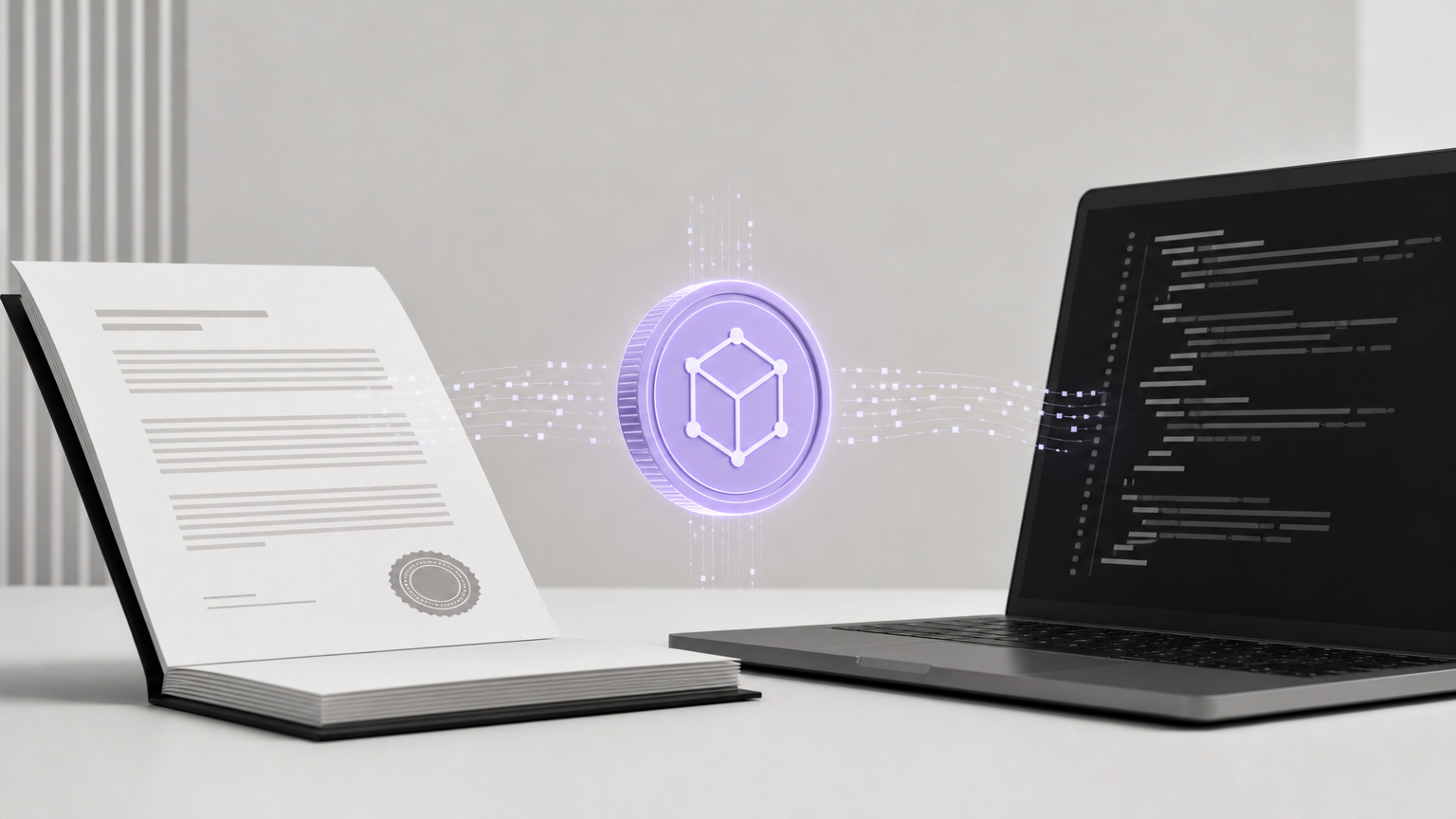
Tokenization is the process of creating a digital representation of a real-world or financial asset on a blockchain or distributed ledger. The token encodes ownership rights, compliance rules, and transaction history directly into the instrument itself, rather than storing that data in separate registrars, transfer agents, and back-office systems. Our fundamentals coverage treats the token as a self-describing container: it carries its own identifiers, its own rulebook, and its own audit trail.
Tokens are more than receipts. They can embed rights such as dividend payments, coupon accrual, voting participation, and jurisdiction-specific trading restrictions through smart contract logic. Once tokenized, the underlying real-world asset is typically immobilized or locked with a qualified custodian; investors then trade the digital token while the physical or legal asset remains custodied off-chain. Stablecoins are the most widely adopted example: tokenized fiat fixed at a 1:1 rate and used for cross-border payments and settlement, a pattern explored in our analysis desk.
In Plain English
A tokenized asset is a programmable, transferable claim on something real, with the rulebook for how it moves written into the token itself.
How Tokenization Works: The Step-by-Step Mechanism
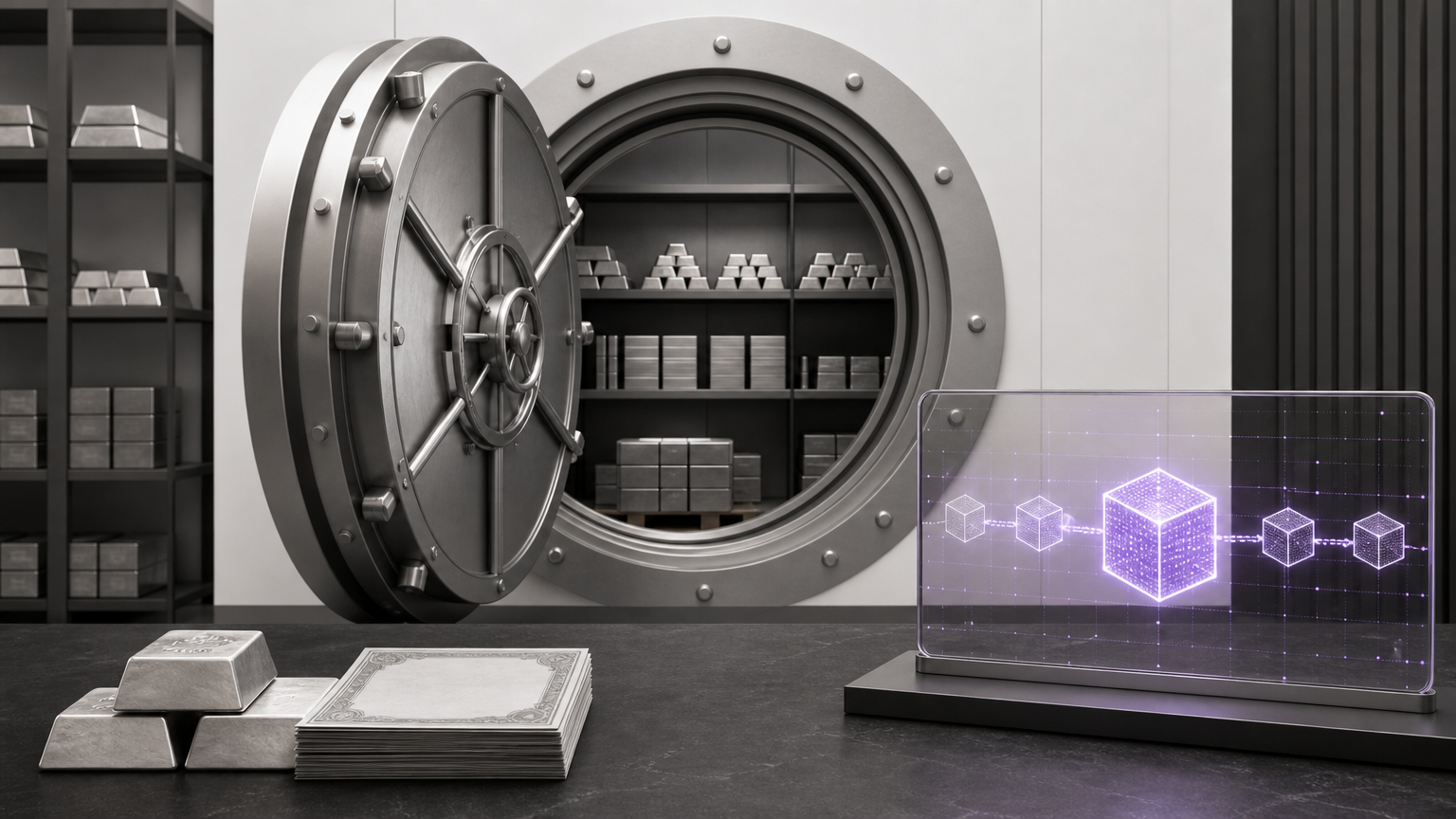
The mechanism is not mystical. It is an ordered sequence of legal, technical, and custodial steps that converts a passive registry entry into an active on-chain instrument. The pattern shows up repeatedly across institutional coverage of tokenized bond and fund launches.
Identifying and Representing the Asset
Issuance begins by identifying the asset (a bond series, a real estate parcel, a fund share class) and then minting a digital representation on a ledger. The token's code encodes type, issuer, unique identifiers, ownership records, and provenance. That mapping between off-chain title and on-chain token is the legal spine of the whole exercise, as detailed in our primary market dynamics piece on real-world asset tokenization.
Smart Contracts and Automated Execution
Smart contracts automate predefined actions when specific on-chain conditions are met. Coupon payments release on schedule. Dividend distributions flow to holders of record. KYC-gated transfer restrictions block ineligible wallets. Manual intermediary steps that once took days compress to seconds, a dynamic that shows up in Goldman Sachs' expansion of its tokenization desk.
Settlement and the Role of Distributed Ledgers
Distributed ledger technology replicates the record among all participants, so integrity does not depend on a single controlling party. Trade settlement can be near-instant and peer-to-peer, moving asset-to-asset and bypassing the traditional cash leg. That structure reduces counterparty risk relative to T+2 cycles, a shift discussed in our macro coverage. According to State Street Global Advisors, the migration to tokenized assets in financial markets may be as significant as the shift from physical media to streaming was in entertainment.
Asset Classes Being Tokenized Today
Not every asset class is equally suited to tokenization, but the frontier is expanding quickly. The map below reflects where issuance volume, secondary trading, and regulatory clarity actually exist, not where they are merely promised. Our resources hub tracks the active issuers by category.
Financial Assets: Stocks, Bonds, and Funds
Equities, fixed-income instruments, and money market funds are the earliest and most active categories, driven by BlackRock, Franklin Templeton, and other large asset managers issuing on public and permissioned chains. Tokenized Treasuries in particular have anchored the shift, a dynamic our great decoupling analysis tracks in detail.
Real Assets: Real Estate and Commodities
Real estate tokenization enables fractional ownership of physical property, lowering minimum investment thresholds and opening secondary market liquidity for an otherwise illiquid asset class. Commodities such as gold can be tokenized so investors hold and transfer fractional claims without physical delivery logistics, a pattern our sovereign debt and digital collateral piece traces into the collateral stack.
Unique and Alternative Assets
Fine art, collectibles, private credit, and carbon credits are being tokenized to enable fractional co-ownership and transparent provenance. According to the World Economic Forum, virtually any financial asset can be tokenized by creating a digital representation on a blockchain tied to legally enforceable ownership. The constraint is legal recognition and custody, not the code, a theme surfaced in several Stablecoin.nyc interviews.
Why Tokenization Matters: Benefits and Trade-offs

The case for tokenization is not aesthetic. It is a claim about cost, speed, and access, weighed against real operational risks. The framing below separates the durable structural gains from the still-open exposures, a distinction our work-with-us desk applies when advising institutional clients.
Liquidity, Access, and Efficiency Gains
Tokenized assets are easier to trade, transfer, lend, and borrow because all necessary information is encoded into a programmable instrument. That reduces friction across the asset lifecycle: issuance, distribution, servicing, and secondary trading. Deloitte notes that tokenization in financial services may significantly reduce operating costs for institutions by automating settlement, reporting, and asset servicing, an efficiency thesis reinforced by record spot ETF monthly volumes in adjacent digital-asset markets.
Transparency and Compliance by Design
Compliance rules including jurisdictional trading limits, KYC/AML requirements, and ownership caps can be embedded at the token level. That enables automated regulatory enforcement without manual gatekeeping, though it demands high-quality legal design upfront. Our coverage of EU MiCA 2.0 and its implications for funds walks through how compliance-by-design is being codified into European rules.
Risks and Limitations to Understand
The exposures are concrete. Regulatory uncertainty varies across jurisdictions. Smart contract vulnerabilities can be exploited. Oracles that link off-chain asset data to on-chain tokens introduce a trust boundary. Custodial complexity for the underlying asset remains. Benefits and costs are not distributed evenly: issuers gain efficiency while intermediaries whose revenue depends on legacy settlement face structural disruption, a tension explored in SEC custody rules for digital asset managers.
Common Misconceptions About Tokenization
The vocabulary is new enough that even sophisticated allocators conflate categories. Three misconceptions do most of the damage in policy conversations and investment memos. Our fundamentals archive treats each one explicitly.
Misconception: A Token Is the Same as Cryptocurrency
Reality: a security token represents a legal claim on an underlying asset and is subject to securities law. A cryptocurrency like Bitcoin is a native digital asset with no off-chain counterpart. Treating them identically leads to bad regulatory analysis and worse portfolio construction, as our de-pegging paradox piece on liquidity cycles illustrates.
Misconception: Tokenization Eliminates All Intermediaries
Reality: tokenization reduces the role of some intermediaries such as clearinghouses and certain custodial functions, but it does not eliminate legal, custodial, and regulatory infrastructure. It redistributes where those functions occur, often toward specialist custodians, transfer agents, and on-chain compliance vendors, which is why our partnerships page engages that operating stack directly.
Misconception: Any Asset Can Be Tokenized Instantly
Reality: tokenization requires legal frameworks that recognize on-chain ownership, reliable custody of the underlying asset, and jurisdiction-specific compliance work. The World Bank's Digital Finance Inclusion group notes that tokenization is still a very incipient area for most jurisdictions, with significant regulatory groundwork still being laid. Our global CBDC adoption roadmap maps how unevenly that groundwork is progressing.
How to Get Started Evaluating Tokenized Assets
Evaluation is a diligence exercise before it is an investment decision. The questions that matter are legal, custodial, and operational, not narrative. Our about page explains the analytical lens we bring to each of them.
Key Questions to Ask Before Investing
Before engaging with any tokenized asset, verify how the underlying asset is custodied, who holds legal title, what redemption mechanisms exist, and which jurisdiction governs the token. Regulatory status varies significantly by asset class and country: tokenized securities typically require registration or an exemption, while tokenized commodities or fund shares may fall under different frameworks, a landscape traced in our Stablecoin Act coverage.
Related Concepts Worth Understanding First
Stablecoins are the settlement layer for most tokenized asset transactions. Most trades settle in a stablecoin rather than traditional fiat, which makes stablecoin liquidity and reserve quality a first-order concern for anyone holding tokenized instruments. McKinsey identifies tokenization as part of a broader digitization of financial infrastructure and recommends that institutions map existing asset servicing workflows before choosing a platform, a workflow discipline our arbitrage loops in AMMs piece illustrates from the market-structure side.
Comparison Table: Traditional vs. Tokenized Asset Lifecycle
| Lifecycle Stage | Traditional | Tokenized |
|---|---|---|
| Issuance | Paper or registrar entry | On-chain mint with embedded rules |
| Settlement | T+1 to T+2 via clearinghouse | Near-instant, atomic asset-to-asset |
| Corporate actions | Manual, batched | Smart-contract automated |
| Compliance | Off-chain checks | Embedded at token level |
| Servicing cost | High, intermediary-heavy | Lower, automated |
Frequently Asked Questions
What is tokenization in finance in simple terms?
Tokenization in finance means creating a digital token on a blockchain that represents ownership of a real asset like a bond, fund share, or property, with rights and rules encoded directly into the token.
How is a tokenized asset different from a cryptocurrency?
A tokenized asset represents a legal claim on an underlying off-chain asset and is subject to securities or commodities law. A cryptocurrency like Bitcoin is a native digital asset with no external claim behind it.
What types of assets can be tokenized?
Stocks, bonds, money market funds, real estate, commodities such as gold, private credit, fine art, and collectibles are all being tokenized. Legal recognition and custody, not technology, determine which asset classes progress fastest.
How does smart contract automation work in tokenized assets?
Smart contracts execute predefined actions when on-chain conditions are met. Coupon payments, dividend distributions, and transfer restrictions run automatically, replacing manual back-office steps and reducing settlement time from days to seconds.
Is tokenization of assets legal and regulated?
Yes, but regulation varies by jurisdiction and asset class. Tokenized securities usually require registration or an exemption. Commodities and fund shares fall under different regimes, and cross-border activity often triggers multiple overlapping frameworks.
What are the main risks of investing in tokenized assets?
Key risks include regulatory uncertainty, smart contract vulnerabilities, oracle failure linking off-chain data to on-chain tokens, custodial complexity for the underlying asset, and unclear legal recourse if an issuer or custodian defaults.
How do stablecoins relate to asset tokenization?
Stablecoins are the settlement layer. Most tokenized asset trades settle in a stablecoin rather than traditional fiat, which makes stablecoin reserve quality, redemption mechanics, and regulatory status directly relevant to any tokenized-asset investor.
Which financial institutions are currently using tokenization?
BlackRock, Franklin Templeton, Goldman Sachs, JPMorgan, State Street, and several European and Asian banks operate active tokenization desks or funds. Coverage spans tokenized Treasuries, money market funds, private credit, and repo.
Conclusion
Tokenization is not a narrative trade. It is an operational restructuring of how ownership, settlement, and compliance are recorded across financial markets. The infrastructure is uneven, the regulation is unfinished, and the incumbent intermediaries face real disruption, but the direction is set. For allocators and institutions evaluating exposure, the useful questions are legal, custodial, and operational rather than speculative. Stablecoin.nyc continues to track the issuers, rules, and settlement rails that will determine which tokenized markets scale and which remain pilots.
This article was written by an AI blog writer.