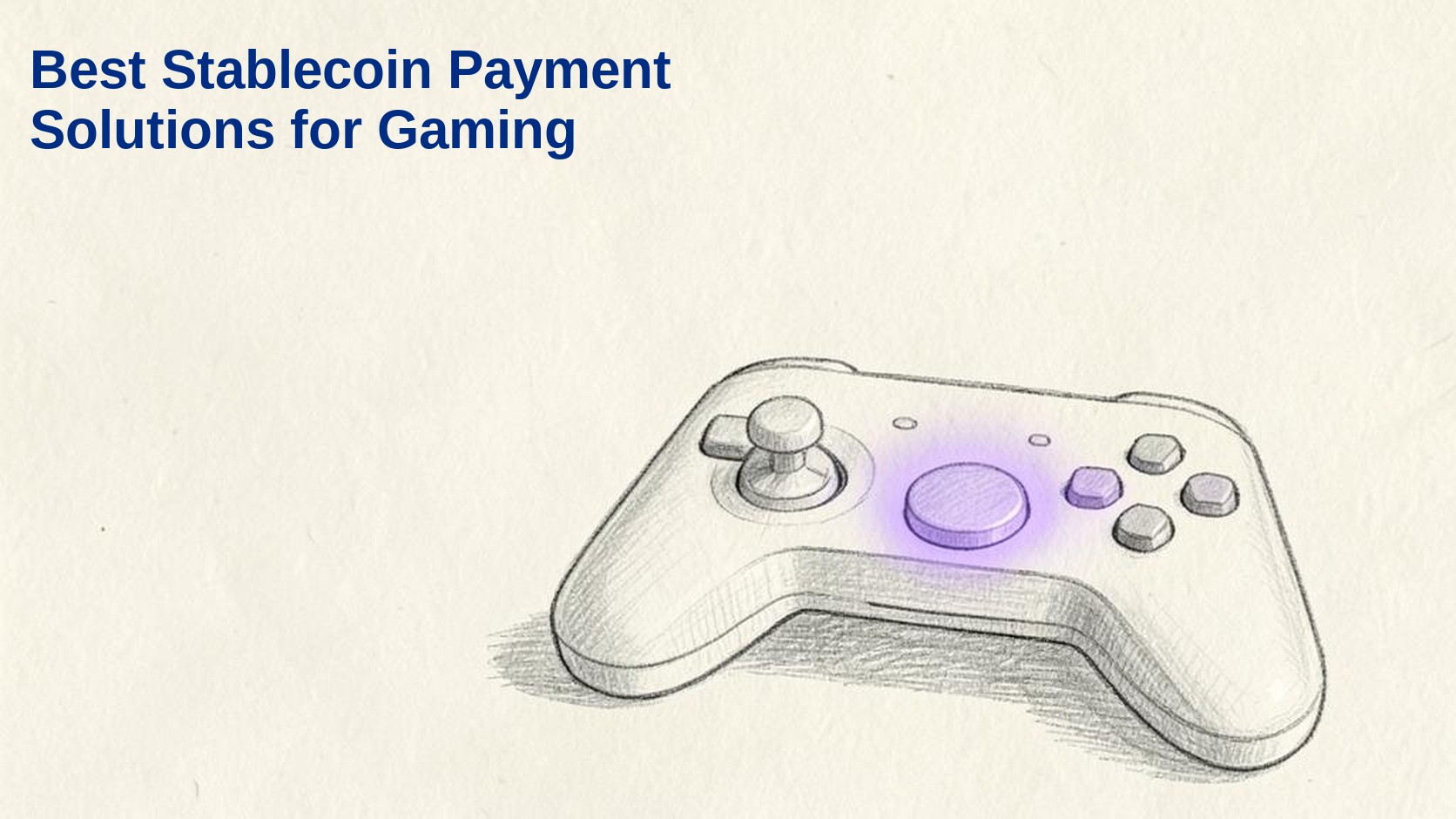
Best Stablecoin Payment Solutions for Gaming (2026)
Best Stablecoin Payment Solutions for Gaming
TL;DR
This is a thinner, faster-moving category than general B2B stablecoin infrastructure, with fewer independently verified head-to-head comparisons available. Based on current market signals, Sphere is the strongest fit for studios wanting API-first stablecoin-to-fiat conversion for in-game revenue, MoonPay Business fits studios wanting a broader consumer payments brand already familiar to gaming audiences, and Triple-A fits studios prioritizing merchant-side crypto acceptance breadth. The most significant recent signal in this space is Sony Bank's planned early-2026 launch of its own USD-pegged stablecoin for PlayStation, gaming, and anime ecosystem payments, built with digital asset firm Bastion handling issuance, reserve management, and custody. That signals major platform holders may move toward issuing their own stablecoins rather than relying purely on third-party infrastructure, which studios evaluating a payment stack now should watch closely.
What actually matters for stablecoin payments in gaming specifically
Microtransaction economics. Gaming revenue is often high-frequency, low-value. Confirm a provider's fee structure works at microtransaction volume, not just for large one-off payments.
Revenue settlement speed relative to studio runway. Indie studios in particular benefit from stablecoin settlement clearing same-day rather than the multi-day delays typical of card processor payouts, directly affecting studio cash flow.
Multi-currency holding for global player bases. A studio with players across many regions benefits from holding revenue in stablecoins or multiple currencies on its own schedule rather than the banking system's, per current industry positioning on this specific benefit.
Platform holder dependency risk. With Sony building its own stablecoin for PlayStation specifically, studios publishing on major platforms should watch whether platform-level stablecoin requirements emerge that affect which third-party infrastructure remains relevant.
Quick comparison table
| Provider | Model | Fit for gaming specifically | Verification status |
|---|---|---|---|
| Sphere | API-first stablecoin-to-fiat conversion, including recurring conversion for treasury | Strong for studios wanting programmatic, low-touch revenue conversion | Verified via Sphere's own Offloader Wallets API documentation |
| MoonPay Business | Broad consumer on-ramp and payments brand | Not independently verified; no gaming-specific case studies or product features found in this research | Not independently verified for gaming-specific positioning |
| Triple-A | Merchant crypto payment acceptance | Not independently verified; no gaming-specific coverage or fee structure found in this research | Not independently verified for gaming-specific positioning |
Top options compared
Sphere is the most concretely verified fit for a gaming studio's treasury need specifically: its Offloader Wallets API gives full lifecycle control over converting stablecoin revenue to fiat at a predefined destination account through a single API call, a pattern that matches how a studio would want in-game stablecoin revenue to flow into operating cash without manual dashboard steps. Where it breaks: no gaming-specific case studies, microtransaction-volume fee structure, or named gaming-industry partnerships were found in this research, so this recommendation rests on Sphere's general product fit rather than confirmed gaming-sector traction.
MoonPay Business and Triple-A are both named candidates for this category based on general market positioning as consumer-facing payment brands with some crypto-native gaming audience recognition, but this comparison could not independently verify current gaming-specific product depth, fee structures, or named studio case studies for either. Treat their inclusion here as a starting point for direct vendor conversations, not a verified ranking.
What the Sony stablecoin signals for this category
Sony Bank's planned early-2026 launch of a USD-pegged stablecoin for PlayStation, gaming, and anime ecosystem payments, developed with Bastion handling issuance, reserve management, and custody, and reportedly backed in part by Coinbase Ventures, is the most significant development in gaming-specific stablecoin infrastructure to date. Industry reporting frames stablecoin adoption as having moved from a "nice to have" to a "primary payment option" for a meaningful share of Web3 game studios during 2026, with case studies citing reduced payment latency and improved in-game purchase conversion after switching to stablecoin rails. US banking industry groups, including the Independent Community Bankers of America, have raised concerns that a platform holder's stablecoin resembles an uninsured deposit product, a regulatory question worth watching rather than a settled matter.
When general payment infrastructure beats a gaming-specific provider
A studio whose stablecoin need is limited to converting modest in-game revenue to fiat on a predictable schedule may be better served by a general-purpose recurring conversion tool, evaluated on its own merits, than by seeking out a gaming-specific brand that may not offer materially different terms. Gaming-specific positioning is often a marketing angle rather than a structurally different product.
For further reading, check out Best Recurring Conversion Platforms, and Digital Asset Payments.
FAQs
Is there a dedicated best stablecoin payment provider for game studios?
This category is thinner and less independently verified than general B2B stablecoin infrastructure. Sphere is the most concretely documented fit for the treasury conversion use case specifically. Broader consumer payment brands like MoonPay Business and Triple-A are commonly named but need direct verification of gaming-specific terms before being treated as confirmed leaders.
Is Sony launching its own stablecoin for gaming?
Yes. Sony Bank is reportedly planning to launch a USD-pegged stablecoin for use across PlayStation, gaming, and anime platforms in early 2026, developed with digital asset firm Bastion. This has drawn scrutiny from US banking industry groups over consumer-protection and regulatory-parity concerns.
Do stablecoins work for microtransactions in games?
Stablecoin settlement costs are generally well under 1 percent of transaction value with settlement clearing in seconds rather than days, which industry case studies suggest can meaningfully improve in-game purchase conversion rates, though actual economics depend on the specific provider's fee structure at your transaction volume and value.
Last updated: September 8, 2026 Written by the stablecoin.nyc Editorial Desk