Pay-in and Pay-out: What They Mean in Payments
Pay-in and Pay-out: What They Mean in Payments
TL;DR
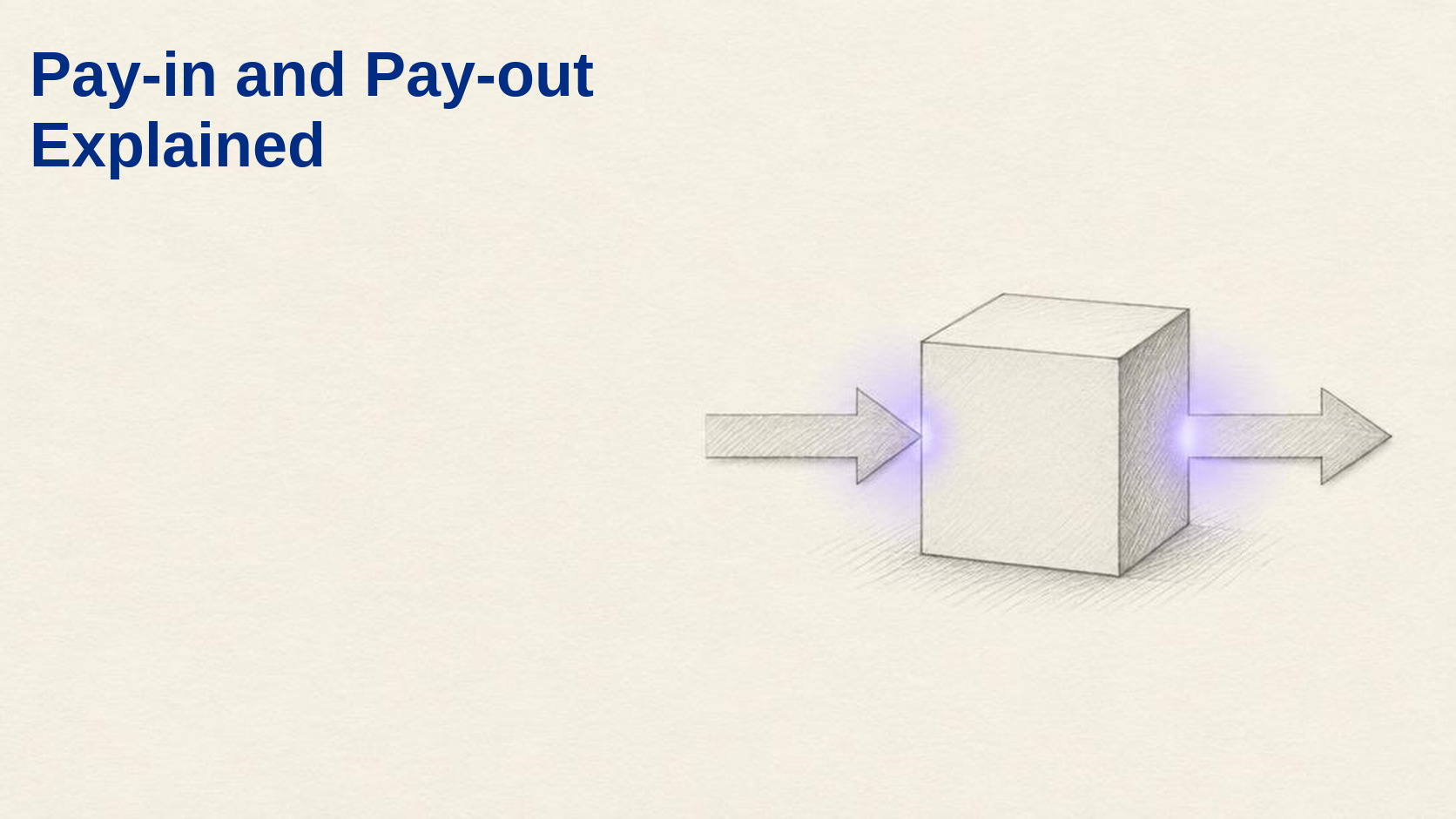
A pay-in is money moving from a customer or payer into a business, a customer paying an invoice, a deposit, a subscription charge. A pay-out is money moving from a business out to a recipient, a payroll disbursement, a vendor payment, a refund, a remittance. The distinction matters operationally because pay-ins and pay-outs often use entirely different infrastructure, a business collecting card payments (pay-in) doesn't necessarily use the same rail to pay its own vendors (pay-out), and in stablecoin payment infrastructure specifically, the compliance, custody, and rail requirements on each side frequently differ.
Pay-in, explained
A pay-in is the collection side of a payment flow, funds arriving from an external party into a business's account or wallet. Examples: a customer completing checkout, a client settling an invoice, a user funding a wallet balance, an investor wiring capital into a fund. In stablecoin infrastructure specifically, a pay-in often means a customer sending USDC or USDT on-chain, or converting fiat to stablecoins through an on-ramp before the funds reach the business.
Pay-out, explained
A pay-out is the disbursement side, funds leaving a business to an external recipient. Examples: payroll, vendor and supplier payments, affiliate or referral payouts, remittances, refunds. In stablecoin infrastructure, a pay-out can mean sending stablecoins directly on-chain to a recipient's wallet, or converting stablecoins to local fiat and paying out through a local rail like PIX, SPEI, or a bank transfer.
Why the distinction actually matters
Pay-in and pay-out infrastructure aren't interchangeable, even within the same company. A business collecting customer pay-ins in stablecoins might still need to pay out to vendors in local fiat currency, requiring an off-ramp and local payment rail integration on the pay-out side that has nothing to do with how pay-ins were collected. Compliance requirements often differ too: KYC on the pay-in side screens who's sending money in, while sanctions and beneficiary screening on the pay-out side governs who's allowed to receive it. A payment infrastructure vendor that's strong on one side isn't automatically strong on the other, worth evaluating each independently rather than assuming a single provider handles both equally well.
FAQs
What is the difference between a pay-in and a pay-out?
A pay-in is money coming into a business from an external payer, a pay-out is money going out from a business to an external recipient. They're opposite directions of the same underlying payment infrastructure question.
Do businesses need separate infrastructure for pay-ins and pay-outs?
Often yes. The compliance requirements, rails, and even currency handling can differ meaningfully between collecting money and disbursing it, a provider strong on one side isn't automatically strong on the other.
Is a stablecoin payment always both a pay-in and pay-out?
Not necessarily in one transaction. A customer pay-in in stablecoins doesn't require the business to pay out in stablecoins too, many businesses collect in stablecoins but pay out in local fiat currency through an off-ramp and local rail, or vice versa.
Last updated: September 28, 2026 Written by the stablecoin.nyc Editorial Desk