Mastercard Crypto Partner Program: What Institutions Need to Know
Mastercard's Crypto Partner Program is a structural bet that on-chain payments scale only when they plug into existing rails, not around them. Launched in March 2026 with more than 85 partners including Binance, PayPal, Ripple, Circle, Gemini, and Paxos, the program creates a formal collaboration layer between crypto-native firms, payment providers, and financial institutions. For treasurers, allocators, and compliance teams evaluating digital-asset exposure, the architecture and incentives of this program are worth understanding precisely.
Definition: What the Mastercard Crypto Partner Program Is
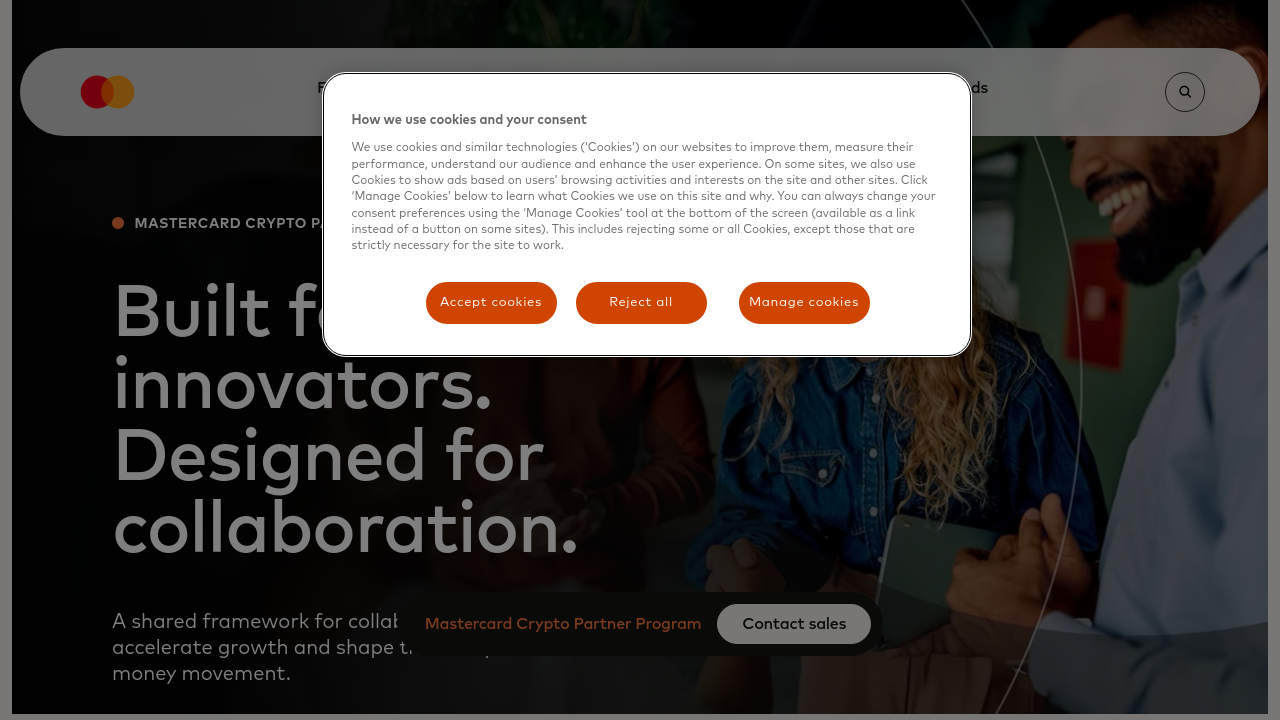
The program is a structured global collaboration framework that connects crypto-native companies, payments providers, and financial institutions with Mastercard's network infrastructure. Mastercard positions it as a forum for dialogue, standards alignment, and real-world deployment rather than a single product launch. Participation is organized by track and category, and outputs are meant to reach production rather than sit in a whitepaper.
At launch in March 2026, more than 85 companies had joined. Mastercard has since referenced the figure as exceeding 100 partners across crypto exchanges, blockchain developers, fintech firms, and banks. The program builds on earlier Mastercard crypto efforts, including crypto-linked cards, the Start Path accelerator, and the Multi Token Network, rather than replacing any of them.
The Plain-Language Version
Think of it as a members' table where Mastercard sits with stablecoin issuers, exchanges, wallet providers, and banks to hash out how blockchain-based value moves through the world's dominant card rails. The output is meant to be integration pathways, shared standards, and co-designed products, not a marketing cohort.
What It Is Not
It is not a retail-facing product and not designed for individual traders. There is no consumer sign-up. Eligibility targets organizations that build or operate part of the digital-asset stack: stablecoin issuers, exchanges, wallets, on/off-ramps, and financial institutions running digital-asset use cases. Institutional readers can find broader context in this analysis of institutional adoption of crypto, which frames why traditional networks are moving now rather than later.
How It Works: Mechanism and Structure

Mastercard has organized participation into tracks with eligible categories spanning stablecoin issuers and infrastructure providers, crypto exchanges, wallets, on/off-ramp providers, and financial institutions exploring digital asset use cases. Participants get access to product co-design forums, standards-setting dialogue, and integration pathways with Mastercard's network, which spans more than 200 countries and territories.
The core problem the program targets is fragmentation. Digital assets can move value quickly and programmatically, but real-world payments require compliance layers, settlement reliability, and interoperability with existing rails. That gap is where many pilots stall. Mastercard's framing emphasizes deployment and standards over marketing, positioning the program as operational infrastructure rather than a logo wall.
Partner Tracks and Eligible Categories
The eligibility surface is broad by design:
- Stablecoin issuers and infrastructure providers, the entities that mint, custody, and route tokenized dollars.
- Crypto exchanges, centralized venues that already hold KYC relationships with millions of users.
- Wallets, custodial and non-custodial front ends where end-user balances sit.
- On/off-ramp providers, the connective plumbing between bank accounts and blockchains. Modern Treasury joined in this capacity, illustrating how the program bridges fiat payment flows with blockchain-based value transfer.
- Financial institutions, banks and fintechs testing digital-asset use cases.
For a deeper map of the fiat-to-blockchain interface, see the survey of crypto on-ramp platforms that on/off-ramp partners in the program compete against.
The Problem It Is Designed to Solve
The friction is not throughput. Blockchains already settle 24/7 at low unit cost. The friction is trust: compliance, consumer protection, chargeback handling, dispute resolution, and interoperability with the accounts payable, treasury, and merchant systems that already run global commerce. The program's implicit thesis is that on-chain value transfer only reaches scale when it inherits the guarantees users and regulators already expect from card rails.
Takeaway: the program is a coordination mechanism aimed at closing the last mile between programmable settlement and real-world payments, not a product SKU.
Why It Matters: Use Cases and Strategic Logic
Mastercard has identified cross-border transfers, business-to-business payments, and global payouts as the priority use cases where digital assets are already gaining measurable traction. These are the corridors where legacy rails are slowest, most expensive, and most exposed to stablecoin substitution. Framing the program around these three targets is a signal about where Mastercard expects the first durable revenue to appear.
Priority Use Cases
- Cross-border transfers, remittances and consumer wallet transfers where stablecoin corridors have already compressed fees.
- B2B payments, supplier settlement, marketplace payouts, and treasury movements where T+2 wire settlement is a genuine constraint.
- Global payouts, creator, gig, and marketplace disbursements that need reach into markets where card acceptance is thin.
Institutions building on these corridors should look at how agentic wallets and DeFi interfaces are evolving as complementary infrastructure before assuming that program participation resolves the plumbing.
Mastercard's Strategic Position
The program positions Mastercard as connective tissue between banks, fintechs, and crypto-native firms rather than a passive observer of on-chain payment development. According to CoinDesk's reporting on the launch, competitors have taken parallel steps: Visa has worked with stablecoin issuers and blockchain firms to test settlement using digital dollars. Read together, this is a competitive infrastructure race among traditional card networks, not a solo initiative.
Strategically the program is dual purpose. Offensively it opens revenue in cross-border B2B and remittances, segments where card interchange has historically been weakest. Defensively it ensures Mastercard remains a central node if stablecoins or CBDCs begin bypassing card rails outright. The alignment with Mastercard's Multi Token Network and its SoFiUSD work signals a coordinated approach to tokenized value rather than isolated pilots.
Takeaway: the program is best read as Mastercard buying optionality on two futures at once, one where card rails absorb on-chain flows and one where they do not.
Key Partners and What Their Presence Signals

Named launch partners include Binance, PayPal, Ripple, Circle, Gemini, and Paxos, covering exchanges, stablecoin issuers, and payment infrastructure in a single cohort. The composition is the message: Mastercard has assembled a cross-section of the digital-asset payment stack in one program, not a single layer of it.
The presence of Circle and Paxos, issuers of USDC and USDP respectively, alongside Ripple, which operates XRP and RLUSD, signals that the program spans multiple stablecoin architectures and settlement paradigms. A partner cohort that includes bank-issued dollars, exchange-issued dollars, and independent stablecoins is a bet that no single token wins outright in the next cycle.
Bolt Group joined to build financial infrastructure connecting digital assets with card rails and wallets, per the company's own statement on Mastercard's launch post. That inclusion illustrates that the program targets builders, not just issuers. StraitsX's participation points to geographic expansion in Southeast Asia, where stablecoin-based payment rails are already more operationally mature than in many Western markets.
The breadth of partner types, from large centralized exchanges to niche infrastructure firms, reflects a deliberate effort to cover the full digital-asset payment stack rather than a single layer. For allocators tracking the shape of the tokenized dollar market, this cohort is a useful proxy for who Mastercard considers structurally important.
Takeaway: partner selection is a read on Mastercard's implicit taxonomy of the stack; issuers, exchanges, builders, and regional specialists are all treated as first-class.
Risks and Limitations Institutions Should Weigh

Program participation is a real signal, not a settled fact. There are four risk categories institutions should price in before treating this as a firm deployment pathway.
Regulatory and Margin Risk
Greater involvement in crypto and stablecoin flows exposes Mastercard to evolving digital asset regulation, which may affect how quickly programs scale and how profitable they become. Simply Wall St's coverage of the launch notes that regulation, pricing, and economics in this space are still evolving and are already flagged as a risk for Mastercard's long-term margins and pricing power.
The economics of crypto payment flows, including fee pools and interchange dynamics, are less predictable than card-based volumes. Institutions building around Mastercard rails inherit that margin uncertainty. Institutions weighing compliance obligations should also review the shifting SEC crypto policy landscape, which materially affects how quickly partners can deploy production products.
Competitive and Execution Risk
If alternative payment rails from Visa, American Express, or crypto-native networks attract on-chain volumes directly, some activity could bypass Mastercard's infrastructure despite the program's breadth. Program membership does not guarantee flow; it guarantees a seat at a standards conversation.
Execution risk is the second concern. A partner program can range from a lightweight community to a serious product co-design pipeline. Institutions should evaluate whether specific integration commitments and timelines are documented for their track before treating participation as a firm deployment pathway. The signal-to-noise ratio in "partner announcement" news is historically low; this cohort deserves scrutiny on the same dimension.
Takeaway: treat regulatory and margin uncertainty as absorbed by all participants, not only by Mastercard. Program economics will be a function of how the underlying digital-asset flows are priced, not how the program is marketed.
What Institutions Should Do With This Information
Institutions evaluating on-chain payment exposure should treat the program as a signal about where the industry's structural gravity is shifting, not as a finished product to deploy immediately. The right posture depends on the reader's seat.
For treasury and payments teams, the relevant near-term question is whether existing banking and payments counterparties are program participants, and whether that creates integration or compliance obligations. If a primary acquirer, on-ramp, or stablecoin issuer is inside the program, treasury architecture decisions made in the next 12 months will interact with whatever standards emerge from it.
For allocators, the program is part of the broader narrative that Mastercard's partnership-driven digital payments strategy supports higher transaction activity and fee-based income as more flows touch its network. Outcomes remain uncertain, and the incremental revenue from on-chain corridors is not yet material to Mastercard's income statement. It is a positioning trade, not an earnings trade.
For builders, organizations building stablecoin or tokenized payment infrastructure should assess whether joining a program structured around Mastercard's standards creates path dependencies that constrain future architectural choices. Standards adoption is rarely free; it exchanges optionality for distribution.
The clearest immediate implication is that on-chain payments are moving from experimental to infrastructural. Institutions that delay engagement with compliant digital-asset rails risk falling behind on interoperability and counterparty connectivity as the standards cohort defines the interfaces.
FAQ: Frequently Asked Questions
What is the Mastercard Crypto Partner Program?
It is a global collaboration framework that connects crypto-native companies, payments providers, and financial institutions with Mastercard's network. The stated purpose is dialogue, standards alignment, and real-world deployment of on-chain payment products, rather than a single retail launch.
Who can join the Mastercard Crypto Partner Program?
Eligibility targets organizations building or operating parts of the digital-asset stack: stablecoin issuers and infrastructure providers, crypto exchanges, wallets, on/off-ramp providers, and financial institutions exploring digital asset use cases. It is not open to individual traders or retail consumers.
Which companies are partners in the Mastercard Crypto Partner Program?
Named launch partners include Binance, PayPal, Ripple, Circle, Gemini, and Paxos, alongside Modern Treasury, Bolt Group, and StraitsX. Mastercard reported more than 85 partners at launch in March 2026 and has since referenced the total as above 100.
What use cases does the Mastercard Crypto Partner Program focus on?
Mastercard has identified cross-border transfers, business-to-business payments, and global payouts as the priority use cases. These are corridors where digital assets already show measurable traction and where legacy card and wire rails are historically slowest and most expensive.
How does the Mastercard Crypto Partner Program relate to stablecoins?
Stablecoin issuers are a core partner category. The cohort spans USDC (Circle), USDP (Paxos), and RLUSD (Ripple), which signals that the program is designed to accommodate multiple stablecoin architectures rather than commit Mastercard's rails to any single issuer or settlement model.
How does Mastercard's program compare to Visa's crypto efforts?
Visa has taken parallel steps, working with stablecoin issuers and blockchain firms to test settlement using digital dollars. Both networks are pursuing similar objectives through different partner mixes, making this a competitive infrastructure race rather than a solo Mastercard initiative.
What is the Multi Token Network and how does it connect to the partner program?
The Multi Token Network is Mastercard's earlier initiative for tokenized asset settlement and interoperability. The Crypto Partner Program sits alongside it and the SoFiUSD work as part of a coordinated strategy, using the partner cohort to help shape products that plug into that underlying token infrastructure.
What are the risks of the Mastercard Crypto Partner Program for institutions?
Key risks include evolving digital-asset regulation affecting scale and margins, competition from alternative rails that could bypass Mastercard, uncertain fee economics in crypto payment flows, and execution risk if program participation stays at the dialogue stage rather than producing documented integration commitments.
Conclusion
The Mastercard Crypto Partner Program is best read as a coordination trade. Mastercard is buying a seat at the standards table for on-chain payments while extending its offensive position in cross-border B2B and its defensive position against stablecoin and CBDC disintermediation. The partner cohort is broad enough to cover the full stack and specific enough to matter. For institutions, the open question is not whether on-chain payments will plug into card rails, but whose standards define the interface. Program participation is a signal about where the answer is being negotiated.